

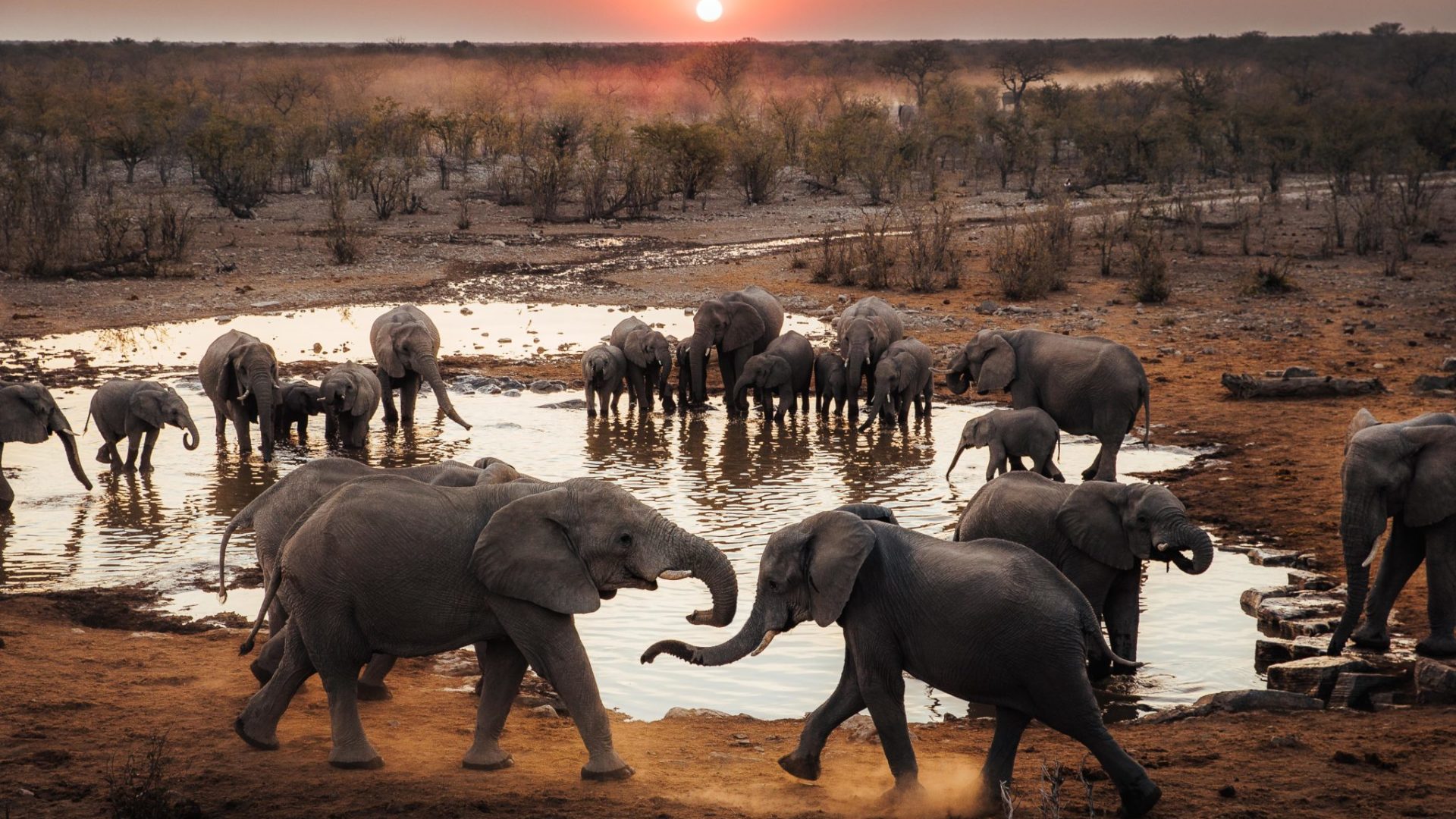
Namibia is one of the few African safari destinations where the honest answer to “when should I go?” is genuinely simple: the dry season from May to October delivers the best wildlife viewing in Etosha, the most comfortable conditions for self-drive travel, and the clearest skies for the landscape photography that draws so many visitors to this country. Outside that window, Namibia is still worth visiting, since the green season transforms the landscape and produces outstanding birding, but the dry season is when the country is at its most rewarding for most travellers.
What makes Namibia’s seasonal story different from East or southern Africa is the absence of a dramatic flood cycle or annual migration to plan around. Namibia’s seasons affect wildlife concentration and comfort rather than fundamentally changing what is available. This makes timing decisions more forgiving than in Botswana or Tanzania, and gives travellers more flexibility in when they go. This guide covers Namibia month by month, with a focus on Etosha National Park, Damaraland, the Namib Desert and the Skeleton Coast.
Namibia’s two seasons
| Season | Months | Character |
|---|---|---|
| Dry season | May to October | Cool to very hot. Clear skies. Wildlife concentrated at waterholes. Best game viewing in Etosha. Peak self-drive season. Minimal malaria risk. |
| Green season | November to April | Hot, with afternoon thunderstorms. Landscape green and photogenic. Excellent birding. Lower rates. Wildlife dispersed. |
Namibia is largely malaria-free in its main safari and tourist areas, including Etosha National Park, Sossusvlei, Damaraland and Swakopmund. Malaria risk exists in the far north (Caprivi Strip/Zambezi Region) year-round and increases during the wet season. Consult a travel health clinic for current prophylaxis advice specific to your itinerary before travelling. Do not rely on any website for medical advice.
Month-by-month guide
| Month | Season | Etosha | Damaraland | Namib / Sossusvlei | Rates |
|---|---|---|---|---|---|
| January | Green / wet | Wildlife dispersed. Lush and green. Flamingos may appear on the pan. Calving season. Birding excellent. | Desert elephants present year-round. Hot. Afternoon thunderstorms. Dramatic skies. | Very hot (40°C+). Dunes most vibrant red after rain. Not ideal for dune climbing. | Low |
| February | Green / wet | Calving season continues. Newborn animals, good predator activity. Wet and hot. Birding outstanding. | Hot and green. Desert elephants active near seasonal water. | Very hot. Dramatic storm light for photography. Cooler mornings than January. | Low |
| March | Late green | Rains tapering. Vegetation still dense. Young animals visible. Game viewing improving gradually. | Rains easing. Desert beginning to dry. Good conditions returning. | Temperatures easing slightly. Still warm. Landscape green and photogenic. | Low to shoulder |
| April | Transition | Excellent. Dry season establishing. Wildlife concentrating at waterholes. Comfortable temperatures. Good value. | Very good. Drying out fast. Desert elephants easily located. Comfortable for walking. | Good. Cooler temperatures. Clear skies. One of the best months for dune photography. | Shoulder |
| May | Early dry | Very good. Dry season well established. All waterholes active. Not yet peak-season crowding. Cold nights. | Excellent. Cooler temperatures ideal for rhino tracking and walking. Less visited than peak. | Excellent. Cool mornings, warm days. Good for dune climbing. Crowds manageable. | Shoulder to mid |
| June | Dry | Outstanding. Peak dry conditions. Large herds at waterholes. Very cold nights and pre-dawn. Black rhino sightings at night waterholes. | Outstanding. Cool and dry. Desert elephant tracking excellent. Skeleton Coast atmospheric. | Outstanding. Cool, clear, perfect for hiking and photography. Dunes at their best. | Mid to high |
| July | Dry / peak | Outstanding. Peak season. Largest herds at waterholes. Cheetah, lion and black rhino reliably seen. Cold mornings (near freezing). | Excellent. Busy but rewarding. Desert elephants easily found. Good for guided walks. | Excellent. Cool temperatures ideal for dune climbing at Dune 45 and Sossusvlei. | Peak |
| August | Dry / peak | Outstanding. Widely regarded as the best single month. All species present. Floodlit waterholes at night camps extraordinary. | Very good. Warming up. Still excellent for desert-adapted wildlife tracking. | Very good. Warming from mid-August. Still manageable for outdoor activities. | Peak |
| September | Dry / late peak | Excellent. Warming significantly. Highest wildlife concentration at waterholes as dry season peaks. Fewer visitors than August. | Hot but rewarding. Black rhino tracking still excellent in the cooler mornings. | Hot. Early morning dune walks still rewarding. Afternoon heat intense. | Peak to high |
| October | Pre-rain | Very good. Extremely hot (35–40°C). Extraordinary wildlife density at remaining waterholes. First rains possible late in the month. | Hot and dusty. Pre-rain atmosphere. Still good for desert wildlife. | Very hot. Not recommended for dune climbing midday. Dramatic pre-storm skies. | High to mid |
| November | Early green | First rains arriving. Animals beginning to disperse. Migratory birds arriving. Rates dropping. Landscape greening rapidly. | First rains. Desert transforming. Dramatic scenery. Lower rates. | First rains. Occasional flooding of access roads. Green season dunes less visited. | Low to shoulder |
| December | Green / wet | Green season. Flamingos on the pan in good numbers. Good birding. Festive premium at some lodges. Wildlife still viewable but dispersed. | Green and photogenic. Desert elephants active. Some roads wet. | Hot and sometimes wet. Dramatic skies. Less visited than dry season. | Low (festive premium from mid-December) |
Best months for specific goals
Best overall game viewing in Etosha
July and August. Etosha‘s floodlit waterholes, a feature unique in Africa at this scale, are at their most productive in the peak dry season. The park maintains several illuminated waterholes adjacent to its camps, where wildlife comes to drink through the night. Sitting at a floodlit waterhole in Etosha in August, with elephant herds arriving in the dark, lions moving through the treeline and black rhino emerging from the mopane woodland for a midnight drink, is one of the most quietly extraordinary wildlife experiences in Africa. It requires no game drive, no guide and no vehicle: just a chair, patience and the willingness to sit still for an hour.
August is widely regarded as the single best month in Etosha, combining peak dry season conditions, manageable temperatures (still below the extreme heat of September and October) and all species active around the waterholes. Book accommodation, particularly the in-park camps at Okaukuejo, Halali and Namutoni, well in advance for August, as demand is high and the in-park camps fill quickly.
Best for black rhino
June to September, at the Okaukuejo waterhole in Etosha. The Okaukuejo waterhole is one of the most reliable places in Africa to see black rhino, which come to drink at the floodlit waterhole after dark through the dry season. Black rhino are critically endangered, with around 6,800 remaining across Africa according to Save the Rhino International, and a sighting at Okaukuejo in the dry season is among the most significant wildlife encounters available in southern Africa. The rhino are habituated to the waterhole and the presence of observers, and the quality of viewing from the camp’s observation deck, at close range with a floodlit subject, is exceptional.
Best for desert-adapted wildlife in Damaraland
May to September for the most comfortable tracking conditions, though desert-adapted elephant and black rhino are present year-round. Damaraland‘s desert-adapted elephant population is one of the most remarkable wildlife stories in Africa: a population that has evolved behaviours for survival in an almost waterless environment, covering vast distances between water sources and stripping bark from trees to access moisture. Tracking them on foot with a specialist guide, across dramatic rocky landscapes and dry riverbeds, is a fundamentally different experience from a waterhole-based Etosha safari. The cooler months of June to August make the walking more comfortable; September and October are manageable in the mornings. For a full discussion of the species and where to find them, see our guide to desert-adapted wildlife in Namibia.
Best for self-drive travel
May to September. Namibia’s road network is one of the best in Africa for self-drive travel, with well-maintained gravel roads connecting Etosha, Damaraland, Sossusvlei and the Skeleton Coast. A standard 4×4 (or high-clearance vehicle) handles the vast majority of routes in the main tourist circuit; a standard saloon car manages the tar roads between major centres. The dry season keeps road surfaces stable, eliminates the risk of flash flooding on desert roads and makes navigation simpler.
Best for Sossusvlei and the dunes
April to September. The Sossusvlei dunes, including Dune 45 and the Deadvlei clay pan with its ancient dead camel-thorn trees, are visitable year-round but most rewarding in the cooler months. Climbing the dunes in the early morning, when temperatures are below 20°C and the light turns the sand from orange to deep red as the sun rises, is an experience specific to the cooler dry-season months. In January and February, midday temperatures at Sossusvlei regularly exceed 45°C, making any outdoor activity outside of the very early morning genuinely dangerous. April and May offer the cooler temperatures with the added possibility of a green landscape from the late rains, an unusual and photogenic combination that the dry season cannot produce.
Best for birding
November to March. Namibia hosts over 670 recorded bird species, with Palearctic migrants arriving from November and the green season producing dramatic increases in waterbird numbers. Etosha’s pan floods partially in good rain years, attracting large flamingo concentrations and waterbirds that are absent in the dry season. The Caprivi Strip (Zambezi Region) in the northeast is a birding destination of the first order in the wet season, with a species list more comparable to Botswana than to the dry Namibian interior. For serious birders, the green season in Namibia offers a completely different country from the dry-season wildlife safari experience.
Best value
April, May and November. April and May sit at the transition into peak season: dry-season conditions are establishing, game viewing is improving rapidly, rates are below their July and August peak and the parks are quiet. May in particular is one of the strongest value months in Namibia: Etosha waterholes are active, the temperatures are comfortable, the Sossusvlei dunes are excellent and rates are meaningfully lower than the peak-season equivalent. November sees rates drop quickly after the October peak, while Etosha still offers good game viewing before the rains fully arrive. For South African residents with a Namibia dollar budget (pegged to the ZAR), the combination of proximity, good value and year-round accessibility makes Namibia one of the most compelling safari options on the continent at any time of year.
Etosha versus Damaraland: does timing change the answer?
Most Namibia itineraries of seven nights or more combine Etosha and Damaraland, often with Sossusvlei as a third element. The two areas have broadly similar seasonal rhythms, since dry-season conditions favour both, but they offer completely different experiences.
Etosha is a classic waterhole-based game viewing safari: you drive between waterholes, wait for wildlife to arrive and observe at close range. Damaraland is a tracking and wilderness experience: guided walks and 4×4 routes in search of desert-adapted elephant and black rhino across one of the most dramatic landscapes in Africa. The contrast between them is part of what makes a Namibia itinerary exceptional, and the timing window of May to September serves both areas well simultaneously.
A note on the Skeleton Coast and the Namib coast
The Namibian coast, from Swakopmund and Walvis Bay north to the Skeleton Coast, operates on a different seasonal pattern from the interior. The Benguela Current keeps the coast cool and frequently foggy year-round. Summer in the interior means cool, atmospheric mornings on the coast. The seal colonies at Cape Cross are viewable year-round. Southern right whales are present off the Namibian coast from roughly June to November, with the peak from July to October. Swakopmund’s adventure activities, from sandboarding and quad biking to kayaking with seals, run year-round in the coast’s reliably cool conditions.
Questions about timing a Namibia safari
Is Namibia good for safari in the green season?
Yes, with adjusted expectations. The green season landscape is dramatically different from the dry season: vivid green against red dunes, storm skies, and a quality of light that the dry season’s clear blue cannot match. Wildlife in Etosha is dispersed and harder to find, but the birding is outstanding and the country feels genuinely uncrowded. Rates are lower. For photographers and birders, the green season has a strong case. For travellers whose primary goal is reliable Big Five game viewing, the dry season is the clear answer.
Do I need a 4×4 for a Namibia self-drive?
For the main tourist circuit in the dry season (Windhoek, Etosha, Sossusvlei and Swakopmund) a high-clearance vehicle (not necessarily full 4×4) handles all routes comfortably on the dry gravel roads. For Damaraland, the Skeleton Coast National Park and any remote routes, a 4×4 with high-range and low-range gearing is strongly recommended. In the green season, a 4×4 is essential for any route involving unpaved roads, as flash flooding and mud can make otherwise straightforward tracks impassable quickly. Verify road conditions for your specific route with your accommodation or the relevant park authority before travelling.
How many nights do I need for a Namibia safari?
Seven nights is a workable minimum for a circuit covering Etosha and Sossusvlei. Ten to twelve nights allows for Etosha, Damaraland and Sossusvlei in a logical self-drive loop from Windhoek, with time to do each area properly. Adding the Skeleton Coast or the Caprivi Strip extends the itinerary further. Namibia rewards time, because the distances between areas are significant and the landscapes change slowly enough that you want to stop and absorb them rather than rush through.
Plan your Namibia safari
Namibia is Africa’s most accessible self-drive safari destination and one of its most visually distinctive. The dry season from May to October delivers the best wildlife viewing and the most comfortable travel conditions. The right time within that window depends on your priorities, your budget and how you feel about sharing Etosha’s waterholes with other visitors in July and August.
Tell us your dates and whether you would rather self-drive or fly between camps, and we will build the route around it. Plan your safari with a specialist, or browse our Namibia safari itineraries.