

Safaris
Safaris in Damaraland
2 safaris that visit the park.

Park guide
Damaraland guide
Overview
Damaraland, in north-western Namibia, is one of Africa’s most dramatic and rewarding wilderness areas. It is not a national park but a vast region of rugged mountains, flat-topped hills, ancient volcanic formations and dry riverbeds, where wildlife lives alongside local communities. Much of the land falls within communal conservancies, in which communities manage wildlife and benefit from tourism, an approach that has helped desert-adapted elephants and black rhino recover across the region.
The landscapes are spectacular. The Brandberg, Namibia’s highest mountain, rises from the plains and is famous for its rock paintings, including the well-known White Lady. Twyfelfontein, a UNESCO World Heritage Site, protects one of Africa’s largest concentrations of rock engravings, made by hunter-gatherers over thousands of years. Nearby sights include the Petrified Forest, with fossilised tree trunks millions of years old, the Organ Pipes, a formation of basalt columns, and Burnt Mountain.
Namibia’s communal conservancy programme, which began in the late 1990s, gave local communities the right to manage and benefit from wildlife on their land. In Damaraland, conservancies employ community game guards, earn income from tourism partnerships and share in decisions about wildlife. Poaching declined and numbers of elephant, rhino, zebra and antelope grew, and the model is now studied around the world. Staying at a conservancy lodge is a direct way to support this work.
Lodges in Damaraland are generally small and set in spectacular locations among granite boulders or overlooking the valleys, from comfortable lodges to exclusive camps in private concessions. Many are partnerships with local conservancies.
Wildlife
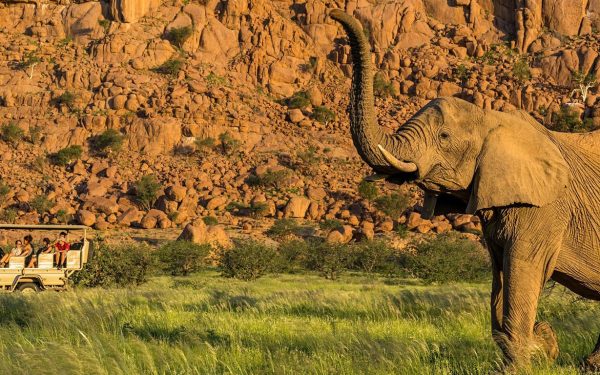
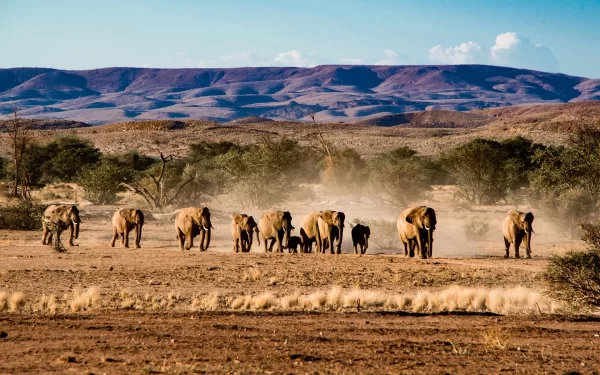
Damaraland’s wildlife has adapted to an arid environment with little water. Desert-adapted elephants are the main attraction. These elephants travel long distances along the dry riverbeds of the Huab, Aba-Huab and Ugab in search of water and food, and seeing them in this stark landscape is unforgettable.
The region is also home to one of the largest free-roaming populations of black rhino in the world, protected by community rangers and conservation organisations. Rhino tracking on foot or by vehicle is offered in some concessions, under strict guidelines to protect the animals.
Other wildlife includes gemsbok, springbok, kudu, Hartmann’s mountain zebra, giraffe, ostrich and klipspringer. Predators such as lion, cheetah, leopard, brown hyena and spotted hyena are present but are elusive and widely scattered. Birdlife includes desert specialists such as Rüppell’s korhaan, Monteiro’s hornbill and Benguela long-billed lark. Damaraland is not a Big Five destination; the focus is on desert-adapted species and landscapes.
Key wildlife
Best Time to Visit
Short answer: May–Oct. Also good: Apr, Nov.
Peak Good Quieter
Damaraland can be visited all year. The dry months from May to October are the most popular, with mild days, cold nights and clear skies, and wildlife is more often found near the remaining water in the riverbeds. From September to November the heat builds and can become intense.
Distances are long and services are few, so plan fuel stops, carry plenty of water and allow extra time on gravel roads. Mornings and evenings are the best times for wildlife and photography, when the light on the mountains is at its most beautiful.
The summer rains, usually light and irregular, fall mainly from December to March and bring a flush of green to the plains, along with dramatic skies. Rivers can occasionally flood after heavy rain, so check road conditions when travelling in summer.
Getting There
Damaraland is usually reached by road from Windhoek, a drive of around five to six hours to the Twyfelfontein area, much of it on gravel. Most travellers visit as part of a longer Namibian self-drive or guided tour, combining Damaraland with Etosha National Park, the Skeleton Coast and Sossusvlei. International visitors arrive at Hosea Kutako International Airport (WDH) near Windhoek.
Fly-in safaris use light aircraft to airstrips near the lodges, which saves time and provides superb views of the landscape. Roads in Damaraland are mostly gravel and can be rough, so a sturdy vehicle, ideally a four-wheel drive, is recommended, and fuel stops are limited.
Fees & Access
Entrance fees
Damaraland is not a national park, so there is no general entrance fee. Conservancy levies are usually included in lodge rates. Twyfelfontein, the UNESCO-listed rock art site, charges international adults N$270 and children aged 8–17 N$220, including the compulsory local guide; SADC adults pay N$100 and Namibians N$80. Rhino tracking and other concession activities are priced separately by each operator.
Gate hours
Sunrise - Sunset
Health
Malaria risk: Low. Ask a travel clinic about antimalarials before you go.
Fees and gate times change. Check the latest rates with the park authority before you travel.
Things to Do
Desert elephant tracking along the dry riverbeds with an experienced guide is the highlight for many visitors.
Rhino tracking in partnership with conservation rangers is available in certain concessions.
Twyfelfontein rock engravings can be visited with a local guide, and the nearby Organ Pipes and Burnt Mountain are short stops.
The Brandberg offers guided hikes to the White Lady rock painting.
Nature drives and walks from the lodges explore the landscapes, geology, plants and smaller desert creatures.
Cultural visits to conservancy communities, including living museums, provide an insight into local life and traditions.
See our Etosha, Damaraland and Sossusvlei fly-in safari and Namibia family self-drive, browse all safaris, or plan your safari with us.
Location
Where is Damaraland?
Good to know
Damaraland FAQs
Is there an entrance fee for Damaraland?
No. Damaraland is a region, not a national park, so there is no general entrance fee. Conservancy levies are usually included in lodge rates, and individual sites such as Twyfelfontein charge their own entry.
How much does it cost to visit Twyfelfontein?
International adults pay N$270 and children aged 8–17 pay N$220, including the compulsory local guide. SADC adults pay N$100 and Namibians N$80.
Where can you see desert-adapted elephants in Damaraland?
Desert-adapted elephants move along the dry riverbeds of the Huab, Aba-Huab and Ugab. Their movements change, so tracking them with an experienced local guide gives the best chance of a sighting.
Can you track rhino in Damaraland?
Yes. Rhino tracking on foot or by vehicle is offered in certain concessions in partnership with conservation rangers, under strict guidelines to protect the animals.
Do you need a 4x4 for Damaraland?
Roads are mostly gravel and can be rough, so a sturdy vehicle, ideally a four-wheel drive, is recommended. Plan fuel stops carefully, as services are limited.
When is the best time to visit Damaraland?
May to October is the most popular, with mild days, cold nights and wildlife closer to water in the riverbeds. From September to November it gets very hot, and the light summer rains fall mainly from December to March.
Keep exploring
More parks in Namibia
 National Park
Etosha National Park
Namibia's premier wildlife destination centred on a vast salt pan visible from space — offering exceptional dry-season game…
Explore park →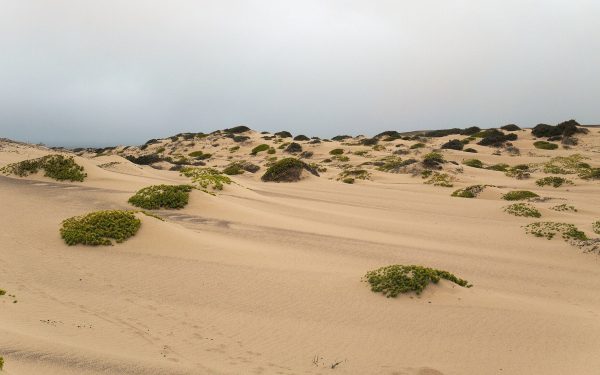 National Park
Skeleton Coast National Park
Namibia's haunting and desolate Atlantic coastline — a wilderness of shipwrecks, fog, seal colonies, and desert-adapted wildlife.
Explore park →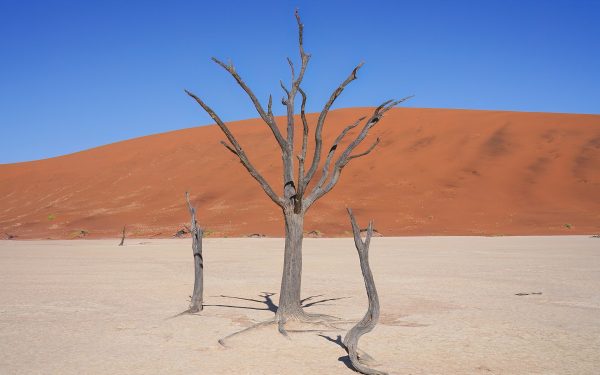 National Park
Sossusvlei and Namib-Naukluft Park
Home to the world's tallest sand dunes and Namibia's most photographed landscapes — a desert wilderness like no…
Explore park →Begin your journey
Ready to experience Damaraland?
Tell us when you want to travel and what you want to see, and we will match you with the right safari.
Plan your safari