Safaris
Safaris in Okavango Delta
1 safari that visits the park.
Park guide
Okavango Delta guide
Overview
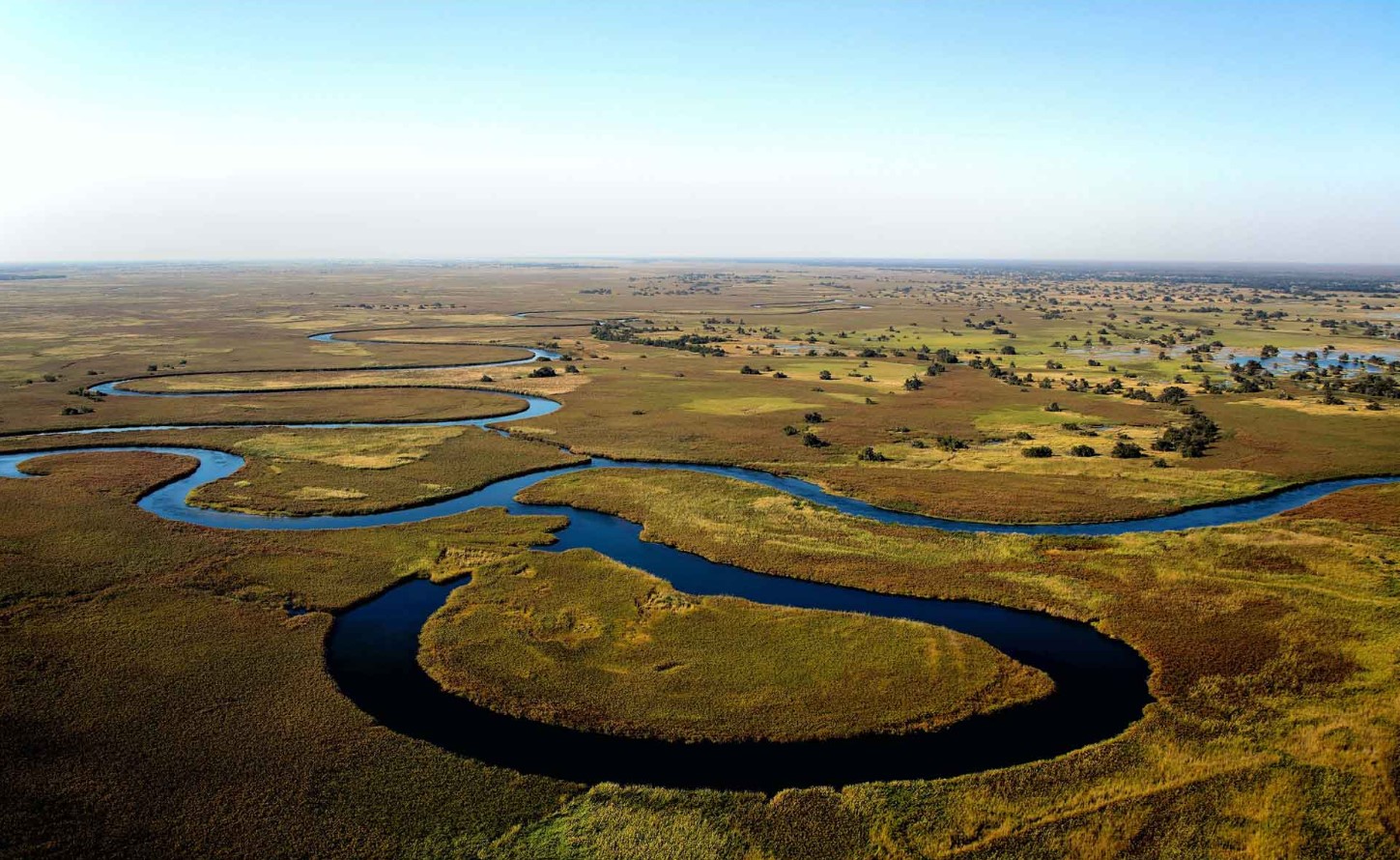
The Okavango Delta is one of the most remarkable wild places on earth: a vast inland delta where the Okavango River, flowing south from the highlands of Angola, spreads out across the sands of the Kalahari and simply disappears. Instead of reaching the sea, its water fans into a maze of papyrus-lined channels, lagoons, floodplains and palm-studded islands in north-western Botswana. UNESCO, which inscribed the delta as a World Heritage Site in 2014, describes it as Africa’s largest endorheic delta, a near-pristine wetland that transforms the surrounding desert.
What makes the Okavango so special is its timing. The floodwaters take months to travel down from Angola, so they arrive and peak during Botswana’s dry winter, usually around June and July, just when the rest of the region is at its driest. The result is an oasis that draws wildlife from far and wide, and a landscape that changes from month to month as the water rises and falls.
The delta is not a single park. According to UNESCO, around 40 percent of it is protected within Moremi Game Reserve, while the rest is divided into wildlife management areas and private concessions, many leased to safari operators or community trusts. Most luxury camps sit within these concessions, where guest numbers are deliberately low and each camp has a large area to itself. Many camps are reached only by light aircraft, which adds to the sense of being somewhere truly remote.
Wildlife
The Okavango supports an extraordinary variety of life. UNESCO records around 130 mammal species and 482 bird species, along with 89 species of fish. Botswana has the world’s largest elephant population, which UNESCO puts at around 130,000, and the delta is the core of their range. Herds of elephant and buffalo splash through the floodplains, and the red lechwe, an antelope adapted to wading in shallow water, is one of the delta’s signature sights.
Predators are well represented. Lion prides here are known for crossing water channels with surprising confidence, leopard are frequently seen in the riverine woodland, and the Okavango is one of the strongholds of the African wild dog. Cheetah hunt on the drier floodplains and islands, and spotted hyena are common.
The wetlands bring their own specialists. Look for sitatunga in the papyrus, hippo and Nile crocodile in the deeper channels, and the rare Pel’s fishing owl roosting in riverside trees. Rhino have been reintroduced to parts of the delta and surrounding areas, though sightings are uncommon and their locations are kept quiet for their protection. For birders, African fish eagles, wattled cranes, slaty egrets and a dazzling range of kingfishers and bee-eaters make every outing rewarding.
Wildlife varies between camps. Concessions with more dry land, or on the delta’s edges, tend to offer the best big-game viewing, while camps deep in the permanent swamps excel at water-based activities, birding and peaceful scenery. Many travellers combine one of each.
Key wildlife
All of the Big Five (lion, leopard, elephant, rhino and buffalo) live in Okavango Delta.
Best Time to Visit
Short answer: Jun–Oct. Also good: Apr–May, Nov.
Peak Good Quieter
The Okavango is a year-round destination, but the dry season from June to October is the classic time. The floodwaters are high, the bush is thinning, and wildlife concentrates around the water, making game viewing excellent. Mokoro trips are at their best when the water is high, usually from around June to August. July to September is the busiest and most expensive period at most camps.
October is the hottest month, with temperatures that can be intense, but game viewing is superb as animals gather at the remaining water. The rains usually arrive in November and last until March, bringing green landscapes, newborn antelope, migratory birds and dramatic afternoon storms. This green season is also when many camps offer lower rates, and while some water activities depend on the levels, it can be a wonderful time to visit.
April and May are transitional months, with the first floodwaters arriving in the northern delta and pleasant temperatures. They can be excellent value. Flood timing and depth vary from year to year with the rains in Angola, so specific water activities are always confirmed closer to the time.
Getting There
The gateway to the delta is Maun Airport (MUB), on the delta’s south-eastern edge, which has regional flights from Johannesburg, Cape Town and other hubs. From Maun, light aircraft fly guests to the private airstrips that serve each camp, with flights usually taking between 20 minutes and an hour. Many travellers also connect through Kasane Airport (BBK), close to Chobe National Park and Victoria Falls.
Light-aircraft luggage limits are strict, usually around 20 kg per person including hand luggage, in soft-sided bags without wheels or frames. Your camp or safari planner will confirm the exact allowance for your flights.
Moremi Game Reserve can also be reached by road from Maun, and some mobile safaris and self-drive visitors take this route. However, the inner delta is largely inaccessible by road, and for most luxury safaris flying between camps is both the easiest option and a highlight of the trip, with spectacular views of channels, islands and wildlife below.
Fees & Access
Entrance fees
The Okavango Delta has no single entrance fee. Around 40 percent of the delta lies in Moremi Game Reserve, where the Department of Wildlife and National Parks charges non-residents P270 per person per day (SADC residents P205, citizens P30), plus P115 per day for a foreign-registered vehicle. Children under 8 enter free.
Most luxury camps sit in private concessions, which charge their own conservation and community levies. These are usually included in the camp rate, so check with your safari planner what is covered.
Gate hours
Private concessions: activity times set by each camp. Moremi gates open roughly sunrise to sunset.
Health
Malaria risk: Moderate. Ask a travel clinic about antimalarials before you go.
Fees and gate times change. Check the latest rates with the park authority before you travel.
Things to Do
Mokoro excursions are the quintessential Okavango experience. Gliding silently through the shallow channels in a traditional dugout canoe, now often made of fibreglass, poled by a local guide, you can watch reed frogs, water lilies and birds at eye level.
Game drives in open vehicles are offered at camps with dry land, and many private concessions allow off-road driving to follow predators, as well as night drives to look for nocturnal species such as genet, serval and aardwolf.
Guided walks on the islands are a highlight in many concessions. Walking with an experienced, armed guide is a chance to learn about tracks, plants and the delta’s smaller creatures.
Boat safaris on the deeper channels and lagoons are ideal for birding, fishing in season and watching elephants cross the water.
Scenic helicopter flights offered by some operators give an unforgettable perspective of the delta’s patterns of water and land.
The Okavango combines beautifully with Chobe, the Makgadikgadi Pans and Victoria Falls. See our romantic Chobe, delta and Mozambique island safari, browse all safaris, or plan your safari with us.
Location
Where is Okavango Delta?
Good to know
Okavango Delta FAQs
Is there an entrance fee for the Okavango Delta?
There is no single fee for the delta. In Moremi Game Reserve, non-residents pay P270 per person per day to the Department of Wildlife and National Parks. Private concessions, where most luxury camps are, charge their own levies, which are usually included in the camp rate.
When is the best time to visit the Okavango Delta?
June to October is the classic season, when the floodwaters are high, the bush is dry and wildlife gathers around the water. July to September is busiest. November to March is the green season, with lower rates, newborn animals and excellent birding.
How do you get to the Okavango Delta?
Fly to Maun Airport (MUB) and connect by light aircraft to your camp’s airstrip, usually a flight of 20 minutes to an hour. Kasane (BBK) is another gateway. Luggage on light aircraft is usually limited to about 20 kg in soft bags.
What is a mokoro trip?
A mokoro is a traditional dugout canoe, now often made of fibreglass, poled through the shallow channels by a local guide. It is a quiet, eye-level way to see birds, frogs and water lilies, and is best when the water is high, usually from around June to August.
Can you see the Big Five in the Okavango Delta?
Lion, leopard, elephant and buffalo are seen regularly. Rhino have been reintroduced to parts of the delta and surrounding areas, but sightings are uncommon and their locations are kept quiet for their protection.
Is the Okavango Delta a malaria area?
Yes. Northern Botswana is a malaria area, with the highest risk in the wet months from about November to April. Talk to a travel clinic about antimalarials and use repellent and cover up in the evenings.
Keep exploring
More parks in Botswana
 Game Reserve
Central Kalahari Game Reserve
Botswana's vast and ancient desert reserve — a wild expanse of fossil river valleys and arid grassland teeming…
Explore park →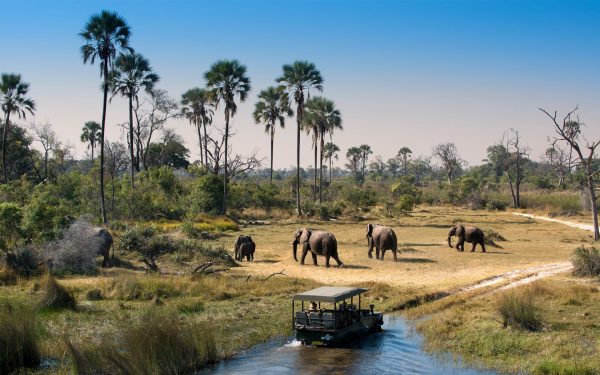 National Park
Chobe National Park
Botswana's first national park renowned for having the largest concentration of elephants in Africa.
Explore park → National Park
Makgadikgadi Pans National Park
Botswana's surreal salt pans — ancient lake beds that host spectacular zebra migrations and meerkat encounters.
Explore park →Begin your journey
Ready to experience Okavango Delta?
Tell us when you want to travel and what you want to see, and we will match you with the right safari.
Plan your safari