
Safaris
Safaris in Sossusvlei and Namib-Naukluft Park
2 safaris that visit the park.

Park guide
Sossusvlei and Namib-Naukluft Park guide
Overview
The Namib-Naukluft Park in western Namibia is one of the largest protected areas in Africa, covering around 49,768 km² of desert, gravel plains, mountains and coastline. Its most famous corner is Sossusvlei, a clay pan surrounded by towering red sand dunes, which are among the tallest in the world. The dunes form part of the Namib Sand Sea, inscribed as a UNESCO World Heritage Site in 2013 for its extraordinary dune landscapes, shaped by wind over millions of years.
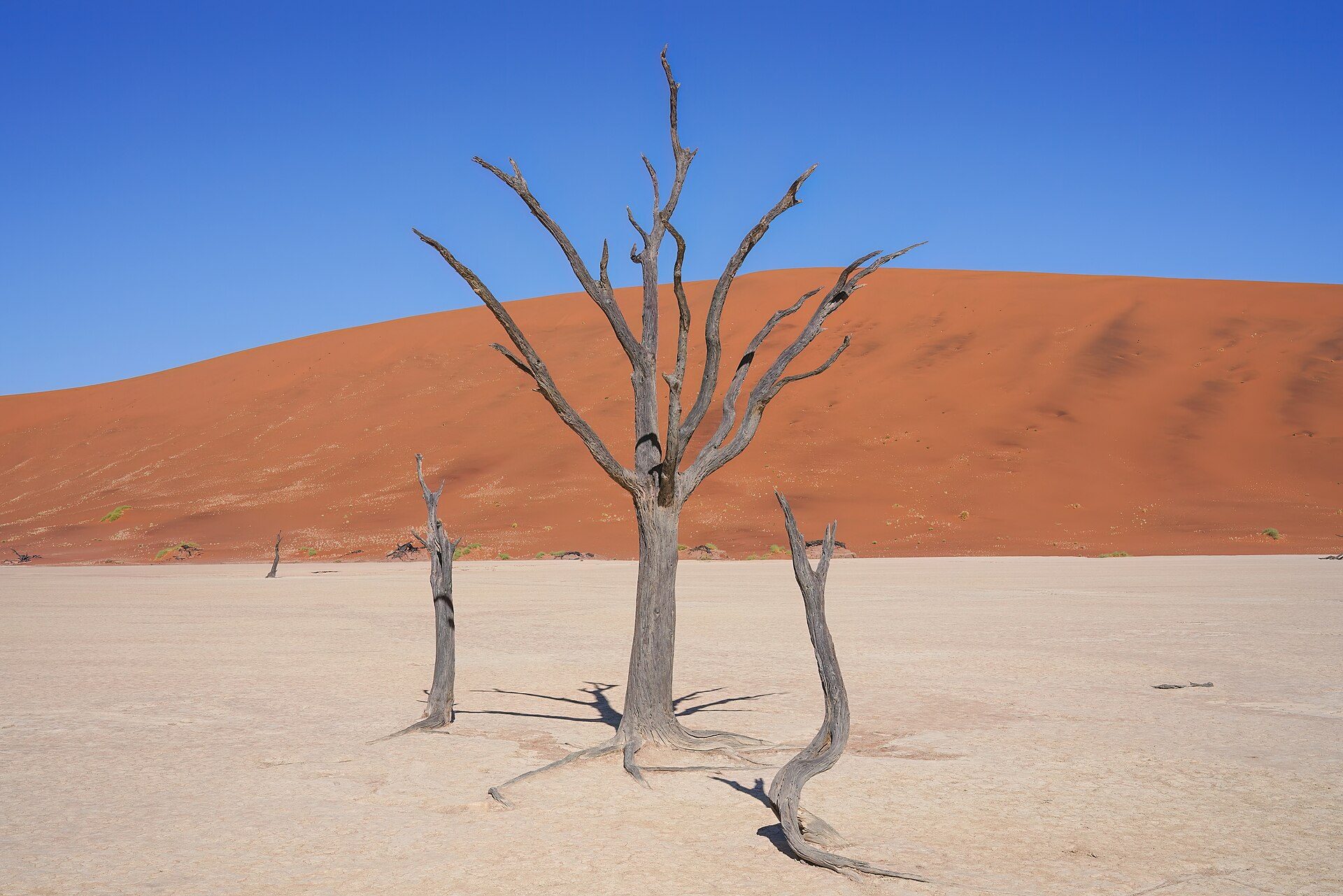
The Namib is considered one of the oldest deserts on earth. Its dunes glow in shades of orange, red and apricot, changing colour with the light, and the contrast between the sand, the white clay pans and the deep blue sky makes this one of the most photographed landscapes in Africa.
The park includes several distinct areas. Sossusvlei and the neighbouring Deadvlei are the main draw, reached from the Sesriem entrance. Sesriem Canyon, a narrow gorge carved by the Tsauchab River, lies close to the gate. The Naukluft Mountains to the north-east offer hiking trails and dramatic scenery, while the western part of the park stretches to the Atlantic coast near Walvis Bay. Lodges in the surrounding private reserves range from comfortable desert lodges to exclusive luxury retreats.
Wildlife
The Namib is not a classic big game destination, but its wildlife is fascinating because of how it has adapted to the desert. Gemsbok, or oryx, are the iconic animal of the dunes, able to survive for long periods without drinking. Springbok, ostrich and, in the mountains, Hartmann’s mountain zebra and klipspringer are also found.
Predators include black-backed jackal, brown hyena, spotted hyena in some areas, bat-eared fox and the elusive leopard in the mountains. Smaller desert specialists are the real stars for many visitors: the fog-basking tenebrionid beetles that drink moisture from the coastal fog, web-footed geckos, sidewinding adders and the dancing white lady spider.
Birdlife includes the endemic dune lark, along with Ludwig’s bustards, sociable weavers in the camelthorn trees, and raptors such as the lappet-faced vulture. The park is not a Big Five destination.
Key wildlife
Best Time to Visit
Short answer: May–Sep. Also good: Mar–Apr, Oct.
Peak Good Quieter
Sossusvlei can be visited all year. The cooler months from May to September are the most comfortable, with warm, clear days and cold nights, sometimes close to freezing. This is a popular time, and accommodation inside the park books up quickly.
From October to April, daytime temperatures can be very high, often above 40°C between the dunes, so plan to be on the dunes early in the morning or late in the afternoon. Rain is rare, but in exceptional years the Tsauchab River floods the Sossusvlei pan, a spectacular and unusual sight. At any time of year, the best light for photography is just after sunrise and before sunset, when the dunes glow and shadows are long.
Getting There
Most visitors arrive at Hosea Kutako International Airport (WDH) near Windhoek. From there, Sesriem is around five hours’ drive, largely on gravel roads, with scenic passes on the way. Many self-drive itineraries continue to Damaraland, Etosha or the coast at Swakopmund.
Light-aircraft flights from Windhoek, Swakopmund and other destinations serve airstrips at lodges in the area, saving the long drive and offering superb views of the desert.
Sesriem is the only entrance for Sossusvlei and Deadvlei. The outer gate opens at sunrise and closes at sunset, while the inner gate opens an hour before sunrise and closes an hour after sunset for guests staying at accommodation inside the park. From the gate, a tarred road runs about 60 km to the 2×4 parking area. The final 5 km to Sossusvlei and Deadvlei are deep sand, suitable only for four-wheel-drive vehicles; others can use the shuttle service. Access rules for this last stretch changed several times in 2026, so check the current situation at the gate.
Fees & Access
Entrance fees
From 1 April 2026, foreign adults (16 and over) pay N$280 per person per day, made up of a N$140 entry fee and a N$140 conservation fee. Foreign children aged 9–15 pay N$180, and children aged 8 and under enter free. SADC residents pay N$180 and Namibians N$60. A vehicle with up to 10 seats pays N$60 per day.
Permits are bought at the park office at Sesriem. The shuttle from the 2x4 parking area to Sossusvlei and Deadvlei is charged separately.
Gate hours
Sesriem outer gate: sunrise to sunset. Inner gate: one hour before sunrise to one hour after sunset, for guests staying inside the park.
Health
Malaria risk: Low. Ask a travel clinic about antimalarials before you go.
Fees and gate times change. Check the latest rates with the park authority before you travel.
Things to Do
Climbing the dunes at sunrise is the classic experience. Dune 45, named for its distance from Sesriem, is the most famous, while Big Daddy, one of the tallest, overlooks Deadvlei.
Deadvlei is a white clay pan dotted with the blackened skeletons of camelthorn trees that died centuries ago, a surreal and unforgettable sight. It is about a kilometre’s walk from the 4×4 parking area.
Sesriem Canyon is a short, easy walk through a narrow gorge just inside the park gate.
Hot-air balloon flights at dawn offer a breathtaking view over the dunes and desert plains.
Scenic flights over the dunes to the Atlantic coast, as well as guided nature drives and walks at private reserves, show the desert from different perspectives.
Stargazing is exceptional, thanks to the desert’s dry air and lack of light pollution.
See our Etosha, Damaraland and Sossusvlei fly-in safari and Namibia family self-drive, browse all safaris, or plan your safari with us.
Location
Where is Sossusvlei and Namib-Naukluft Park?
Good to know
Sossusvlei and Namib-Naukluft Park FAQs
How much does it cost to visit Sossusvlei?
From 1 April 2026, foreign adults pay N$280 per person per day (N$140 entry plus N$140 conservation fee), foreign children aged 9–15 pay N$180, and children 8 and under are free. A vehicle with up to 10 seats pays N$60 per day. The shuttle for the last 5 km is extra.
What time does the Sossusvlei gate open?
The outer Sesriem gate opens at sunrise and closes at sunset. Guests staying inside the park can pass the inner gate from one hour before sunrise until one hour after sunset.
Do you need a 4x4 to get to Sossusvlei?
A normal car can drive the tarred road to the 2x4 parking area. The final 5 km to Sossusvlei and Deadvlei are deep sand, so you need a proper 4x4 or the shuttle. The rules for this stretch changed several times in 2026, so check at the gate.
When is the best time to visit Sossusvlei?
May to September is the most comfortable, with warm days and cold nights. From October to April it can be extremely hot, so plan dune walks for early morning or late afternoon.
How far is Sossusvlei from Windhoek?
Sesriem is around five hours’ drive from Windhoek, largely on gravel roads. Light-aircraft flights to lodge airstrips are a faster alternative.
Which dune should you climb at Sossusvlei?
Dune 45 is the most popular and easiest to reach, while Big Daddy, one of the tallest dunes, is a tougher climb with views over Deadvlei. Start early to avoid the heat.
Keep exploring
More parks in Namibia
 Conservancy
Damaraland
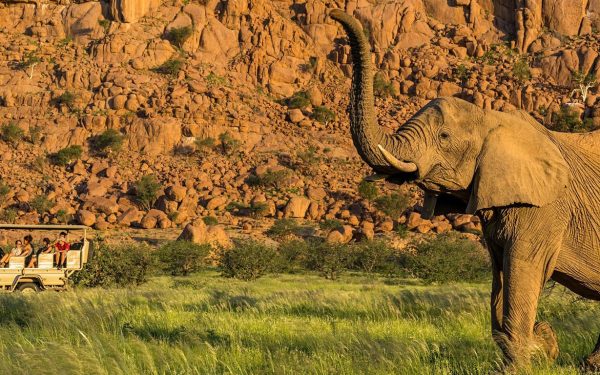
Namibia's dramatic volcanic landscape home to rare desert-adapted elephants and the endangered black rhino.
Explore park →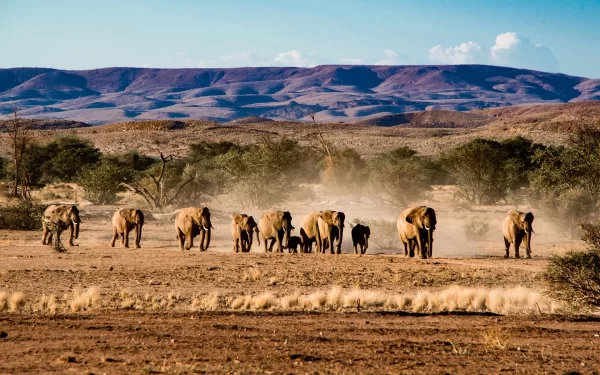 National Park
Etosha National Park
Namibia's premier wildlife destination centred on a vast salt pan visible from space — offering exceptional dry-season game…
Explore park →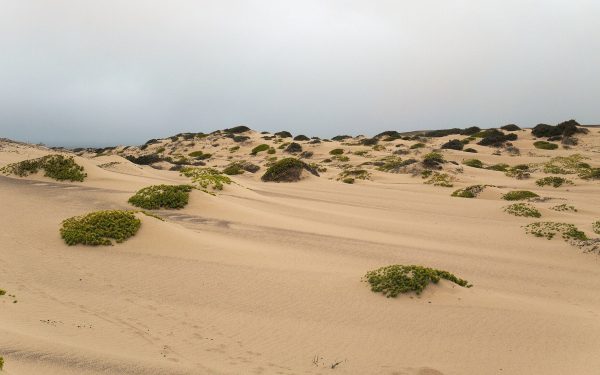 National Park
Skeleton Coast National Park
Namibia's haunting and desolate Atlantic coastline — a wilderness of shipwrecks, fog, seal colonies, and desert-adapted wildlife.
Explore park →Begin your journey
Ready to experience Sossusvlei and Namib-Naukluft Park?
Tell us when you want to travel and what you want to see, and we will match you with the right safari.
Plan your safari