
Botswana has a seasonal quirk that catches most first-time visitors off guard: the Okavango Delta floods in the dry season, not the wet one. Summer rainfall in Angola’s highlands takes four months to reach Botswana, arriving as peak floodwaters in July and August when local rainfall is zero. The result is one of Africa’s great natural paradoxes: a vast inland delta at its most extraordinary precisely when the surrounding landscape is at its driest.
Understanding this flood cycle is the key to planning a Botswana safari. It shapes the water levels in the Okavango, the concentration of wildlife across the country, the activities available at each camp and the rate you will pay. This guide covers Botswana month by month, with a focus on the Okavango Delta, Chobe National Park and the Linyanti system.
Botswana’s two seasons and the flood cycle
| Period | Months | Character | Okavango flood level |
|---|---|---|---|
| Green season | November to April | Hot, wet, lush. Lower rates, fewer visitors, outstanding birding. | Low: waters receding or at minimum |
| Dry season | May to October | Cool to warm, dry, vegetation thinning. Peak game viewing. Higher rates. | Rising from May, peaking July to August, receding from September |
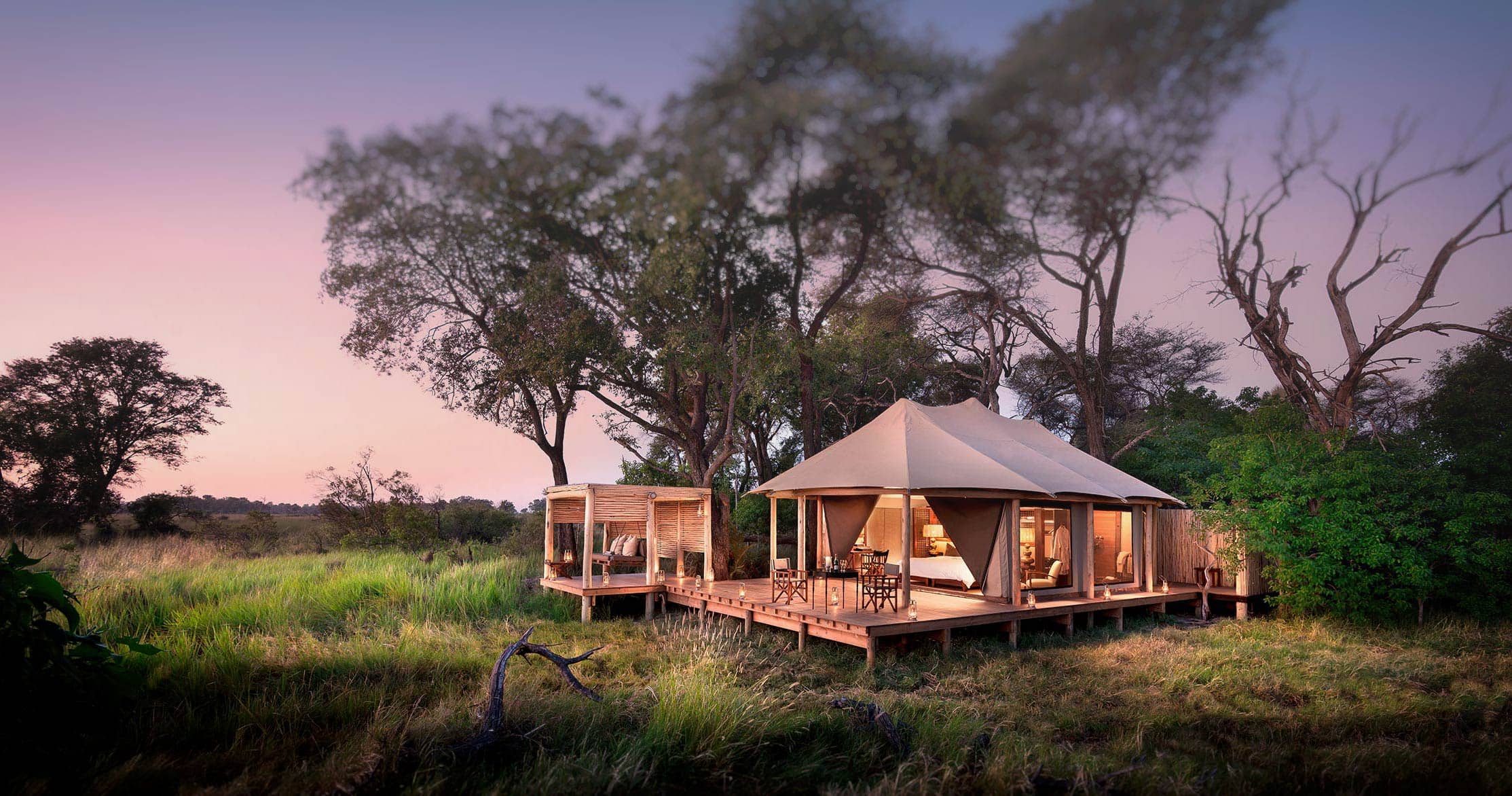
The Okavango Delta paradox: the flood arrives from Angola in the dry season, peaking in July when local rainfall is zero. This means the best time for water-based safaris (mokoro, boat, helicopter) and the best time for game viewing on land coincide in June, July and August. This is what makes the Okavango one of the most extraordinary safari destinations in Africa.
Month-by-month guide
| Month | Season | Okavango Delta | Chobe and Linyanti | Rates |
|---|---|---|---|---|
| January | Green / wet | Low water levels. Lush, green, dramatic skies. Birding excellent. Some camps inaccessible. | Animals dispersed. Green and photogenic. Chobe riverfront still productive. | Low |
| February | Green / wet | Hottest month. Heavy afternoon rain. Calving season for many antelope. Strong birding. | Green and lush. Rainfall heaviest. Some tracks impassable. | Low |
| March | Late green | Rains tapering. Waters still low. Flood from Angola beginning its journey south. | Rains easing. Wildlife beginning to concentrate again. Good game viewing returning. | Low to shoulder |
| April | Transition | Flood arriving in upper delta. New mokoro routes opening. Landscape still green. Cooling. | Dry season establishing. Excellent game viewing. Impala breeding season. | Shoulder |
| May | Early dry | Flood spreading rapidly through the delta. Outstanding. Rates below peak. Not yet crowded. | Very good. Buffalo and zebra in large numbers. Elephant herds returning to Linyanti. | Shoulder to mid |
| June | Dry / peak | Excellent. Flood well advanced. Mokoro and boating fully operational. Cold mornings. | Excellent. Elephant concentrations building at Chobe and Linyanti rivers. | High |
| July | Dry / peak | Outstanding. Peak flood. Water at highest levels. Best month for mokoro and boat safaris. | Peak elephant numbers at Chobe River. Outstanding. Cold mornings, warm afternoons. | Peak |
| August | Dry / peak | Outstanding. Waters still high. Wildlife concentrated on islands. Excellent game viewing. | Elephant herds enormous. Predator activity very high. Warmest peak month. | Peak |
| September | Dry / late peak | Waters beginning to recede. Game viewing intensifying as islands shrink. Very hot. | Exceptional. Highest animal concentrations of the year at Chobe River. Very hot. | Peak to high |
| October | Pre-rain | Waters low. Dramatic game viewing as animals concentrate on remaining water. Extremely hot (40°C+). | Outstanding predator and elephant activity. Hottest month. Rates easing. | High to mid |
| November | Early green | First rains arrive. Calving season begins. Rates drop. Some camps close for the season. | Rains starting. Animals beginning to disperse. Birding improving rapidly. | Low to shoulder |
| December | Green / wet | Rains established. Low water levels. Strong birding. Very low rates. Festive premium at some camps. | Green season. Zebra migration to Makgadikgadi beginning. Good for zebra and lion. | Low (festive premium from mid-December) |
The best months for specific goals
Best overall safari conditions
June, July and August. The dry season, the peak Okavango flood and the highest wildlife concentrations coincide in a three-month window that is hard to match anywhere in Africa. The Okavango Delta at peak flood, with hippo, elephant, lion and wild dog all concentrated on islands and waterways, offers a depth of wildlife experience that very few destinations can replicate. Mornings in June and July are cold on an open game-drive vehicle, with temperatures dropping below zero before dawn, so pack warm layers regardless of how tropical the daytime feels.
Best value without sacrificing quality
May and early October. May sits just before peak season: the flood is spreading rapidly through the delta, game viewing is excellent, rates are below their July and August peak and the camps are not yet at full capacity. Early October sees rates beginning to ease while wildlife concentrations at the Chobe and Linyanti rivers are at their highest of the year as the pre-rain heat forces animals to water in extraordinary numbers. Both months offer genuine value in a destination that has no cheap tier.
Best for water-based activities
June to September for the Okavango Delta. Mokoro (traditional dugout canoe) excursions, motorboat safaris and helicopter flights over the flooded delta are all at their most rewarding when flood levels are highest. The experience of gliding silently through papyrus channels in a mokoro, with hippos moving in the reeds and fish eagles calling overhead, is specific to the flood season and is one of the defining Botswana experiences. Water levels begin to recede from September, and by November the delta is approaching its annual low point.
Best for wild dog sightings
May and June, when African wild dogs den and their pups begin to emerge. Wild dog is one of Botswana’s signature species and the Linyanti system and Moremi Game Reserve are among the best places in Africa to see them. The denning period in May and June produces extended sightings as packs return repeatedly to their den site. Wild dog can be seen year-round but denning season produces the most reliable and prolonged encounters.
Best for elephant
August to October at Chobe. The Chobe River carries a substantial share of the largest national elephant population on earth. Botswana counted more than 131,000 elephants in its 2023 national aerial survey. In the peak dry season from August to October, the concentration of herds along the Chobe riverfront and at the Linyanti can reach extraordinary numbers. A boat safari on the Chobe River in September, with hundreds of elephants coming to drink at sunset, is one of the great African wildlife experiences.
Best for birding
November to April. Botswana hosts over 550 recorded bird species, with Palearctic and intra-African migrants arriving from November. The Okavango Delta in the green season carries extraordinary waterbird concentrations, including carmine bee-eaters, African skimmers, saddlebill storks and large breeding colonies of herons and egrets. The delta in the wet season is a different destination from the dry season flood period, and serious birders often prefer it.
Best for the Makgadikgadi zebra migration
December to March. Botswana’s zebra migration is less well known than the Serengeti’s wildebeest movement but is genuinely impressive in scale. Tens of thousands of zebra move from the Okavango region to the Makgadikgadi salt pans following the rains, and back again as conditions dry. The salt pans in the green season, with zebra, wildebeest and their attendant predators against the vast white landscape, is a distinctive and photogenic experience that differs completely from the dry-season delta safari.
Okavango versus Chobe: does timing change the answer?
The two areas have different seasonal peaks, and a well-structured Botswana itinerary often combines both.
The Okavango Delta is at its most extraordinary from June to August, when flood levels are highest and water-based activities are fully operational. The Chobe riverfront and Linyanti system are at their peak from August to October, when elephant and predator concentrations are at their highest. A classic Botswana itinerary of seven to ten nights positions three or four nights in the Okavango in June or July, followed by three or four nights in Chobe or Linyanti in August or September. This structure captures both areas at or near their peak and gives you the contrast between the water-based delta experience and the river-edge game driving of Chobe.
For more on each area, see our guides to the Okavango Delta and Chobe National Park.
A note on cost and booking
Botswana is the most expensive safari destination in Africa at every price point, and the gap between peak and shoulder season rates is significant. July and August at a top Okavango camp can cost $2,000 to $5,000 per person per night. The same camp in May or November can cost 20 to 40 percent less. For a full breakdown of what Botswana costs and what each budget delivers, see our guide to how much an African safari costs in 2026.
The best camps in the Okavango and Linyanti fill twelve months ahead for July and August. If peak season is your target, book as early as possible after fixing your dates.
Questions about timing a Botswana safari
Is Botswana worth visiting in the green season?
Yes, with the right expectations. Green season rates are significantly lower, the landscape is dramatically different from the dry season, birding is outstanding and the camps feel genuinely private. The trade-offs are that some camps close from November to March, water levels in the delta are at their lowest (limiting mokoro and boat activities), and some areas become inaccessible after heavy rain. For travellers who know what the green season offers and want it specifically, Botswana in January or February can be a genuinely rewarding experience at a fraction of peak-season cost.
How cold does it get in June and July?
Pre-dawn temperatures in the Okavango and Chobe can drop below zero in June and July. An open game-drive vehicle at 5am in July requires a warm jacket, a fleece and ideally a blanket. Daytime temperatures are comfortable (20 to 25°C) and evenings warm quickly. Pack layers regardless of when you travel, but pack seriously warm ones for June and July.
How many nights do I need in Botswana?
A minimum of five nights is needed to do justice to a single area such as the Okavango or Chobe. Seven to ten nights allows for two areas and is the most common structure. Botswana’s remoteness means travel days are part of the itinerary: most camps require a light aircraft transfer from Maun or Kasane, and these legs take time to arrange and execute.
Plan your Botswana safari
The right time for a Botswana safari depends on whether the water-based delta experience or the dry-season game viewing takes priority, and in the best months you get both. Our specialists can help you match the timing to the camps and build the itinerary around what you want to experience.
Tell us your dates and whether the delta flood or the Chobe elephant season matters more, and we will shape the route around it. Plan your safari with a specialist, or browse our Botswana safari itineraries.