
Safaris
Safaris in Etosha National Park
2 safaris that visit the park.

Park guide
Etosha National Park guide
Overview
Etosha National Park is Namibia’s flagship wildlife destination and one of the great game parks of Africa. Covering 22,270 km² of the country’s north, it is named after the Etosha Pan, a vast, shimmering salt pan of about 4,760 km² that fills almost a quarter of the park. For most of the year the pan is a dry, white expanse that stretches to the horizon, and the wildlife of the surrounding grasslands and mopane woodland depends on a scattering of springs and waterholes along its edges.
That is what makes Etosha so rewarding. In the dry months, animals come to drink at the waterholes in a steady procession, and simply parking at one and waiting can bring elephants, rhino, lions, giraffe and great herds of springbok and zebra into view. It is one of Africa’s most relaxed and accessible places to see big game.
Etosha also has deep history. The area was first proclaimed a game reserve in 1907, making it one of the oldest protected areas in Africa, and it received national park status in 1967. Historic Fort Namutoni, in the east of the park, recalls the colonial era, while the Hai||om people, who once lived around the pan, have a long connection to the land.
The park is well suited to both self-drive travellers and guided safaris. Rest camps inside the park, run by the state-owned Namibia Wildlife Resorts, sit close to floodlit waterholes, and private reserves on Etosha’s southern and eastern borders offer luxury lodges with guided drives into the park and their own exclusive activities.
Wildlife
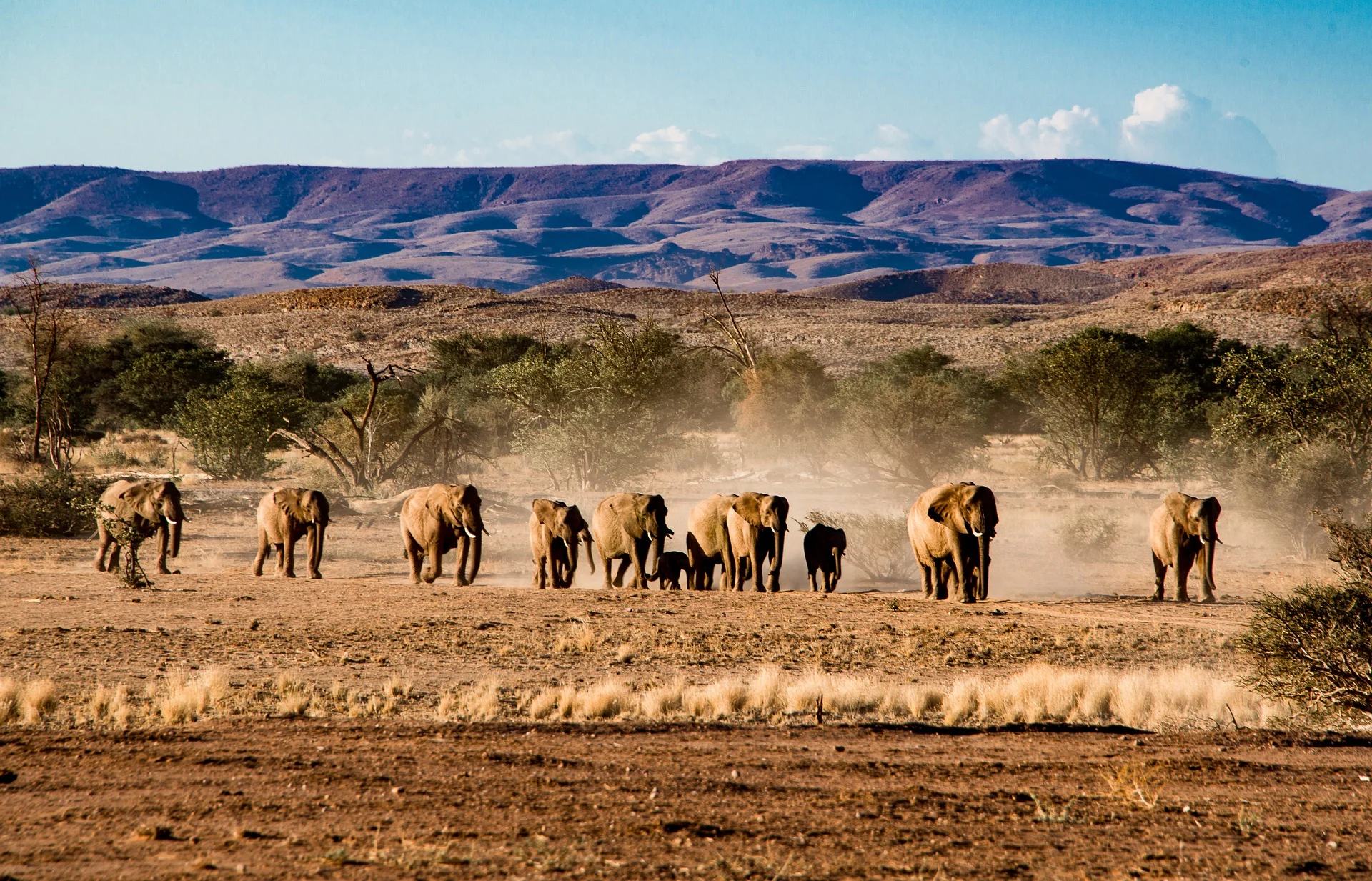
Etosha supports a wide range of large mammals adapted to its dry environment. Elephants here are often coated white with the pale dust of the pan, and are among the tallest in Africa. Huge herds of springbok, gemsbok, blue wildebeest and Burchell’s zebra graze the open plains, alongside red hartebeest, eland, kudu and giraffe.
The park is one of the world’s most important refuges for the endangered black rhino, and Etosha’s waterholes give a rare chance to see this shy animal, especially after dark at the floodlit waterholes of the rest camps. White rhino are also present. Poaching remains a serious threat, which is why rhino locations are never shared publicly.
Lions are widespread, and leopard, cheetah, spotted and brown hyena, black-backed jackal and bat-eared fox are all seen. Etosha is also home to two specialities of the region: the black-faced impala, a localised subspecies, and the tiny Damara dik-dik, often seen near Namutoni.
Birdlife is surprisingly rich, with around 340 species recorded. Kori bustards, secretary birds, ostriches and a variety of raptors are easy to see, and in years of good rain, when water collects on the pan, flamingos and pelicans may gather to breed. There are no buffalo in Etosha, so it is not a Big Five park, but very few parks offer more reliable rhino viewing.
Key wildlife
Best Time to Visit
Short answer: Jun–Oct. Also good: May, Nov.
Peak Good Quieter
The dry season from June to October is the best time for game viewing. Water is scarce, the vegetation thins, and animals gather at the waterholes, so sightings are frequent and predictable. Days are warm and sunny, while early mornings and nights in June and July can be cold, so bring warm layers for game drives. By September and October it is hot and very dry, and the waterholes are at their busiest.
May is a lovely shoulder month, with the bush still green after the rains and comfortable temperatures. The rainy season usually runs from about November to April, with afternoon thunderstorms. Animals disperse widely as water collects across the park, which makes sightings less predictable, but the landscape turns green, many antelope have their young, migratory birds arrive and the pan may hold water. It is also quieter, with lower rates at some lodges.
Getting There
Most international visitors arrive at Hosea Kutako International Airport (WDH) near Windhoek. From there, Etosha’s southern Andersson Gate is roughly a five-hour drive on good tarred roads, often broken with a night along the way. Many self-drive itineraries combine Etosha with Damaraland and Sossusvlei.
Ondangwa Airport (OND), north of the park, has domestic flights and is the closest airport with scheduled services. Many luxury and fly-in safaris use light aircraft to private airstrips in the reserves bordering Etosha, cutting out long road transfers.
The park has four main entrances: Andersson Gate in the south, Von Lindequist Gate in the east, King Nehale Gate in the north-east and Galton Gate in the west. Gates open at sunrise and close at sunset, and visitors must be inside a camp or outside the park before the gates close. Roads within the park are gravel but generally suitable for ordinary vehicles, although a higher-clearance vehicle is more comfortable.
Fees & Access
Entrance fees
From 1 April 2026, foreign adults (16 and over) pay N$280 per person per day, made up of a N$140 entry fee and a N$140 conservation fee. Foreign children aged 9–15 pay N$180, and children aged 8 and under enter free. SADC residents pay N$180 and Namibians N$60. A vehicle with up to 10 seats pays N$60 per day.
Fees are paid at the gate or at your rest camp, and guided safaris usually include them.
Gate hours
Sunrise to sunset. Be inside a camp or out of the park before the gates close.
Health
Malaria risk: Low. Ask a travel clinic about antimalarials before you go.
Fees and gate times change. Check the latest rates with the park authority before you travel.
Things to Do
Self-drive game viewing is one of Etosha’s great pleasures. With a good map, you can explore the network of waterholes at your own pace, stopping wherever the action is.
Guided game drives are offered by lodges and by the rest camps, including guided night drives, the only way to explore the park after dark. Private reserves on the borders also offer their own drives, walks and rhino-focused activities.
Floodlit waterholes at Okaukuejo, Halali and Namutoni allow you to watch wildlife late into the night from the comfort of the camp. Okaukuejo’s waterhole is famous for black rhino, elephants and lions.
Etosha Pan viewpoints let you look out over the vast white pan, an extraordinary sight, especially in the heat haze of the afternoon.
Photography is superb, with clear light, open landscapes and waterholes that bring animals to you.
Explore our Etosha, Damaraland and Sossusvlei fly-in safari and Namibia family self-drive, extend your trip to the Skeleton Coast, browse all safaris, or plan your safari with us.
Location
Where is Etosha National Park?
Good to know
Etosha National Park FAQs
How much are Etosha park fees?
From 1 April 2026 foreign adults pay N$280 per person per day (N$140 entry plus N$140 conservation fee), foreign children aged 9–15 pay N$180, and children 8 and under are free. A vehicle with up to 10 seats pays N$60 per day.
When is the best time to visit Etosha?
The dry season from June to October is best. Water is scarce and animals gather at the waterholes, so sightings are frequent. The rainy months from November to April are green and quieter, with good birding, but wildlife is more spread out.
Can you self-drive in Etosha?
Yes. Etosha is one of Africa’s best self-drive parks. Main roads are gravel but suitable for ordinary vehicles, and you can stop at waterholes along the way. You must be inside a camp or out of the park between sunset and sunrise.
Is Etosha a Big Five park?
No. Etosha has no buffalo, but it is one of the best places in Africa to see black rhino, especially at the floodlit waterholes at night, along with elephant, lion and leopard.
How far is Etosha from Windhoek?
The southern Andersson Gate is roughly a five-hour drive from Windhoek on tarred roads. Many travellers break the journey with a night on the way, or fly by light aircraft to an airstrip near the park.
Is Etosha a malaria area?
Etosha has a low, seasonal malaria risk, mainly during and after the rains from about November to June. Ask a travel clinic for advice and use insect repellent in the evenings.
Keep exploring
More parks in Namibia
 Conservancy
Damaraland
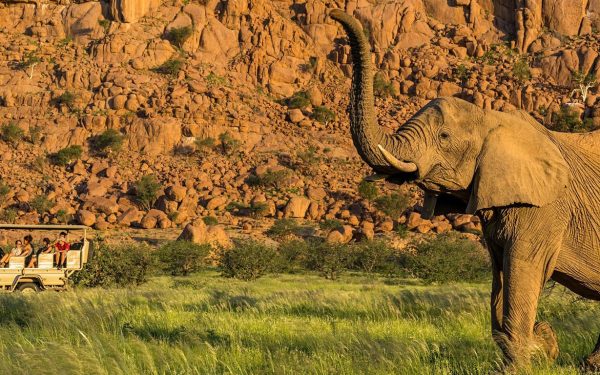
Namibia's dramatic volcanic landscape home to rare desert-adapted elephants and the endangered black rhino.
Explore park →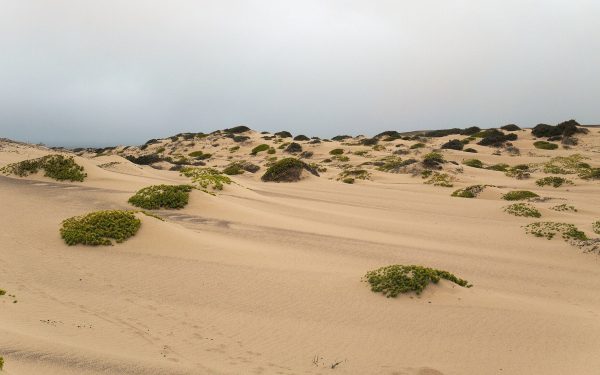 National Park
Skeleton Coast National Park
Namibia's haunting and desolate Atlantic coastline — a wilderness of shipwrecks, fog, seal colonies, and desert-adapted wildlife.
Explore park →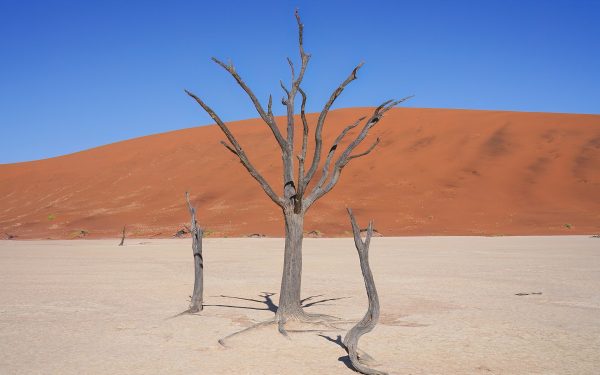 National Park
Sossusvlei and Namib-Naukluft Park
Home to the world's tallest sand dunes and Namibia's most photographed landscapes — a desert wilderness like no…
Explore park →Begin your journey
Ready to experience Etosha National Park?
Tell us when you want to travel and what you want to see, and we will match you with the right safari.
Plan your safari