
Overview
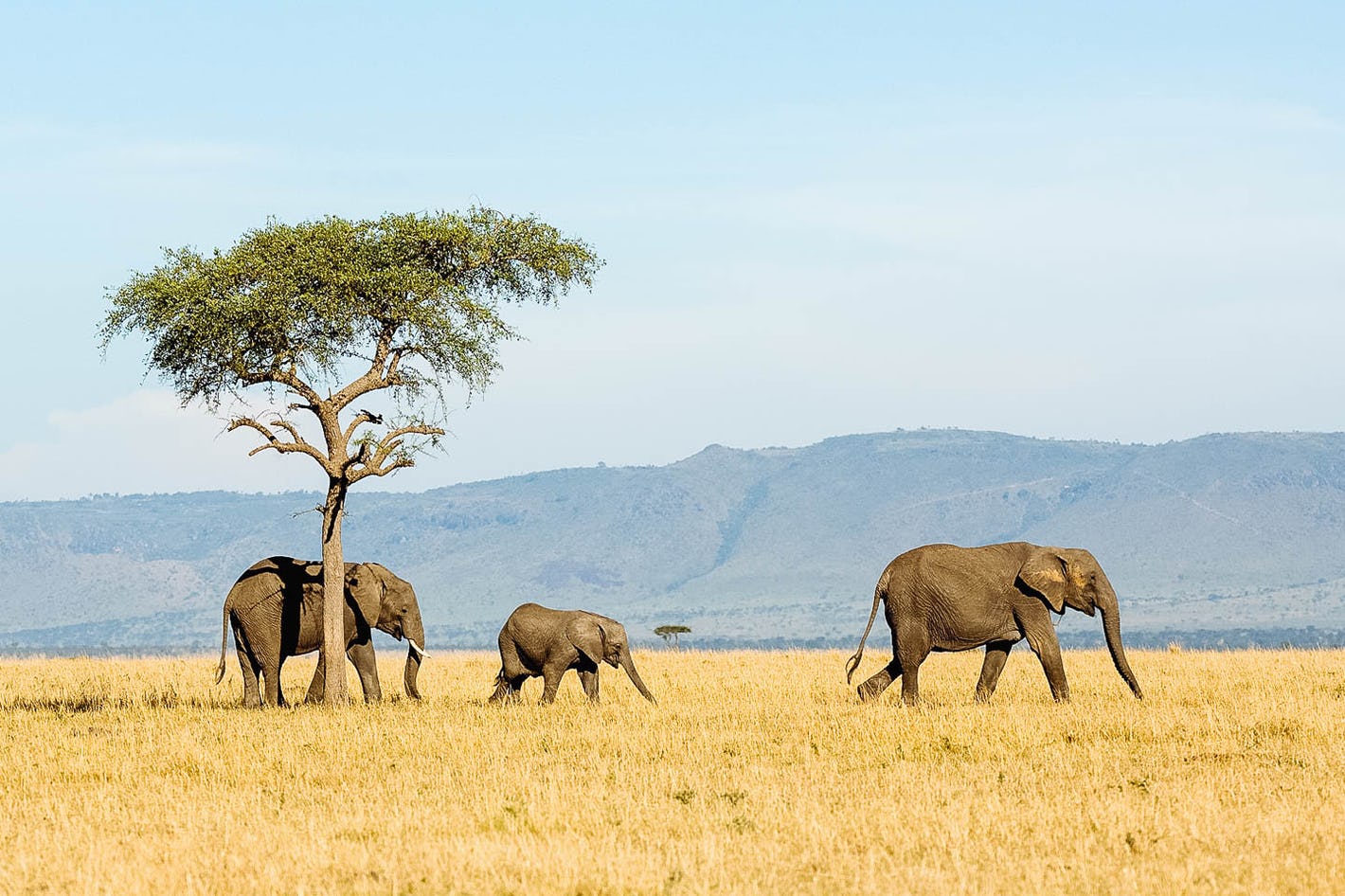
A Tanzania luxury safari puts the Serengeti plains, the Ngorongoro Crater and the Indian Ocean within reach of a single trip. The country holds two distinct safari circuits, a wildebeest migration that runs year-round rather than seasonally, and a standard of tented camp and lodge that ranks with anything in Africa. Trips are built to order rather than sold off the shelf, and suggested itineraries usually run from eight to 15 days.
Why safari in Tanzania
The difference between the two circuits matters when you are planning. The northern circuit is compact and well connected, which makes it the natural choice for a first safari. The southern and western parks are remote and lightly visited, and they reward travellers who have already seen the classics. Across both you can expect the Big Five, chimpanzees, wild dogs and over 1,000 bird species.
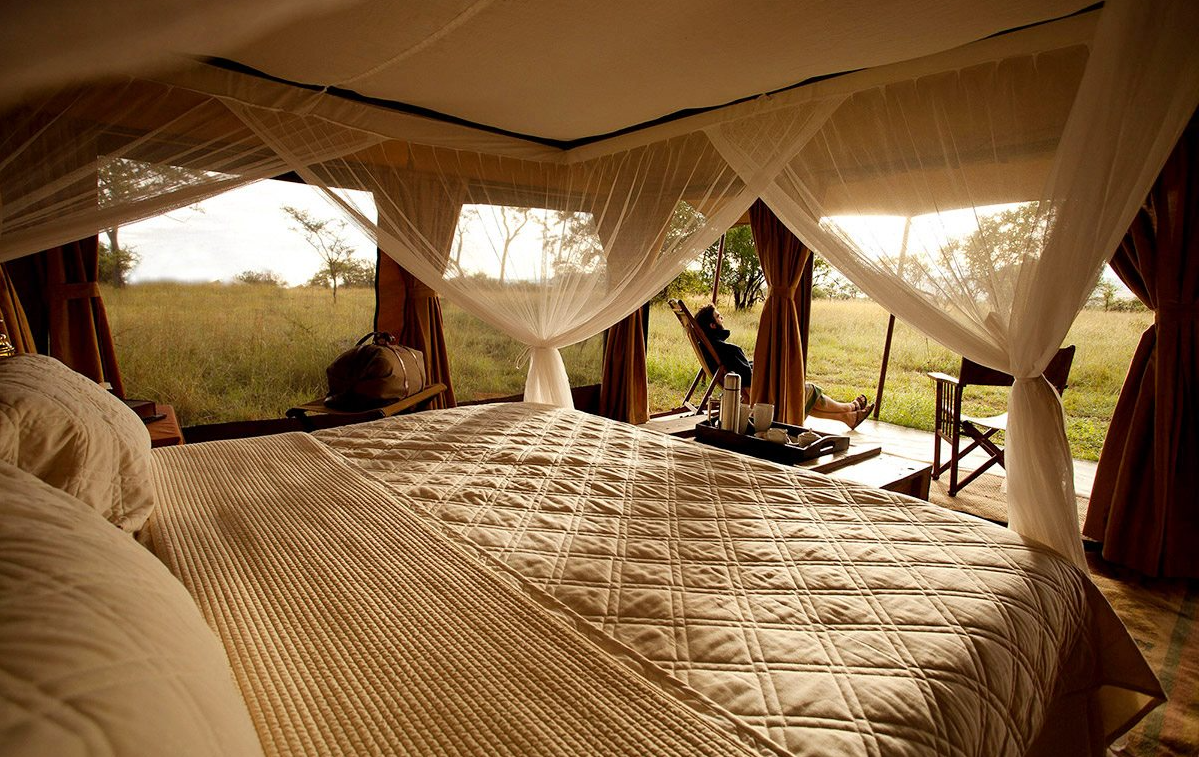
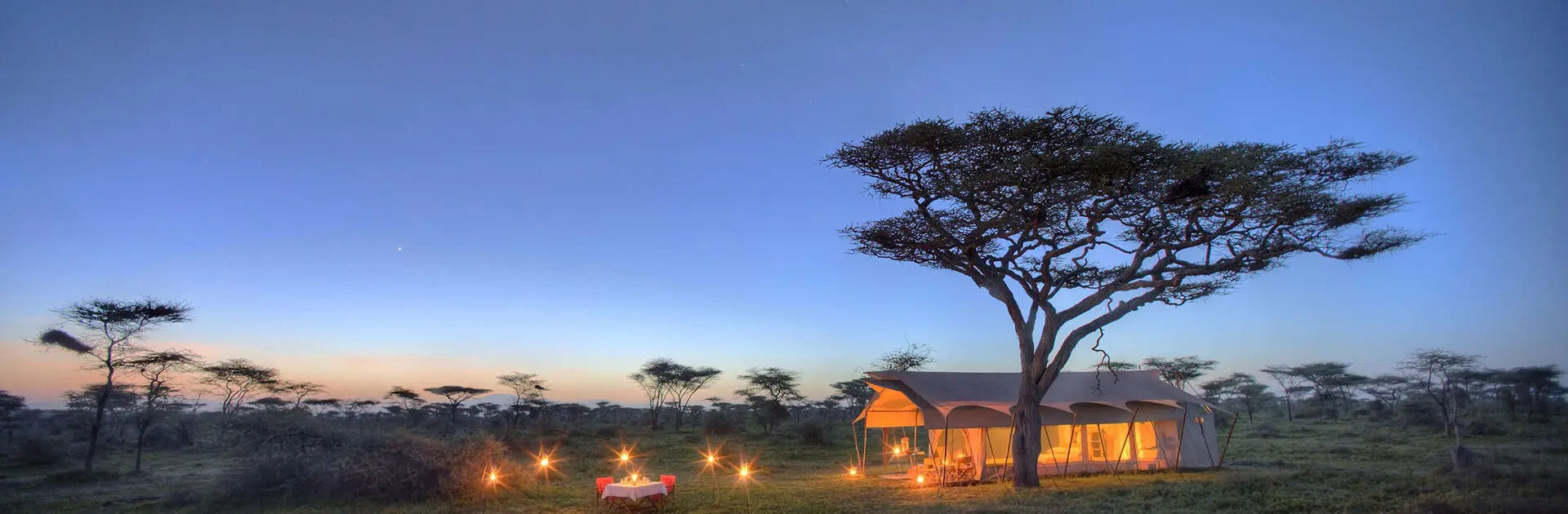
The second thing that sets Tanzania apart is the quality of the guiding and the camps. Expect tented camps and lodges with well-judged interiors, serious kitchens and staff who have worked the same concessions for years, set against landscapes that carry no hint of the effort behind them.
The northern circuit
Serengeti National Park is the centrepiece: grassland, woodland and riverine forest supporting the annual movement of well over a million wildebeest, along with hundreds of thousands of zebra and gazelle. Predator density here is among the highest anywhere on the continent.
The Ngorongoro Crater is a collapsed volcanic caldera and a UNESCO World Heritage Site. Its floor is a self-contained ecosystem of grassland, swamp, forest and lake, game viewing is unusually concentrated, and it is one of the better places in East Africa to see black rhino.
Tarangire National Park comes into its own in the dry season, when the Tarangire River draws large elephant herds into a landscape of baobabs. Lake Manyara National Park is small but layered, running from groundwater forest at the entrance gate to the alkaline lake beneath the Rift Valley escarpment.
The southern and western parks
Nyerere National Park, the former Selous Game Reserve and redesignated in 2019, is the largest national park in Africa and a UNESCO World Heritage Site. Boat safaris on the Rufiji River are its signature activity and have no equivalent on the northern circuit.
Ruaha, further west, sits where eastern and southern African species overlap, so greater and lesser kudu, sable and roan appear alongside substantial lion prides. Both parks see a fraction of the visitor numbers of the north, which is the point of going.
The Great Migration through the year
The migration is a continuous loop rather than a single event, so there is no month in which it stops. Calving takes place on the short-grass plains in the south of the ecosystem early in the year and draws heavy predator activity. The herds move north and west through the middle of the year, and the Mara River crossings in the far north are generally at their most dramatic from July to October.
Mobile camps that move with the herds place you closest to the action, and their positions change by season, which is why the timing conversation comes before the camp choice. Our guide to the Great Migration path sets out the loop in more detail.
Beyond the game drive
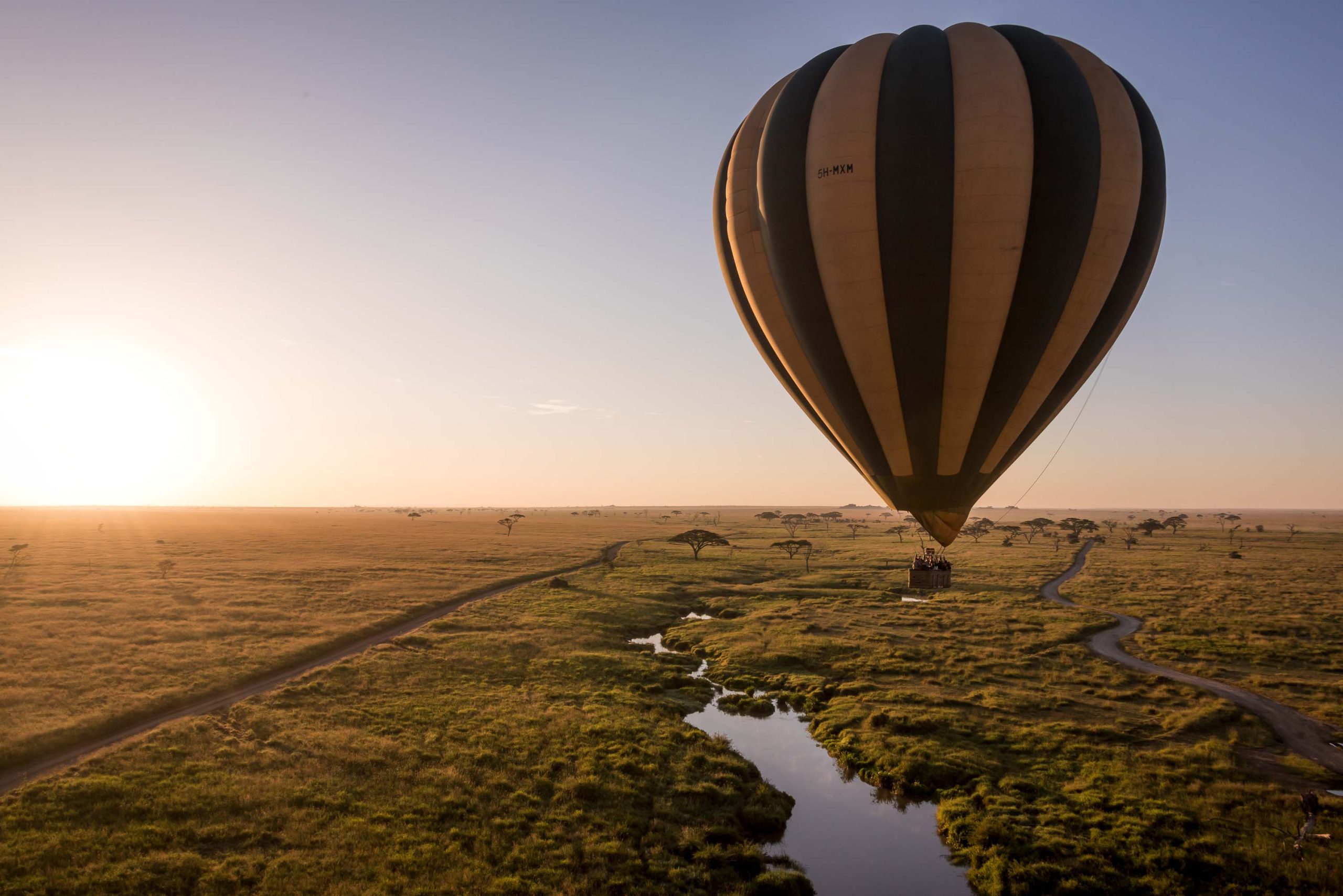
Walking safaris in Tarangire and parts of the Serengeti change the pace and the scale of what you notice, and they are led by armed, licensed guides. Hot-air balloon flights lift off over the Serengeti at first light and land to a bush breakfast. Cultural time with Maasai communities is offered by most camps on the northern circuit and is worth arranging properly rather than as a roadside stop.
Adding Zanzibar
Most Tanzania safaris finish on the coast. Zanzibar is reached by domestic flight from the safari areas, and a few nights there gives you reef diving and snorkelling, Stone Town, and the decompression that a week of early starts tends to call for. Our 10-day migration and beach itinerary shows how the two halves fit together.
When to go
June to October is the dry season and the most reliable period for game viewing, when animals concentrate around permanent water and the bush thins out. The green season from November to May brings lush landscapes, newborn game, excellent birding and lower rates, with the long rains falling roughly from March to May. Neither window is wrong; they simply suit different priorities.
Getting there
The northern circuit is usually reached through Kilimanjaro International Airport, with Arusha as the hub for road transfers and light aircraft. The southern parks are reached through Dar es Salaam. Light aircraft link the parks to one another and to the coast, and how much of your travel is flown rather than driven is one of the larger levers on both comfort and cost.
What a Tanzania luxury safari costs
Go2Africa lists Tanzania luxury safaris from around US$9,250 per person sharing. The final figure depends on the season, the camps chosen and the proportion of travel by light aircraft. Rates are quoted per person sharing, single supplements may apply, and all pricing is subject to availability and may change without notice, so treat this as a planning figure and confirm the current rate when you enquire.
Planning your Tanzania safari
Every Tanzania luxury safari here is built to order, and every tour is a Positive Impact Safari that includes a donation to a community initiative. Tanzania also combines well with Kenya, Rwanda or Uganda if you want to add a second migration destination or gorilla trekking.
Tell us when you can travel and what you most want to see, and we will shape the route around it. Plan your safari to get started.
Highlights
Photo Gallery

Additional Information
- Every Tanzania luxury safari is bespoke and built to order.
- All tours are Positive Impact Safaris and include a donation to a community initiative.
- Popular areas: Serengeti National Park, Ngorongoro Crater, Tarangire, Lake Manyara, Ruaha, Nyerere National Park and Zanzibar.
- Suggested itineraries range from 8 to 15 days.
- Prices from around US$9,250 per person sharing, as listed by Go2Africa.
- Rates are per person sharing, single supplements may apply, and all pricing is subject to availability and may change without notice.
- Combines well with Kenya, Rwanda or Uganda.