
Safaris
Safaris in Tsavo West National Park
1 safari that visits the park.
Park guide
Tsavo West National Park guide
Overview
Tsavo West National Park covers about 9,065 km² of southern Kenya, west of the Nairobi–Mombasa road. With its neighbour Tsavo East, it was declared a national park in 1948, and the two parks together form one of the largest protected wildlife areas in Africa.
Where Tsavo East is mostly flat and open, Tsavo West is volcanic, hilly and full of variety. Lava flows, cinder cones, rocky ridges and the forested Ngulia Hills rise above the bush, and on clear days Mount Kilimanjaro appears on the horizon to the southwest. Rain falling on the Chyulu Hills seeps through the porous volcanic rock and re-emerges at Mzima Springs, a chain of clear pools that also supply part of Mombasa’s drinking water.
The park reaches south to Lake Jipe on the Tanzanian border and the Taita Hills to the east. Its rugged scenery and dense bush mean game viewing takes a little more patience than in the open plains parks, but the reward is a wild, varied and uncrowded safari, often combined with Amboseli or Tsavo East.
Wildlife
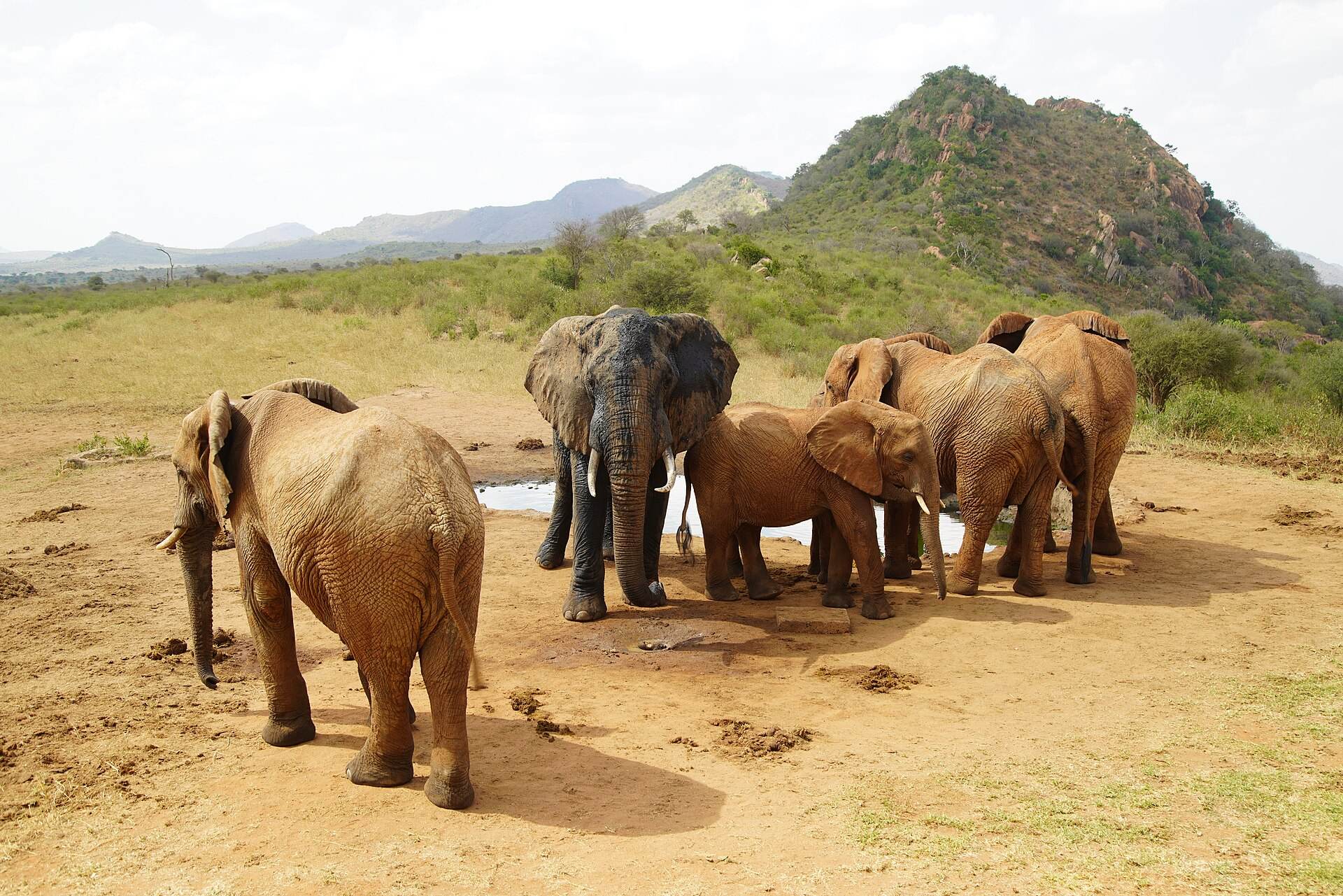
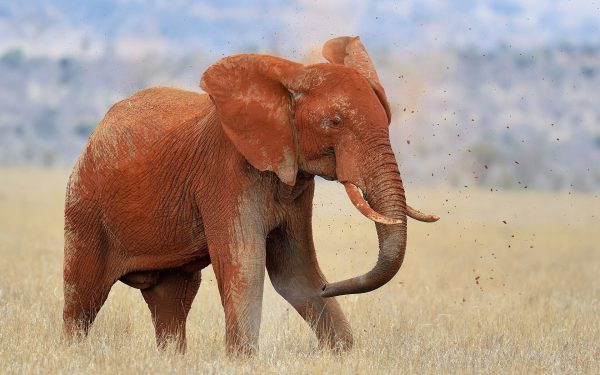
Elephants and buffalo are widespread, and lion, leopard and cheetah all live in the park, along with spotted and striped hyena. Black rhino are protected in the fenced Ngulia Rhino Sanctuary, set up in the 1980s at the foot of the Ngulia Hills, so all of the Big Five are found in Tsavo West, although rhino are not easy to see.
Plains game includes Maasai giraffe, plains zebra, Coke’s hartebeest, eland, impala and waterbuck, while dry-country specialists such as fringe-eared oryx, gerenuk and lesser kudu live in the thicker bush. Klipspringer are often seen on rocky outcrops.
At Mzima Springs, hippo and Nile crocodile live in the clear water. An underwater viewing chamber gives a rare chance to watch hippo and shoals of fish beneath the surface. Birdlife is excellent, with more than 500 species recorded across the Tsavo parks. The Ngulia Hills are also known among ornithologists for the large numbers of migrant songbirds that pass through on misty nights in November and December.
Key wildlife
Best Time to Visit
Short answer: Jun–Oct. Also good: Jan–Feb.
Peak Good Quieter
The dry season, from June to October, is the best time for game viewing. The bush thins, and animals gather at springs, rivers and waterholes. January and February are a second, shorter dry period that is also good.
The long rains usually fall from around March to May and the short rains in November and December. The landscape turns green and birdlife is at its best, but the bush becomes thicker and wildlife harder to spot.
Days are warm to hot, and nights in the hills can be cool. Malaria is present, so speak to a travel clinic about prevention before you travel.
Getting There
Tsavo West is roughly midway between Nairobi and Mombasa. Mtito Andei Gate, the busiest entrance, is about four to five hours’ drive from Nairobi on the Mombasa road. Tsavo Gate, further south, is closer to Mombasa, and the Chyulu Gate in the west links the park with Amboseli.
Moi International Airport (MBA) in Mombasa and Jomo Kenyatta International Airport in Nairobi are the main international gateways. The Madaraka Express train between Nairobi and Mombasa stops at Mtito Andei, and there are airstrips in the park, including Kilaguni, for charter flights.
Park fees are cashless and must be paid in advance through the Kenya Wildlife Service’s eCitizen system. Your safari operator or lodge will usually arrange this for you.
Fees & Access
Entrance fees
Conservation fees are set by the Kenya Wildlife Service and charged per person for a single entry of up to 24 hours. Non-resident adults pay US$80 and children aged 5–17 US$40. African citizens pay US$40 (child US$20), Kenya residents KSh 1,350 and East African citizens KSh 1,000. Children under 5 are free. A vehicle with fewer than six seats pays KSh 600 per day.
Payment is cashless and must be made in advance through KWS’s eCitizen system, usually by your safari operator or lodge. Tsavo East and Tsavo West charge separately.
Gate hours
6:00 AM - 6:00 PM
Health
Malaria risk: Moderate. Ask a travel clinic about antimalarials before you go.
Fees and gate times change. Check the latest rates with the park authority before you travel.
Things to Do
Mzima Springs is the park’s best-known attraction, with a nature trail along the pools and an underwater hide for watching hippo and fish.
The Shetani Lava Flow is a vast field of black volcanic rock near the Chyulu Hills, with caves and a moonscape that contrasts strongly with the surrounding bush.
Game drives explore the hills, plains and waterholes, with chances of elephant, lion and leopard.
Viewpoints such as Roaring Rocks and Poacher’s Lookout offer sweeping views over the Tsavo plains.
Lake Jipe, in the far south on the Tanzanian border, is a peaceful spot for birdwatching and views of Kilimanjaro.
Explore neighbouring Tsavo East and Amboseli, browse all safaris, or plan your safari with us.
Location
Where is Tsavo West National Park?
Good to know
Tsavo West National Park FAQs
How much are Tsavo West National Park fees?
Non-resident adults pay US$80 and children aged 5–17 pay US$40 per entry of up to 24 hours. African citizens, Kenya residents and East African citizens pay lower rates. Payment is cashless through KWS’s eCitizen system.
What is special about Mzima Springs?
Mzima Springs is a chain of clear pools fed by underground water from the Chyulu Hills. An underwater viewing chamber lets you watch hippo and fish beneath the surface.
Can you see rhino in Tsavo West?
Black rhino are protected in the fenced Ngulia Rhino Sanctuary. They are shy and live in thick bush, so sightings are possible but not guaranteed.
How do you get to Tsavo West?
Mtito Andei Gate is about four to five hours by road from Nairobi on the Mombasa road. You can also drive from Mombasa, take the Madaraka Express train to Mtito Andei, or charter a flight to an airstrip in the park.
Can you combine Tsavo West with Amboseli?
Yes. Tsavo West and Amboseli are a classic combination, linked by road through the Chyulu Gate.
When is the best time to visit Tsavo West?
The dry season from June to October is best for game viewing, with a second dry spell in January and February. The rainy months are green and excellent for birds.
Keep exploring
More parks in Kenya
 National Park
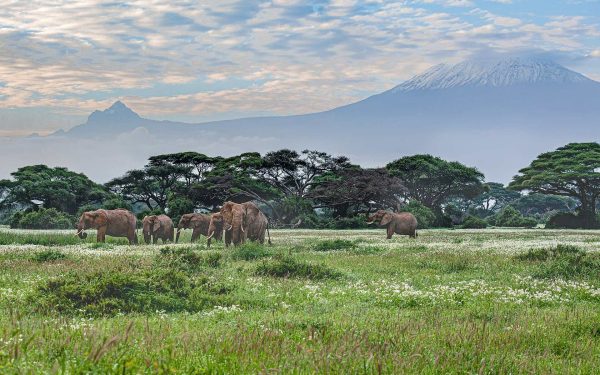
Amboseli National Park
Kenya's iconic park offering unrivalled views of Mount Kilimanjaro as a backdrop to large elephant herds.
Explore park →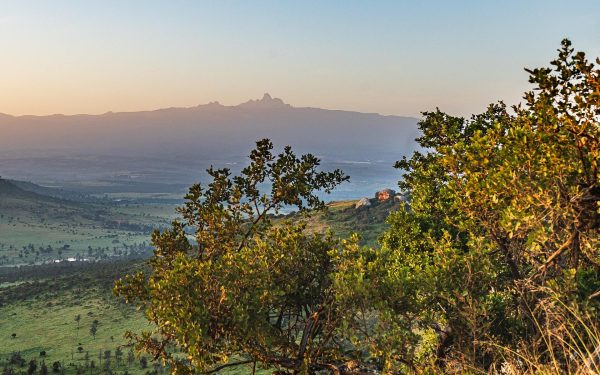 Conservation AreaBig Five
Laikipia Plateau
Kenya's wildlife heartland — a vast mosaic of private ranches and conservancies supporting more wildlife than any other…
Explore park →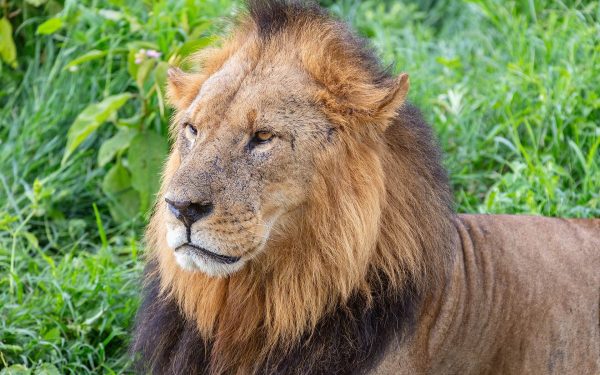 National Park
Lake Nakuru National Park
A compact Kenyan park famous for its flamingo-lined alkaline lake and excellent rhino conservation.
Explore park →Begin your journey
Ready to experience Tsavo West National Park?
Tell us when you want to travel and what you want to see, and we will match you with the right safari.
Plan your safari