
Safaris
Safaris in Ngorongoro Crater
2 safaris that visit the park.
Park guide
Ngorongoro Crater guide
Overview
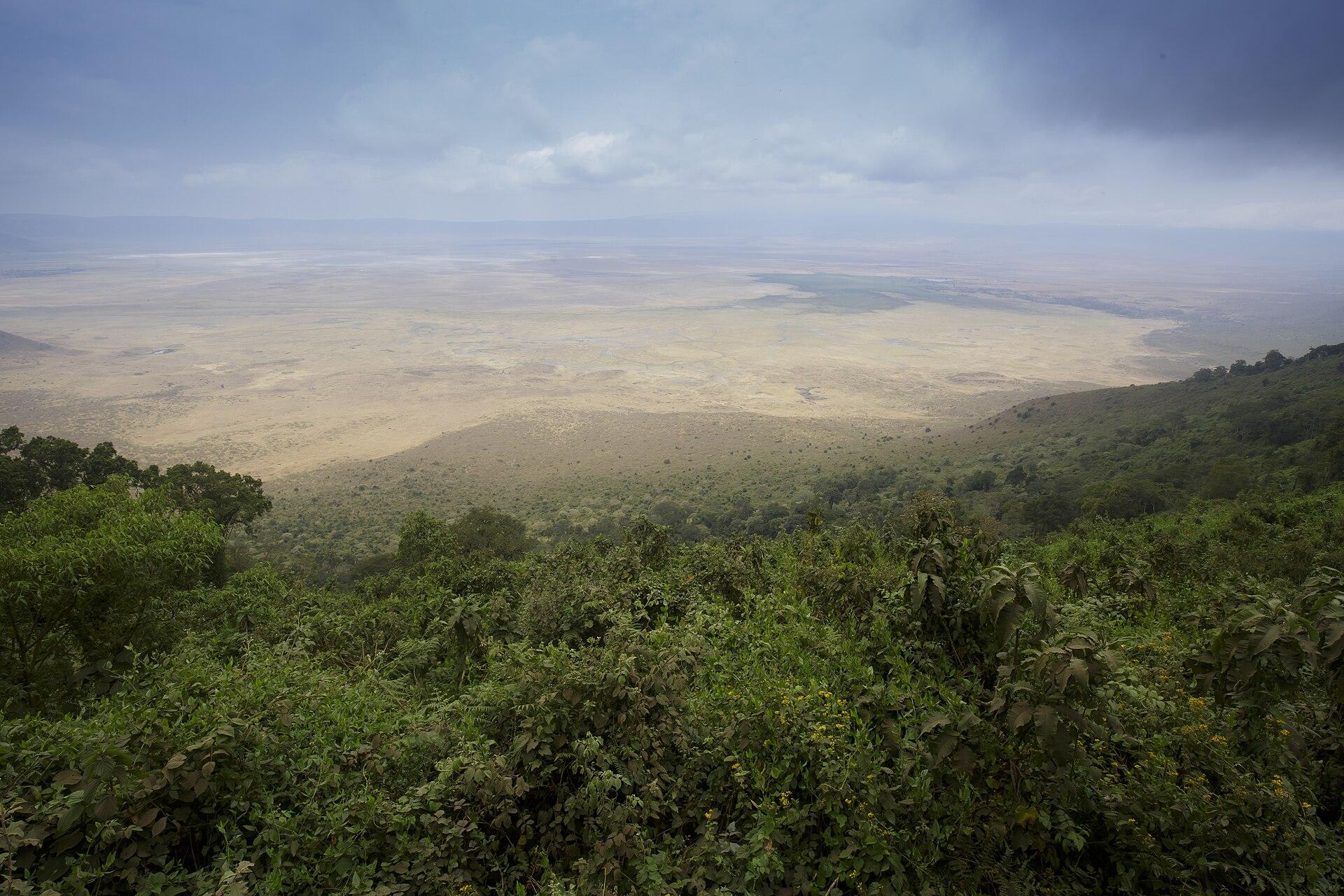
Standing on the rim of the Ngorongoro Crater for the first time is one of those moments that stays with you. Some 600 metres below, the caldera floor spreads out like a private world of grassland, swamp, forest and a shallow soda lake, with herds of wildebeest and zebra moving across it in slow lines. UNESCO describes Ngorongoro as the world’s largest unbroken caldera, and it is easy to see why the crater is regarded as one of the great natural wonders of the planet.
The crater is only part of the story. It sits within the Ngorongoro Conservation Area, an 8,094 km² expanse of highland forest, open plains and further volcanic craters stretching from the edge of the Serengeti to the eastern arm of the Great Rift Valley. Established in 1959, it was designed as a multiple land-use area, where wildlife shares the land with semi-nomadic Maasai pastoralists and their cattle. That makes it different from Tanzania’s national parks, and it gives the area a strong cultural character alongside its wildlife.
The conservation area also protects some of the most important sites in the story of human evolution. Olduvai Gorge, a 14 km ravine on the western plains, and the Laetoli footprints, dated to around 3.6 million years ago, are both within its boundaries, which is why UNESCO has listed Ngorongoro for both its natural and its cultural value.
Lodges are spread along the crater rim, where the views are extraordinary and the nights are cool, and in the farming highlands around Karatu. Most travellers spend one or two nights here as part of a northern Tanzania circuit, pairing the crater with Tarangire, Lake Manyara and the Serengeti.
Wildlife
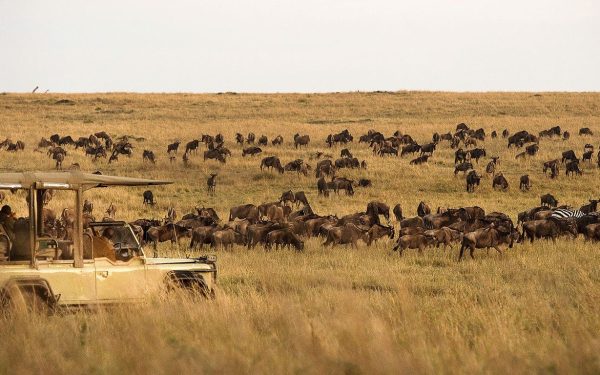
The crater’s steep walls and permanent water create one of the densest concentrations of wildlife in Africa. UNESCO puts the population of the wider conservation area at some 25,000 large animals, mostly grazers, together with one of the highest densities of large predators on the continent. On a single morning on the crater floor you can watch wildebeest, zebra, buffalo, Grant’s and Thomson’s gazelle, eland and warthog, with spotted hyena and golden jackals never far away.
Lion are the stars. Prides are often seen resting in the open or watching the herds from the edge of the grass, and the crater’s relatively small area makes them easier to find than in larger parks. Leopard are more elusive and are usually seen in the forested areas and on the rim. Servals hunt in the long grass, and cheetah pass through occasionally.
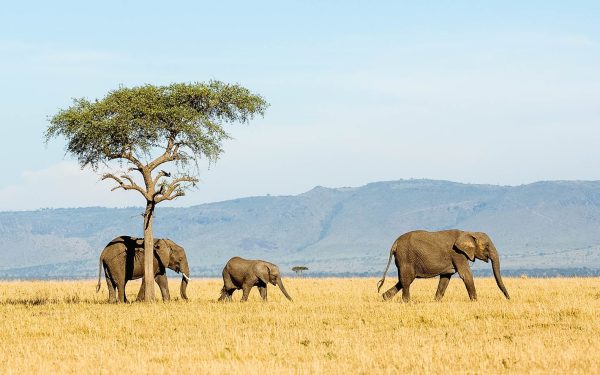
Ngorongoro is also one of the best places in East Africa to see the critically endangered black rhino. The small population on the crater floor is closely protected, and although sightings are never guaranteed, the open landscape gives you a real chance with a good guide and binoculars. Elephant visit the Lerai Forest and the swamps, most of them older bulls carrying impressive tusks. Hippo wallow in the Ngoitokitok springs, and flamingos gather on Lake Magadi when water levels suit them.
Some species are notable by their absence: giraffe and topi are not found on the crater floor, largely because of the steep descent. Look for them instead on the surrounding plains and in the Serengeti. Birdlife is rich, with UNESCO recording around 500 species across the conservation area, including kori bustard, crowned crane and ostrich on the crater floor.
Key wildlife
All of the Big Five (lion, leopard, elephant, rhino and buffalo) live in Ngorongoro Crater.
Best Time to Visit
Short answer: Jun–Oct. Also good: Dec–Mar.
Peak Good Quieter
Because the crater holds water and wildlife all year, Ngorongoro is worth visiting in any month. The dry season from June to October is the most popular time, with clear skies, short grass and easy game viewing. It is also the busiest season, so an early descent is the best way to enjoy the crater floor before most vehicles arrive.
From December to March, the short-grass plains of the southern conservation area around Ndutu become the calving grounds of the Serengeti migration. Combining a stay near Ndutu with a day in the crater is one of the finest safaris in Africa at this time of year, with green landscapes, newborn wildebeest and intense predator activity.
The long rains in April and May bring the quietest period, when the crater can feel almost private. The roads are slower, but the scenery is at its most lush. Whatever the month, remember that the rim sits at well over 2,000 metres: early mornings and evenings are cold, and a warm jacket is essential.
Getting There
Most visitors fly into Kilimanjaro International Airport (JRO) and travel on from Arusha. The drive from Arusha to the crater rim takes around four hours on a tarred road through Mto wa Mbu and Karatu, and it is often broken with a stop at Tarangire or Lake Manyara along the way.
If you prefer to fly, the nearest airstrip is Lake Manyara Airstrip (LKY), served by light aircraft from Arusha and the Serengeti. Your guide will meet you there for the drive up through the highlands, which takes around an hour and a half to the crater rim. Ndutu, in the south of the conservation area, also has its own airstrip for the calving season.
Visitors enter the conservation area at Lodoare Gate. Descent to the crater floor is by four-wheel-drive vehicle only, on steep roads that are part of the adventure, and permits are valid for a half-day visit to the crater floor.
Fees & Access
Entrance fees
Fees are set by the Ngorongoro Conservation Area Authority and charged per person per 24 hours. Non-East African adults (16 and over) pay US$70.80, children aged 5–15 pay US$23.60, and under-5s enter free.
To drive down into the crater, each vehicle also pays a crater service fee of US$295 per trip. Guests staying at lodges and camps inside the conservation area pay a concession fee of US$59 per adult per night (US$11.80 per child), usually included in the lodge rate. Fees are normally arranged by your safari operator.
Gate hours
Gates 06:00–18:00. Crater descents in daylight hours only.
Health
Malaria risk: Low. Ask a travel clinic about antimalarials before you go.
Fees and gate times change. Check the latest rates with the park authority before you travel.
Things to Do
Crater game drives are the main event. Leave early with a packed breakfast to reach the crater floor at first light, when predators are active and the light is soft, and take a picnic lunch by one of the designated sites.
Crater rim and highland walks are possible with an armed ranger. Walks along the rim, or a hike down into the nearby Empakaai Crater with its deep lake, show a completely different side of the highlands.
Olduvai Gorge is a fascinating stop between the crater and the Serengeti. The museum explains the fossil discoveries that helped shape our understanding of human origins, with views over the gorge itself.
Maasai culture. The Maasai have grazed their cattle here for generations, and a visit to one of the cultural bomas offers an insight into their way of life. Ask your guide to arrange a respectful visit rather than a stop by the roadside.
The Karatu highlands are dotted with coffee farms and country lodges, and make a peaceful base with walks, farm visits and long lunches. Browse our Tanzania luxury safari and migration and beach safari for itineraries that include the crater, see all our safaris, or plan your safari with us.
Location
Where is Ngorongoro Crater?
Good to know
Ngorongoro Crater FAQs
How much does it cost to visit Ngorongoro Crater?
Non-East African adults pay US$70.80 per 24 hours to enter the Ngorongoro Conservation Area and children aged 5–15 pay US$23.60; under-5s are free. Each vehicle that drives down into the crater also pays a crater service fee of US$295 per trip. These fees are normally included in a safari package.
Can you see the Big Five in Ngorongoro Crater?
Yes. Lion, elephant, buffalo and leopard are all present, and the crater is one of the best places in Tanzania to see endangered black rhino. Leopards are more often seen in the forests on the rim than on the crater floor, and no sighting is ever guaranteed.
How long do you need at Ngorongoro Crater?
Most visitors spend one full day or a long half-day game drive on the crater floor, with one or two nights on or near the rim. Add a day if you want to visit Olduvai Gorge or explore the highlands on foot.
When is the best time to visit Ngorongoro Crater?
The crater has resident wildlife and is good all year. The dry season from June to October gives easier game viewing but is busiest, while December to March is green, with calving on the nearby plains. Mornings on the rim are cold, so pack warm layers.
How do you get to Ngorongoro Crater?
The crater rim is about four hours by road from Arusha via Lodoare Gate, or roughly an hour and a half from Lake Manyara Airstrip (LKY), which has scheduled light-aircraft flights. International travellers usually arrive at Kilimanjaro International Airport (JRO).
Is there malaria at Ngorongoro Crater?
The risk on the cool, high crater rim is low, but most Ngorongoro itineraries include lower-lying parks such as Tarangire, Lake Manyara or the Serengeti where malaria is present. Ask a travel clinic about prevention before you travel.
Keep exploring
More parks in Tanzania
 National Park
Lake Manyara National Park
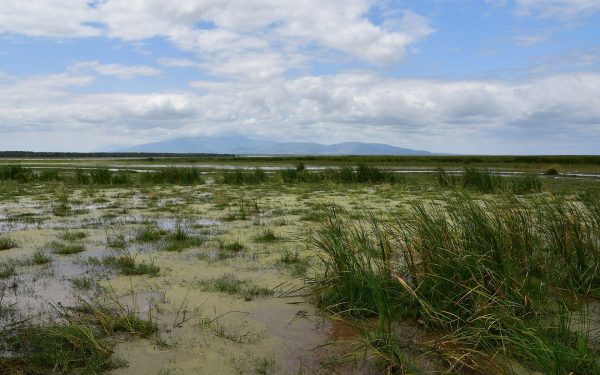
A compact Tanzanian gem famous for tree-climbing lions and vast flamingo flocks against the dramatic Rift Valley escarpment.
Explore park → National Park
Nyerere National Park
Africa's largest national park — formerly the Selous Game Reserve — a vast and remote wilderness in southern…
Explore park → National ParkBig Five
Serengeti National Park
Tanzania's most iconic park and stage for the Great Migration — the largest overland wildlife movement on the…
Explore park →Begin your journey
Ready to experience Ngorongoro Crater?
Tell us when you want to travel and what you want to see, and we will match you with the right safari.
Plan your safari