

The term “Big Five” appears on every safari brochure in Africa, but it does not mean what most people assume. The five animals, lion, leopard, African elephant, Cape buffalo and rhinoceros, were not grouped together for their size, their rarity or their photogenic qualities. They were grouped together because they were considered the most dangerous animals to hunt on foot. That is the origin of the phrase, and understanding it changes how you think about encountering them.
Today the term belongs to wildlife tourism and conservation rather than hunting. But the animals themselves have not changed. All five are genuinely formidable, all five require a competent guide and a patient approach to see at their best, and all five are present in South Africa in numbers that make it one of the most reliable Big Five destinations on the continent.
Where the term “Big Five” comes from
The phrase dates to the colonial era of big-game hunting in Africa, broadly the late 19th and early 20th centuries. Hunters, most of them European, used it to describe the five animals that posed the greatest danger and difficulty when pursued on foot. The classification had nothing to do with body size: hippos, crocodiles and giraffes are heavier or taller than some of the Big Five, but they did not make the list. What defined the group was the combination of aggression when threatened, physical power, and the particular danger of tracking them through dense vegetation without the advantage of a vehicle.
As safari tourism replaced hunting across Africa through the latter half of the 20th century, the phrase transferred to photography and wildlife watching. The five animals remained the same. The goal changed from a trophy to a sighting, and in doing so, the term shed most of its original meaning while keeping all of its marketing power.
The five animals: what to know before you go
Lion
The lion is the most socially complex of the Big Five and, for most first-time safari visitors, the most affecting encounter. Lions live in prides, family groups that typically include several related females, their cubs, and one or more adult males. They are largely nocturnal hunters, which is why early morning game drives (when lions are often still active from a night hunt) and evening drives (when they begin to move) produce the best sightings. Mid-morning, you will most likely find them asleep in the shade.
The key to a good lion sighting is not finding them, experienced guides know where to look, but patience once you do. A pride at a kill, or a male patrolling his territory at dawn, is a different experience from a sleeping lion at midday. Both are real. One is more memorable.
Best reserves in South Africa: Kruger National Park, Sabi Sand Game Reserve, Timbavati Private Reserve, Madikwe Game Reserve.
Leopard
The leopard is the hardest of the Big Five to find and the most rewarding when you do. Solitary, largely nocturnal and superbly camouflaged, a leopard in thick vegetation is invisible until it moves. The Sabi Sand Game Reserve in South Africa’s Greater Kruger is the exception to most of what makes leopards difficult: decades of habituation to safari vehicles means that Sabi Sand leopards go about their lives — resting in trees, patrolling riverine thickets, marking territory, with little apparent interest in the vehicles watching them. On a five-night stay, most guests see leopard several times. This is not typical of leopard behaviour elsewhere in Africa.
On an evening drive, a spotlight-lit leopard carrying prey up a marula tree is one of the most visceral wildlife sightings in Africa. Worth the trip on its own.
Best reserves in South Africa: Sabi Sand Game Reserve (unmatched for leopard sightings), MalaMala, Londolozi, Singita Sabi Sand.
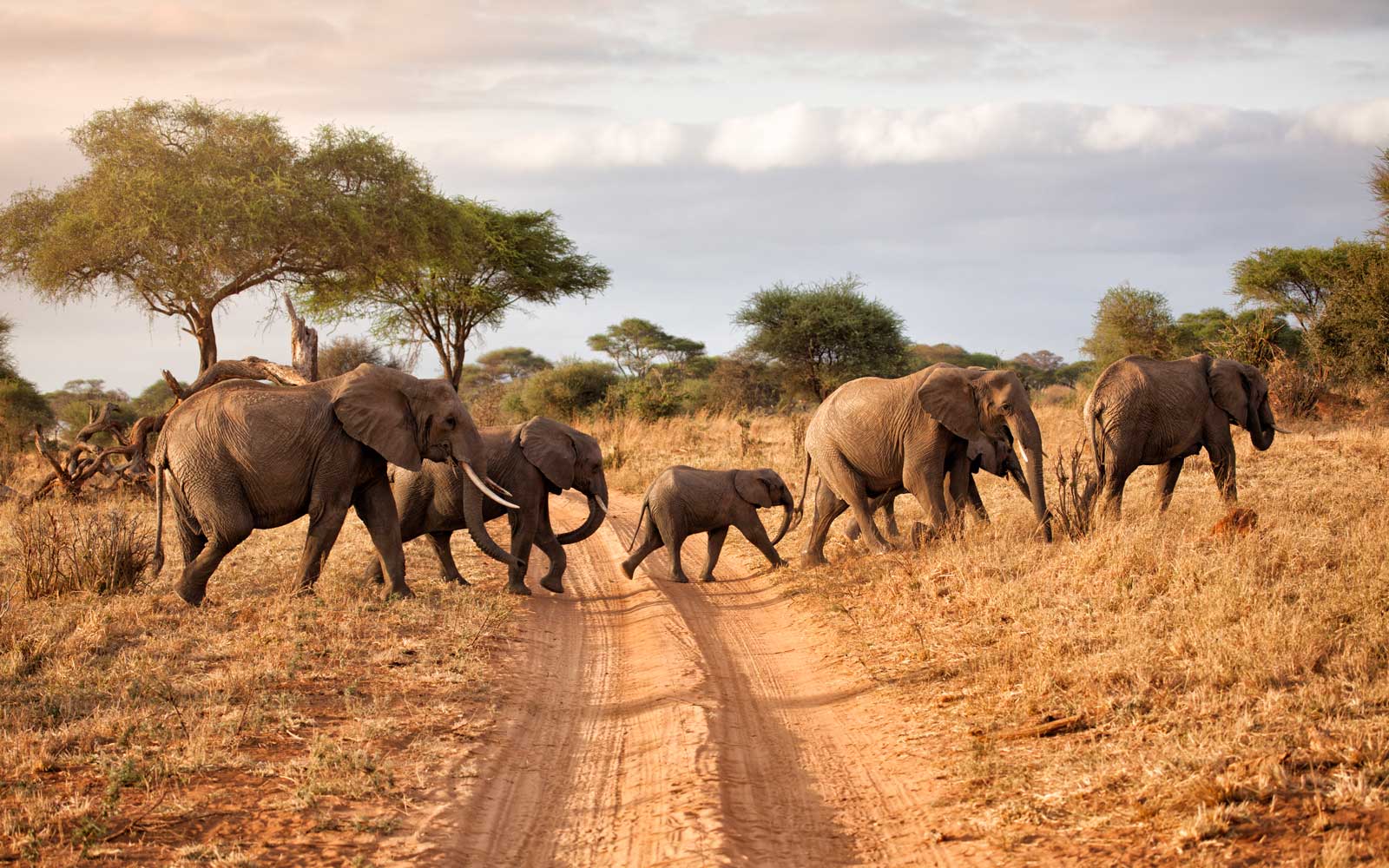
African elephant
The African elephant is the largest land animal on earth, and a close encounter with one in the wild is a recalibrating experience. An adult bull elephant standing three metres from an open game-drive vehicle, apparently unbothered, forces a genuine reckoning with scale. Guides read elephant body language carefully, a relaxed elephant feeding is a different animal from a cow with a calf that feels cornered and position the vehicle accordingly.
Elephant are generally the easiest of the Big Five to find: they move in herds, they need large quantities of water daily, and they leave unmistakable tracks. In Kruger, large breeding herds are a near-daily sighting. The reserve is home to one of the largest elephant populations in Africa, with numbers that the park manages carefully against the carrying capacity of the land.
Best reserves in South Africa: Kruger National Park, Addo Elephant National Park (Eastern Cape, also one of the few places on earth where you can see the Big Seven), Sabi Sand.
Cape buffalo
The Cape buffalo is the most consistently underestimated of the Big Five. It looks, to the uninitiated eye, like a large cow. It is not. Buffalo are responsible for more hunter fatalities historically than any other animal in the group, and they remain unpredictable when injured or cornered. A large herd of buffalo, several hundred animals moving through open grassland, raising a dust cloud visible from two kilometres, is one of the more elemental sights in African wildlife. Old solitary bulls, known as dagga boys, are particularly dangerous and are treated with great respect by experienced guides.
Buffalo are a reliable sighting across most Big Five reserves: they congregate around water, they form large, visible herds, and they do not hide. What they lack in elusiveness they make up for in atmosphere.
Best reserves in South Africa: Kruger National Park, Sabi Sand, Hluhluwe-iMfolozi Park.
Rhinoceros
South Africa is home to both white and black rhino, and the distinction matters. White rhino are grazers, wide-mouthed, relatively placid, often seen in pairs or small groups on open grassland. Black rhino are browsers, hook-lipped, solitary, fast-moving and significantly more aggressive. A black rhino sighting in the wild is rarer and more charged than a white rhino encounter, though both are increasingly threatened by poaching.
South Africa holds the largest rhino population in the world. The Kruger National Park and the private reserves of the Greater Kruger are central to the country’s rhino conservation effort. Rhino sightings are less reliable than elephant or buffalo, they cover large distances, they are often found in dense bush, and black rhino in particular are difficult to approach, but a close encounter, particularly on a walking safari, is among the most powerful wildlife experiences in Africa.
Best reserves in South Africa: Kruger National Park, Sabi Sand, Hluhluwe-iMfolozi Park (where the white rhino was saved from extinction in the 1960s), Madikwe Game Reserve.
Where to see the Big Five in South Africa
South Africa is one of the most reliable Big Five destinations in Africa, with a combination of national parks, private reserves and well-developed guiding infrastructure that makes it the strongest choice for a first safari and a consistently rewarding return destination.
Sabi Sand Game Reserve
The Sabi Sand is the gold standard for Big Five game viewing in South Africa. Sharing an unfenced 50-kilometre border with Kruger, the 65,000-hectare reserve has no boundary that prevents animals from moving between the two areas. Lion, leopard, elephant, rhino and buffalo are all resident and regularly seen. The leopard sightings here are, by most measures, the best in Africa, decades of habituation to vehicles have produced a population that tolerates close approach, allowing prolonged observation of natural behaviour. On a five-night stay in the Sabi Sand, seeing all five species is realistic. Seeing all five in a single day is not unusual.
Kruger National Park
Kruger National Park is one of Africa’s great wildlife reserves and the most accessible Big Five destination for South African residents. The park covers nearly two million hectares of Lowveld bushveld and is home to more than 140 mammal species, including all of the Big Five. Lion and elephant are reliable sightings; leopard requires more time and a good guide (or significant luck on a self-drive); rhino numbers have been affected by poaching pressure but remain present. The self-drive experience in Kruger, your own vehicle, your own pace, a network of tar and gravel roads crossing the park, is genuinely world-class and significantly cheaper than a private reserve. The trade-off is that off-road driving and night drives are not permitted on public roads.
Other strong South African options
Hluhluwe-iMfolozi Park in KwaZulu-Natal is South Africa’s oldest proclaimed game reserve and the place where the white rhino was rescued from near-extinction in the 1960s under Operation Rhino. It remains excellent for rhino and offers solid Big Five game viewing at lower cost than the Greater Kruger. Madikwe Game Reserve in the North West Province is malaria-free and particularly well-suited to families, with strong Big Five numbers and good guiding.
How to make the most of a Big Five safari
The mindset that produces the best safari experience is one of curiosity rather than checklist completion. A guide who can explain why a buffalo herd is moving, what a lion’s posture communicates, or how a leopard selects a tree to cache prey in — that knowledge turns a sighting into an experience that stays with you. The Big Five framework is a useful way in, but the guides who work these reserves think in ecosystems, not lists.
Practically: give yourself at least three nights in a single reserve. Two nights is too short for the rhythm of safari to settle. Five nights in the Sabi Sand, with four morning drives and four evening drives, gives you eight chances to find each of the five species, and enough time between drives to absorb what you have seen.
Questions about the Big Five
Are the Big Five the most dangerous animals in Africa?
By kill count, no. Hippos, crocodiles and mosquitoes are responsible for far more human deaths annually than any of the Big Five. The classification was always about the danger to hunters pursuing them on foot, not statistical threat to humans generally. On a guided safari in a vehicle or on a walking safari with a professional guide, the risk is managed and minimal.
Can you see all Big Five in one day?
In the Sabi Sand, yes — this is a realistic outcome on any given day. In Kruger on a self-drive, all five in one day is possible but requires significant time on the roads and some luck. In most other reserves, all five in a single day is unlikely but not impossible.
Which of the Big Five is hardest to see?
Outside the Sabi Sand, the leopard. Inside the Sabi Sand, the black rhino — because white rhino are more common and more visible, and true black rhino sightings require specific conditions and a guide who knows their range. The answer varies by reserve.
Plan a Big Five safari in South Africa
South Africa offers the most accessible and reliable Big Five experience in Africa, from self-drive Kruger to the exclusive private lodges of the Sabi Sand. Where you go depends on your budget, your time and what kind of experience you are after.