
Safaris
Safaris in Rwanda
We have no itinerary listed for Nyungwe Forest National Park yet. These safaris explore other parts of Rwanda.
Park guide
Nyungwe Forest National Park guide
Overview
Nyungwe National Park in southwest Rwanda protects one of the oldest and best-preserved montane rainforests in Africa. Covering about 1,019 km² of steep, forested hills and valleys, it was declared a national park in 2004 and is managed by the Rwanda Development Board in partnership with African Parks.
The forest climbs from around 1,600 metres to almost 3,000 metres above sea level, and its streams feed both the Nile and the Congo river basins. Mist often hangs over the treetops, and the cool, damp climate supports giant tree ferns, orchids and towering mahogany and other hardwood trees.
Nyungwe is Rwanda’s top destination for chimpanzee tracking and forest walks, and it pairs naturally with gorilla trekking in Volcanoes National Park and a savannah safari in Akagera National Park. The shores of Lake Kivu, a few hours to the north, are a popular place to relax between activities.
Wildlife
Nyungwe is home to 13 primate species, about a quarter of all the primate species in Africa. Chimpanzees are the main attraction, and habituated communities can be tracked with park guides. The forest is also known for large troops of Rwenzori black-and-white colobus, as well as L’Hoest’s monkeys, grey-cheeked mangabeys, silver monkeys and red-tailed monkeys.
Other mammals are shy and seldom seen in the dense forest, but include duikers, bushpigs, serval and golden cats.
Birdlife is exceptional, with more than 300 species recorded, including many species found only in the Albertine Rift mountains, such as the Rwenzori turaco and several sunbirds and warblers. The forest is also rich in butterflies, orchids and other plants.
Key wildlife
Best Time to Visit
Short answer: Jun–Aug. Also good: Dec–Feb.
Peak Good Quieter
Nyungwe can be visited year-round, but it is one of the wettest places in Rwanda. The drier months, from about June to August and from December to February, make trails less muddy and are generally the most comfortable time to visit.
The rainy seasons, from about March to May and from September to November, bring heavy showers, but the forest is at its most lush, and many birds and flowering plants are at their best.
Because of the altitude, days are mild and nights can be cold. Bring a rain jacket, warm layers and sturdy walking shoes at any time of year.
Getting There
Most visitors arrive at Kigali International Airport (KGL). The drive from Kigali to Nyungwe takes about five to six hours on good tarred roads, passing through Huye, Rwanda’s former royal capital, and its museums.
Scheduled domestic flights from Kigali to Kamembe Airport near Lake Kivu, in the far southwest, cut the journey to about an hour, followed by a road transfer to the park.
The main road through the park, between Huye and Rusizi, offers forest views and access to trailheads and the canopy walkway.
Fees & Access
Park entry covers the regular nature trails, including waterfall walks. Chimpanzee tracking, the canopy walkway, guided birding and other primate treks are charged separately and include a guide. Chimpanzee tracking is limited to small groups and is not open to children under 15, so book well in advance.
Entrance fees
International visitors pay a park entry fee of US$100 per adult and US$50 per child aged 6–12 for a day visit or the first night. The second and third nights are charged at half the rate (US$150 for two nights, US$200 for three), and the fourth to seventh nights are free. Foreign residents of Rwanda and the EAC and other African citizens pay US$60 per adult, and Rwandan and EAC citizens RWF 10,000. Entry covers the regular nature trails, including waterfall walks.
On the 2025–2026 price list, chimpanzee tracking costs US$150 per international visitor (minimum age 15), and the canopy walkway, guided birding and other primate treks US$40, all including a guide. Confirm current rates when booking.
Gate hours
6:00 AM - 5:00 PM
Health
Malaria risk: Low. Ask a travel clinic about antimalarials before you go.
Fees and gate times change. Check the latest rates with the park authority before you travel.
Things to Do
Chimpanzee tracking sets out early in the morning, following trackers through the forest to find a habituated chimpanzee community.
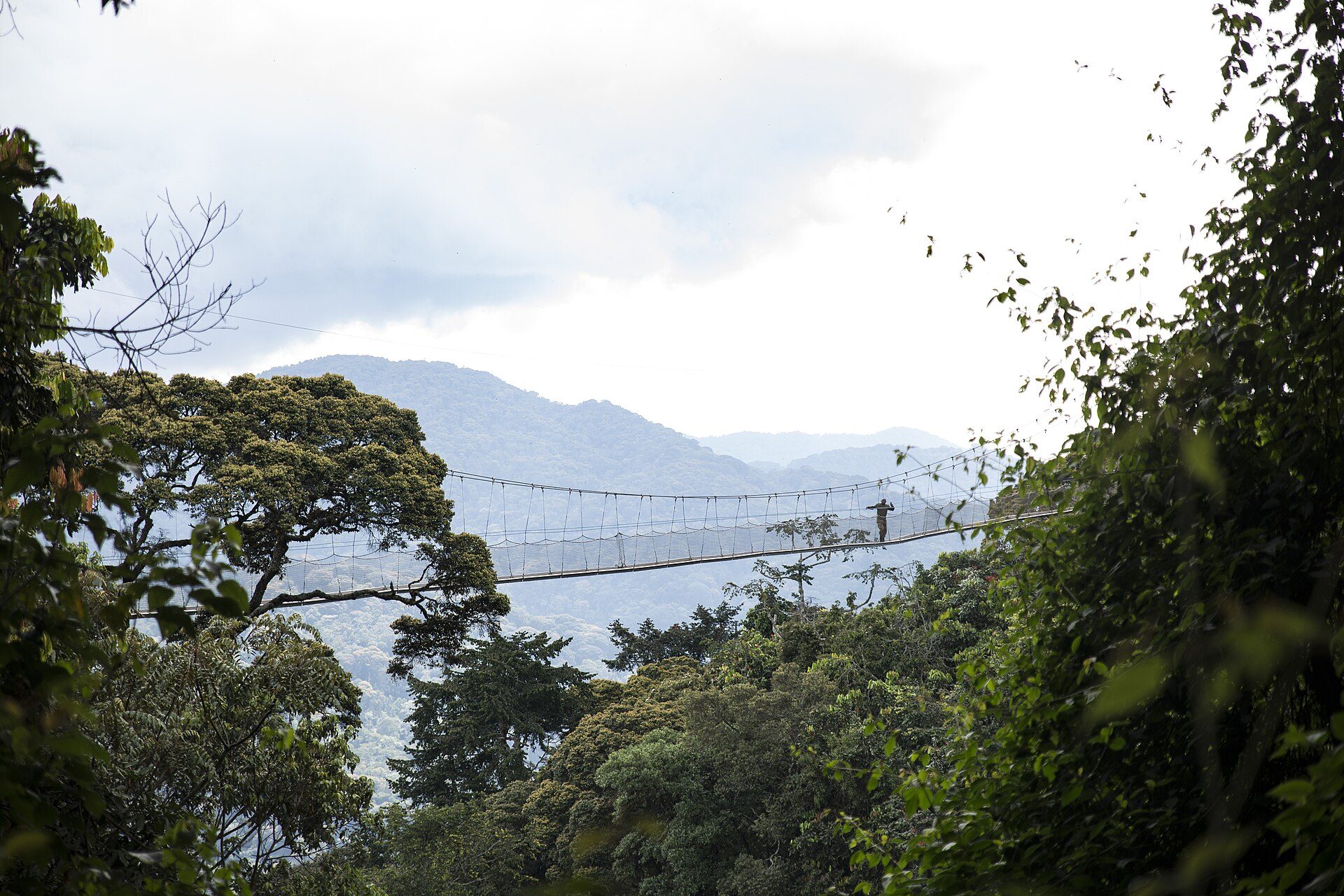
The canopy walkway is a suspension bridge strung high above a forested valley, offering a bird’s-eye view of the treetops.
Hiking on a network of marked trails leads through the forest to waterfalls, viewpoints and swamps.
Colobus and monkey treks visit the large troops of black-and-white colobus and other primates.
Birding walks with specialist guides are rewarding for those hoping to see Albertine Rift endemics.
Tea plantations on the forest edge make for a scenic visit to learn about one of Rwanda’s main exports.
Explore Rwanda’s other parks, such as Volcanoes and Akagera, browse all safaris, or plan your safari with us.
Location
Where is Nyungwe Forest National Park?
Good to know
Nyungwe Forest National Park FAQs
How much are Nyungwe National Park fees?
International visitors pay US$100 per adult and US$50 per child aged 6–12 for a day visit or the first night, with reduced rates for the second and third nights. Chimpanzee tracking (US$150) and the canopy walkway (US$40) are charged separately.
How much does chimpanzee tracking cost in Nyungwe?
On the 2025–2026 price list, chimpanzee tracking costs US$150 per international visitor, including a guide. It is limited to small groups, and children under 15 are not allowed.
What is the Nyungwe canopy walkway?
The canopy walkway is a suspension bridge high above a forested valley, giving views over the treetops. It costs US$40 per international visitor, including a guide.
How many primates live in Nyungwe?
Nyungwe is home to 13 primate species, including chimpanzees, Rwenzori black-and-white colobus, L’Hoest’s monkeys and grey-cheeked mangabeys.
How do you get to Nyungwe?
The drive from Kigali takes about five to six hours on tarred roads. Scheduled domestic flights to Kamembe Airport, followed by a road transfer, are quicker.
When is the best time to visit Nyungwe?
Nyungwe can be visited year-round. June to August and December to February are drier, with less muddy trails. Bring rain gear in any season.
Keep exploring
More parks in Rwanda
 National ParkBig Five
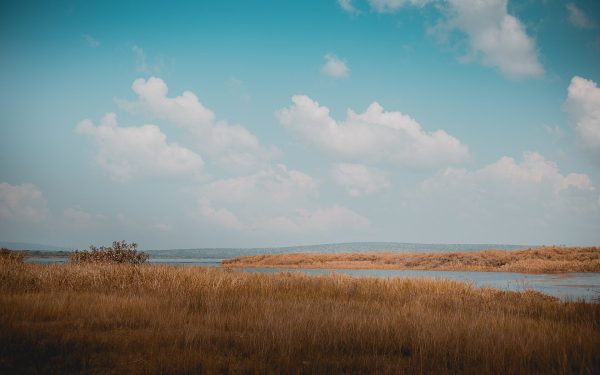
Akagera National Park
Rwanda's only Big Five savanna park — a remarkable rewilding success story in the land of a thousand…
Explore park →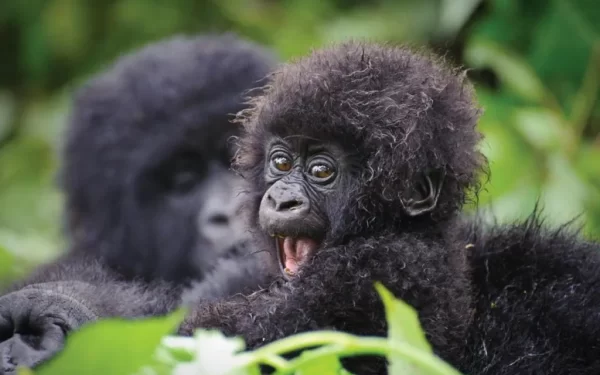 National Park
Volcanoes National Park
Rwanda's premier park protecting endangered mountain gorillas on the misty slopes of the Virunga volcanoes.
Explore park →Begin your journey
Ready to experience Nyungwe Forest National Park?
Tell us when you want to travel and what you want to see, and we will match you with the right safari.
Plan your safari