
Kruger National Park and the Sabi Sand Game Reserve share an unfenced border and the same wildlife. A lion that slept in the Sabi Sand last night may be in Kruger this morning. The two areas are ecologically one system, and experientially they are completely different safaris.
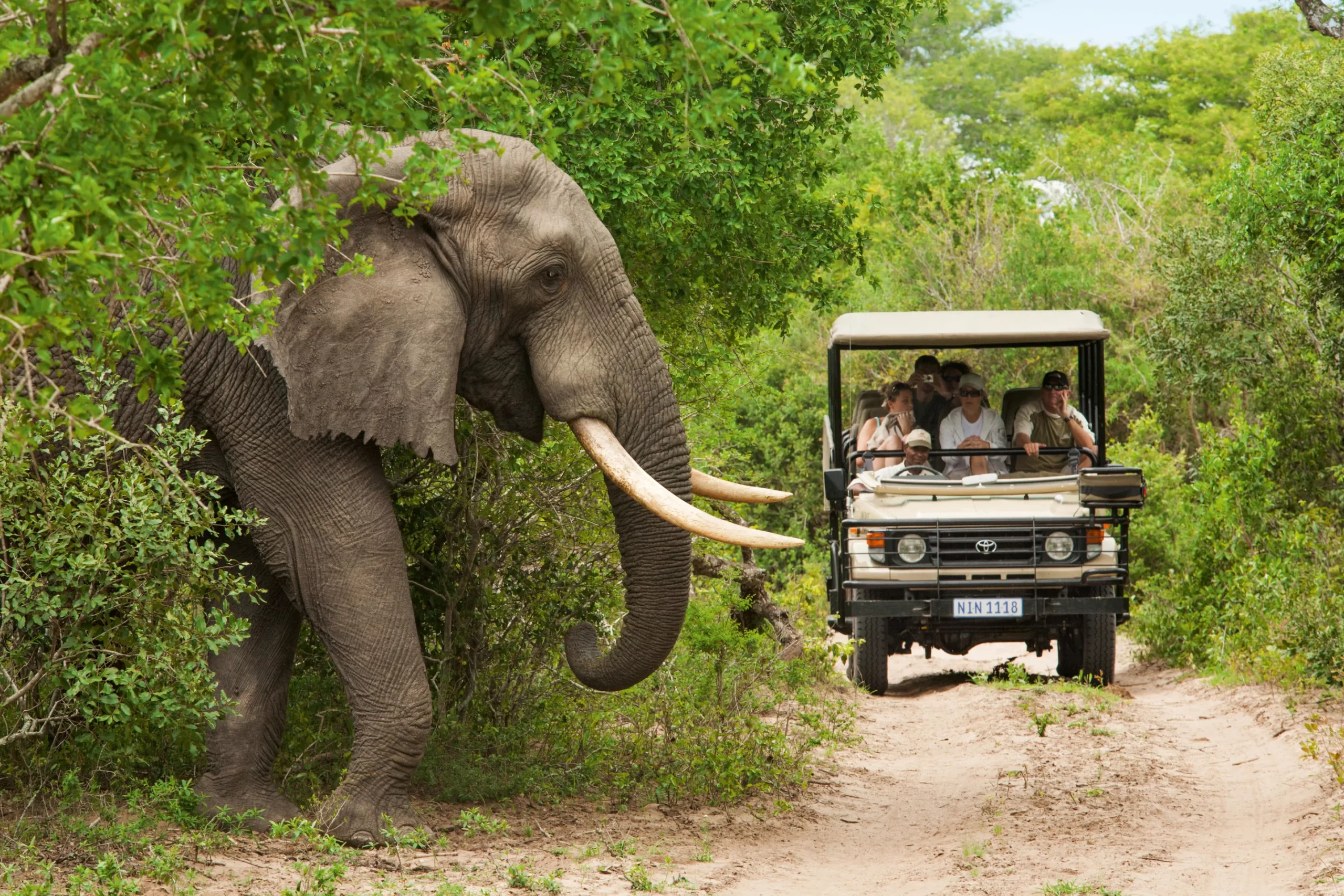
Kruger is a national park covering nearly two million hectares, open to anyone with a vehicle and a park fee. Sabi Sand is a 65,000-hectare private reserve accessible only through its lodges, with no day visitors and no self-drive. The wildlife is comparable. The cost, the access, the guiding and the atmosphere are not. Choosing between them is not a question of which is better. It is a question of what kind of safari you are after.
The core differences at a glance
| Factor | Kruger National Park | Sabi Sand Game Reserve |
|---|---|---|
| Access | Public: self-drive or guided day tours | Private: lodge guests only, no day visitors |
| Size | ~2 million hectares | ~65,000 hectares |
| Driving | Roads only, no off-road permitted | Off-road permitted, so guides follow animals into the bush |
| Night drives | Not permitted on public roads | Included as standard on every evening drive |
| Walking safaris | Wilderness trails available (pre-book) | Offered by most lodges as an add-on activity |
| Vehicle exclusivity | Shared sightings with all vehicles in the park | Limited vehicles per sighting, with most lodges capping at three |
| Leopard sightings | Possible but unpredictable | Among the most reliable in Africa |
| Cost (per night) | From ~$50 / R925 (public restcamp) to $400+ (private lodge) | From ~$700 / R13,000 pppn (premier lodges) |
| Best for | Self-drive, budget, independence, scale | Guided luxury, leopard, walking, intimacy |
The case for Kruger
Scale and diversity
Kruger’s near-two-million-hectare footprint encompasses a range of habitats (open savanna, mopane woodland, riverine forest and granite hills) that no private reserve can match. The northern reaches around Punda Maria and Pafuri are ecologically distinct from the south around Skukuza and Lower Sabie, and a multi-day self-drive that crosses several ecosystems delivers a breadth of wildlife and landscape that private reserves, by their nature, cannot replicate. If you want to understand the African bush at scale, Kruger is the answer.
Self-drive freedom
There is a specific pleasure to a self-drive safari that no guided experience replicates: your vehicle, your pace, your decisions. The moment you round a bend on a quiet gravel road in southern Kruger and find a leopard sitting in a tree fifty metres away, with no other car in sight, is as good a wildlife moment as Africa produces. It requires patience and some luck. It also requires no specialist budget.
Kruger’s road network is extensive and well-maintained. A standard sedan handles most tar roads comfortably; a higher-clearance vehicle opens up the gravel routes. The park’s network of restcamps, from basic camping to comfortable chalets, means a week-long self-drive covering the full length of the park is logistically straightforward.
Cost
Kruger is the most accessible Big Five safari in Africa by cost. A public restcamp berth starts under R925 per person per night. Conservation fees for South African residents are around R232 per person per day (verify current SANParks rates at sanparks.org before travelling, as these change annually). A family of four can do a week-long self-drive Kruger safari, with accommodation and park fees, for a total outlay that would not cover two nights at a mid-range Sabi Sand lodge.
Who Kruger suits
- Travellers on a budget, or South African residents making a first safari.
- Those who want the freedom and adventure of self-drive.
- Repeat visitors who want to explore different parts of the Greater Kruger ecosystem over multiple trips.
- Birders, since Kruger’s diversity of habitats supports over 500 recorded bird species.
- Anyone with five or more days who wants to cover serious ground.
The case for Sabi Sand
Off-road access and guiding quality
The single most important practical difference between Kruger and the Sabi Sand is off-road driving. In Kruger, you stay on roads. In the Sabi Sand, the guide follows the animal through long grass, across dry riverbeds and between trees until the vehicle is positioned for the best possible view. Combined with a tracker working on foot ahead of the vehicle, reading prints and broken vegetation, a Sabi Sand guiding team routinely finds and approaches animals in ways that are simply impossible in a national park.
The guiding standard in the top Sabi Sand lodges is among the highest in Africa. These are professional naturalists with years of experience in a specific piece of land. They know individual animals by name, they know where to look at different times of day and in different seasons, and they can explain what is happening in front of you in a way that makes a twenty-minute lion encounter feel like a masterclass.
Leopard sightings
The Sabi Sand’s leopard population has been habituated to safari vehicles over decades. The result is something that exists almost nowhere else in Africa: leopards that go about their lives, hunting, resting, marking territory and raising cubs, with lodge vehicles present at close range and apparently disregarded. On a five-night stay, most guests see leopard several times. Seeing a leopard carry prey up a tree, or a mother with cubs on a termite mound, at a range of fifteen metres from an open vehicle, is an encounter that very few reserves in Africa can offer with equivalent reliability.
Night drives and exclusivity
Night drives are a standard part of every Sabi Sand evening, included in the lodge rate. The nocturnal species (civets, genets, porcupines, bush babies and occasionally leopard or lion on a kill) are only accessible after dark, and only in a reserve where night driving is permitted. Kruger’s public roads close at sunset.
Vehicle numbers at sightings are managed by the lodges. Most properties cap the number of vehicles at any single sighting at three, and many operate on a radio protocol that prevents overcrowding. At a major predator sighting in peak-season Kruger, the vehicle numbers can reach ten or more. The contrast in atmosphere is significant.
Who Sabi Sand suits
- Travellers for whom leopard sightings are a priority.
- Those who want the full guided luxury experience: expert guide, tracker, off-road access, night drives, all-inclusive.
- Honeymoon and special-occasion travellers.
- Photographers who need vehicle positioning control and reliable, close subjects.
- First-time safari visitors with a higher budget who want to maximise sighting quality in a short stay.
Can you combine both?
Yes, and for many travellers this is the best answer. A classic South Africa safari structure is two or three nights in Kruger (self-drive or guided) followed by three or four nights in a Sabi Sand lodge. Kruger gives you scale, independence and the satisfaction of finding your own game; the Sabi Sand delivers the intimate, high-impact encounters that a national park cannot. The two experiences are complementary rather than competing, and the transfer between them, either by road through Hazyview or by light aircraft to a private airstrip, is straightforward.
Several of our South Africa itineraries are built around exactly this combination.
The verdict by traveller type
| Traveller type | Verdict |
|---|---|
| Budget-conscious / self-drive | Kruger. Unbeatable value, genuine Big Five, total freedom. |
| First safari, higher budget | Sabi Sand. Maximises sighting quality and guiding standard in a short stay. |
| Leopard is the priority | Sabi Sand. No contest, and the most reliable leopard sightings in Africa. |
| Family with children | Kruger for flexibility and cost; Sabi Sand if the lodge accepts children and budget allows. |
| Honeymoon / special occasion | Sabi Sand. The lodge atmosphere, exclusivity and sighting quality suit a celebratory trip. |
| Repeat safari visitor | Both. Combine them, because the contrast is part of the appeal. |
| Birder | Kruger. Greater habitat diversity and over 500 species recorded. |
| Photographer | Sabi Sand. Off-road positioning, close habituated animals, night drive access. |
Questions about Kruger and Sabi Sand
Do I need a 4×4 for Kruger?
No. The majority of Kruger’s road network is tar or compacted gravel, and a standard sedan handles it comfortably. A higher-clearance vehicle gives you access to some rougher gravel routes in the north, but is not required for a standard visit to the southern or central sections of the park.
How close are Kruger and Sabi Sand to each other?
The Sabi Sand shares its eastern boundary with the western edge of Kruger. By road, the Hazyview area, the main gateway town for both, is roughly four hours from Johannesburg. Several Sabi Sand lodges have private airstrips with scheduled or charter flights from OR Tambo International Airport, making the journey around 45 minutes by air.
Is the wildlife better in Sabi Sand than Kruger?
The wildlife is the same, and the animals move between the two areas freely. What differs is the quality and reliability of the encounter. In the Sabi Sand, off-road access, expert guides and habituated animals produce closer, more sustained sightings. In Kruger, the experience is less predictable and more self-directed. Neither is objectively “better”; they are different experiences of the same ecosystem.
How many nights do I need in each?
For Kruger on a self-drive, a minimum of three nights is needed to cover meaningful ground; five to seven nights allows you to explore different sections of the park. For the Sabi Sand, three nights is a workable minimum; five nights is the most satisfying stay, giving you six game drives and enough time for the rhythm of the reserve to settle.
Plan your South Africa safari
Whether you choose Kruger, the Sabi Sand or a combination of both, South Africa delivers the most accessible Big Five safari experience in Africa. The right answer depends on your budget, your priorities and how much time you have. Our guide to the best luxury lodges in the Greater Kruger covers the private reserves next door to the Sabi Sand, and when you are ready you can plan your safari with a specialist.