
Safaris
Safaris in Hwange National Park
We are still adding safaris that include Hwange National Park. Tell us your dates and we will suggest a trip.
Plan your safari Browse all safarisPark guide
Hwange National Park guide
Overview
Hwange is Zimbabwe’s largest national park and one of southern Africa’s great elephant strongholds. Covering 14,651 km² of Kalahari sandveld, teak woodland and open vleis in Matabeleland North, it lies between Bulawayo and Victoria Falls and shares its western boundary with Botswana. It was proclaimed a game reserve in 1928, then known as Wankie, and became a national park in 1961. Today it forms part of the five-country Kavango–Zambezi Transfrontier Conservation Area, so its wildlife moves freely across a vast, connected landscape.
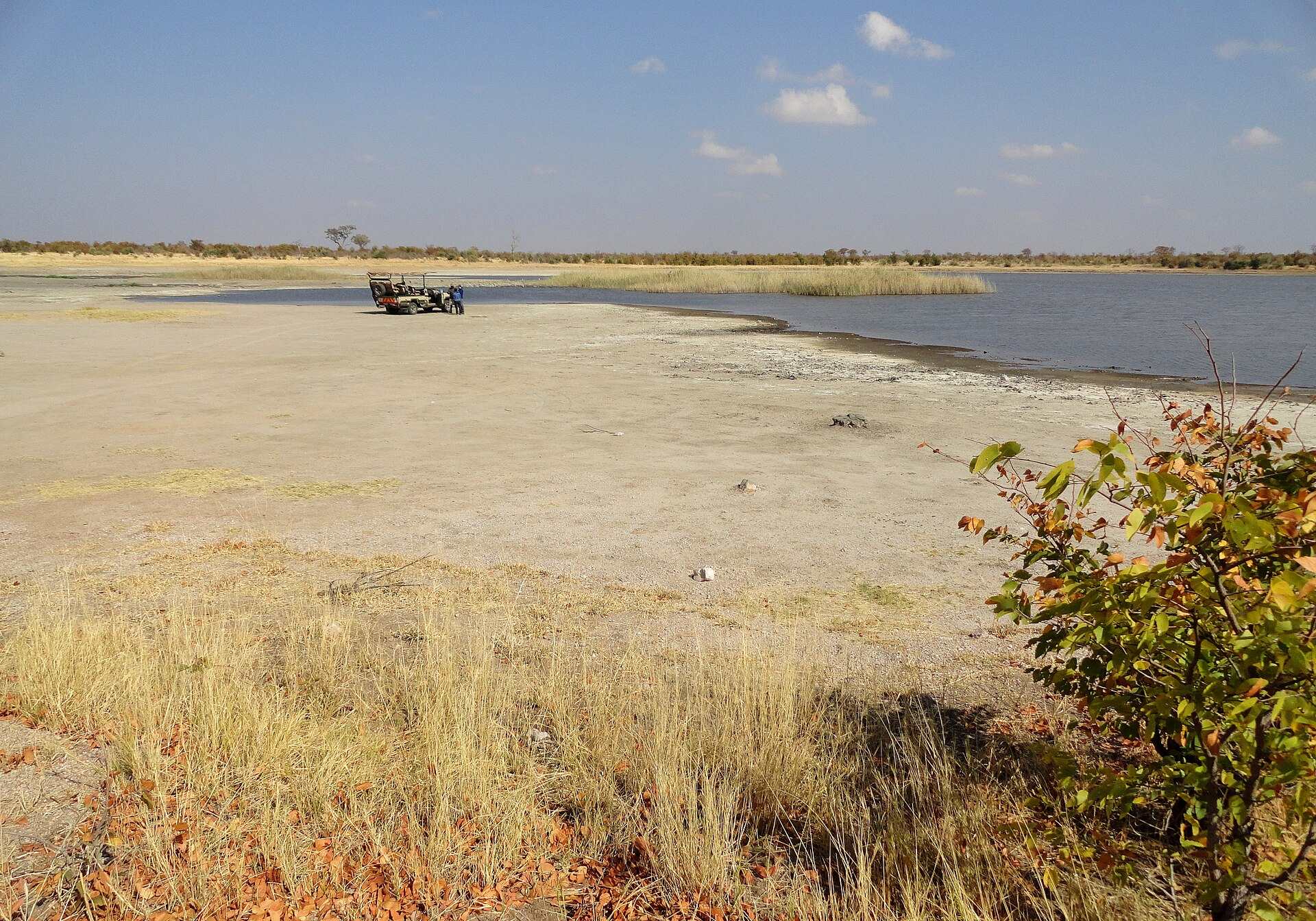
There are no permanent rivers through most of the park, which gives Hwange its particular character. Life gathers around the pans: some fed by natural seeps, many topped up by boreholes. In the dry season these waterholes become stages where elephants, buffalo, antelope and predators come and go from dawn to dusk, and a quiet hour beside one can be as rewarding as a day’s driving.
The park is divided into broad areas, each with its own feel. The east, around Main Camp and the open Linkwasha and Makalolo plains, is the busiest and most developed, with most of the private concessions and luxury tented camps. The north, around Sinamatella and Robins, is wilder and hillier, with mopane woodland, basalt ridges and a strong sense of remoteness. The centre and south are designated wilderness, with minimal development and access only for guided groups.
Wildlife
Hwange is synonymous with elephants. The most recent survey cited in Zimbabwe’s national elephant management plan estimates more than 42,000 in the park, and in the dry season it is not unusual to watch several family herds arrive at a single pan, the youngest calves hurrying to keep up. Buffalo herds can be equally impressive.
The predator line-up is excellent. Lion are found throughout and are closely tied to the waterholes; Hwange is also known for one of Africa’s more significant populations of African wild dog, also called painted dog, with research and conservation work based in nearby Dete. Leopard, cheetah, spotted hyena and side-striped jackal complete the cast, and the park was the long-time home of Cecil, the lion whose death in 2015 drew worldwide attention to the region’s big cats.
Hwange is one of the best parks in the region for rarer antelope. Sable and roan both occur here, along with greater kudu, eland, waterbuck and, on the Kalahari sands towards Botswana, small numbers of gemsbok. More than 100 mammal species and over 400 bird species have been recorded, from kori bustard and southern ground hornbill to raptors such as the martial eagle. Hwange is not a Big Five park in practice, as rhino are not seen, but for elephants, wild dog and classic Kalahari scenery it is hard to beat.
Key wildlife
Best Time to Visit
Short answer: Jul–Oct. Also good: May–Jun.
Peak Good Quieter
The dry season from July to October is Hwange’s peak time. The bush thins, surface water disappears and wildlife concentrates on the pumped pans, making sightings reliable and often dramatic. September and October are the hottest and driest months, and the elephant gatherings at this time can be extraordinary.
May and June are a good choice for cooler days and still-excellent game viewing as the landscape dries out. Nights can be cold at this time of year, so pack warm layers for early drives.
The rains usually arrive in November and last until March or April. The park turns green, animals disperse widely and game viewing becomes more of a search, but it is a beautiful time for birding, with migrant species arriving, and many antelope give birth early in the season. Rates are often lower, and you will share the park with far fewer visitors.
Getting There
The main gateway is Victoria Falls International Airport (VFA), which has regular flights from Johannesburg, Cape Town and other regional hubs. From there, Main Camp is about 195 km by road; allow three to four hours while roadworks on the A8 continue, or break the journey with a night at Victoria Falls.
The park also has its own airport, Hwange National Park Airport (HWN) near Dete, but scheduled services have been unreliable, so it is best treated as an occasional option rather than a plan. Most guests staying at the private camps in the south-east fly by light aircraft from Victoria Falls directly to their camp’s airstrip, a flight of under an hour that replaces a long, sandy drive. Your camp will usually arrange this as part of your stay.
The main entrances are Mpofu Gate near Dete for Main Camp, Mbala Gate for Sinamatella and Nantwich Gate for Robins. Hwange combines naturally with Victoria Falls and with Botswana’s Chobe National Park, a short drive from Victoria Falls via Kasane, and with Mana Pools on the Zambezi for a wider Zimbabwe safari.
Fees & Access
Entrance fees
ZimParks conservation fees for international visitors are US$12 per person per day if you stay inside the park and US$24 per day for day visitors. SADC nationals pay US$10 (staying) or US$18 (day visit). Children aged 6–12 receive a 50% discount. Rates include VAT, and vehicle entry is charged separately.
Private concessions charge their own conservation levies, which are usually included in your camp rate.
Gate hours
6:00 AM - 6:00 PM
Health
Malaria risk: Moderate. Ask a travel clinic about antimalarials before you go.
Fees and gate times change. Check the latest rates with the park authority before you travel.
Things to Do
Game drives in open vehicles are the main activity, with private concessions offering exclusive traversing and, in some areas, night drives that bring the chance of seeing nocturnal species such as honey badger, porcupine and civet.
Guided walks are a Zimbabwean speciality. The country’s professional guides undergo some of the most rigorous training in Africa, and a morning on foot with one of them, reading tracks and approaching game carefully, is often the highlight of a stay.
Hides and platforms let you sit quietly at the water’s edge. Raised wooden platforms at pans such as Guvalala and Makwa, and the sunken hides at several private camps, put you at eye level with drinking elephants.
Painted dog conservation. A visit to the painted dog conservation centre in Dete is an excellent way to learn about Africa’s most endangered large carnivore and the work being done to protect it.
History and culture. The Bumbusi National Monument in the north holds stone-walled ruins, and the park is dotted with archaeological sites spanning the Stone and Iron Ages.
We do not yet list a Hwange itinerary, but it pairs beautifully with Victoria Falls, Chobe and the Okavango Delta. Browse our safaris for ideas, including our Chobe safari from Victoria Falls, or plan your safari with us.
Location
Where is Hwange National Park?
Good to know
Hwange National Park FAQs
When is the best time to visit Hwange?
July to October is the best time. The dry season concentrates wildlife on the pumped waterholes, and September and October bring the biggest elephant gatherings. May and June are cooler and still very good, while the green season from November to April is best for birding.
How much are Hwange National Park fees?
International visitors pay US$12 per person per day when staying inside the park and US$24 for a day visit (2026 ZimParks tariff, including VAT). SADC nationals pay US$10 or US$18, and children aged 6–12 get a 50% discount. Vehicle entry is extra.
How do you get to Hwange National Park?
Fly into Victoria Falls International Airport (VFA). Main Camp is about 195 km away by road, around three to four hours while the A8 roadworks continue. Guests at the private camps in the south-east usually fly from Victoria Falls to their camp’s airstrip in under an hour.
Does Hwange have the Big Five?
Not in practice. Lion, leopard, elephant and buffalo are all present, but rhino are not seen in Hwange. The park is best known for its huge elephant herds, wild dog and rare sable and roan antelope.
How many elephants are in Hwange?
The most recent survey cited in Zimbabwe’s national elephant management plan put Hwange’s elephant population at more than 42,000, one of the largest in Africa.
Is Hwange a malaria area?
Yes. Hwange has a moderate malaria risk, highest during the rains from November to April. Ask a travel clinic about antimalarials before you go.
Keep exploring
More parks in Zimbabwe
Begin your journey
Ready to experience Hwange National Park?
Tell us when you want to travel and what you want to see, and we will match you with the right safari.
Plan your safari