
Safaris
Safaris in Queen Elizabeth National Park
We are still adding safaris that include Queen Elizabeth National Park. Tell us your dates and we will suggest a trip.
Plan your safari Browse all safarisPark guide
Queen Elizabeth National Park guide
Overview
Queen Elizabeth National Park in western Uganda is the country’s most visited safari park and one of its most varied. It covers about 1,978 km² between Lake George and Lake Edward, beneath the Rwenzori Mountains, and straddles the equator. Created in 1952 and renamed after Queen Elizabeth II’s visit in 1954, it is also a UNESCO Biosphere Reserve.
The park’s landscapes change quickly from open savannah and acacia woodland to papyrus swamps, tropical forest and a field of volcanic explosion craters, some holding lakes. At its heart is the Kazinga Channel, a natural waterway that links the two lakes and draws huge numbers of animals and birds to its shores.
Queen Elizabeth is often combined with gorilla trekking in Bwindi Impenetrable National Park, a few hours’ drive to the south, and with chimpanzee tracking in the forests of western Uganda. Its southern Ishasha sector, close to the border with the Democratic Republic of Congo, is a quieter and wilder part of the park.
Wildlife
The park supports around 95 mammal species. Elephant and buffalo are common, and the Kazinga Channel holds one of the largest concentrations of hippo in Africa, along with Nile crocodile. Uganda kob, topi, waterbuck, bushbuck and warthog graze the savannah, and the elusive giant forest hog lives in the thicker areas.
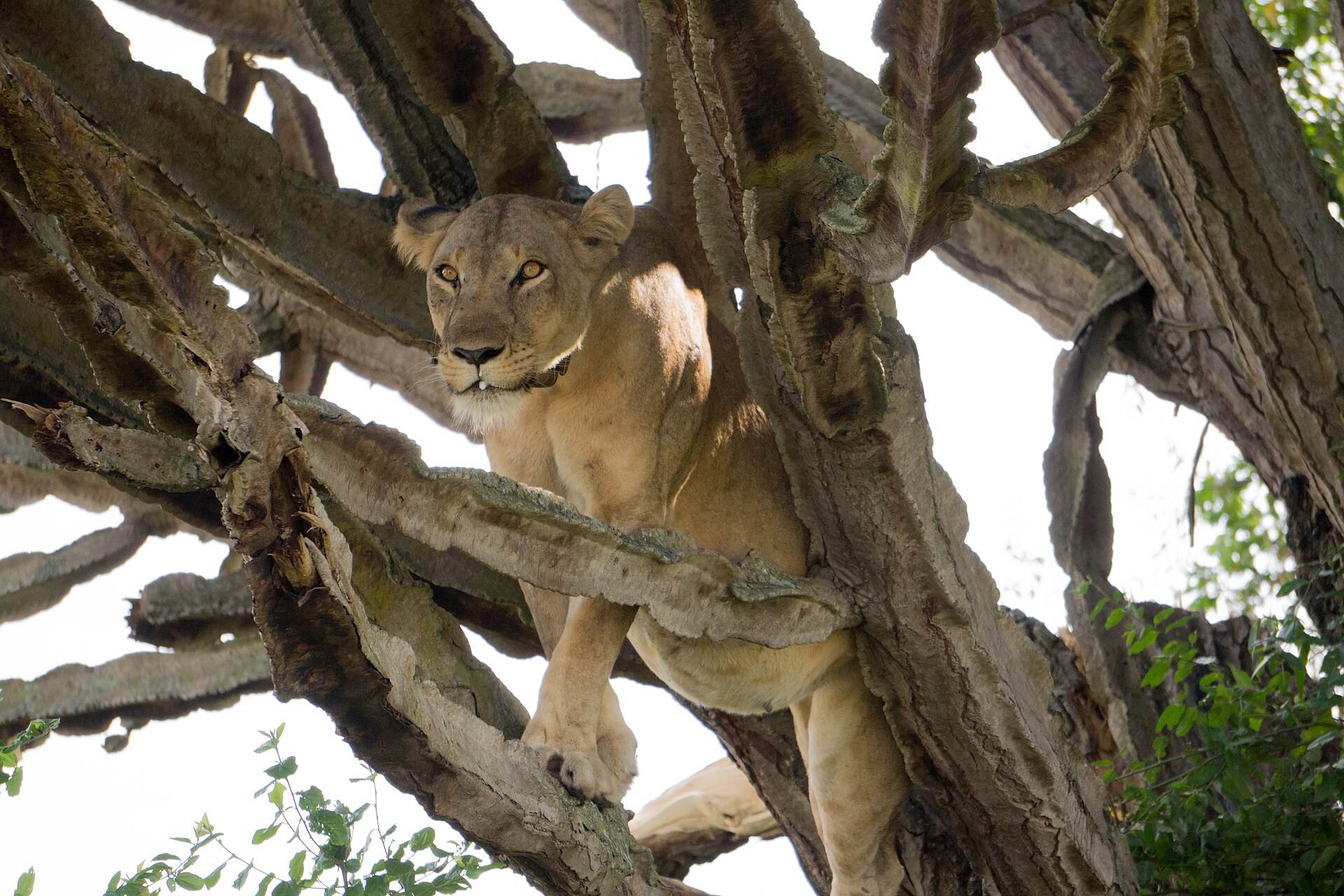
Lion are found across the park, and in the Ishasha sector they are famous for resting in the branches of large fig and acacia trees. Leopard and spotted hyena are also present. There are no rhino in the park, so it is not a Big Five destination.
Chimpanzees live in Kyambura Gorge, a forested valley sunk into the savannah, and in the nearby Maramagambo Forest, which is also home to other primates. With more than 600 bird species recorded, Queen Elizabeth is one of Africa’s top birding destinations. Look for shoebill in the Lake George wetlands, as well as African skimmers, pelicans, fish eagles and many kingfishers along the channel.
Key wildlife
Best Time to Visit
Short answer: Jun–Sep. Also good: Dec–Feb.
Peak Good Quieter
Queen Elizabeth can be visited year-round. The drier months, from about June to September and from December to February, are best for game viewing, as animals gather near water and roads are easier to drive.
The wetter seasons, from about March to May and from October to November, bring green landscapes and good birding, though some roads, especially in Ishasha, can be muddy. Because the park lies on the equator, temperatures are warm all year.
Malaria is present, so speak to a travel clinic about prevention before you travel.
Getting There
Most visitors arrive at Entebbe International Airport (EBB) near Kampala. The drive from Kampala to the park takes about six to seven hours, often broken with a stop in Fort Portal or at the crater lakes. Scheduled and charter flights also serve airstrips close to the park, such as Kasese and Mweya, cutting the journey to around an hour.
From the south of the park, the road through Ishasha continues to Bwindi, making it easy to combine wildlife viewing with gorilla trekking.
Park entry and activities are booked through the Uganda Wildlife Authority, usually by your safari operator or lodge.
Fees & Access
Entrance fees
Park entrance is set by the Uganda Wildlife Authority and charged per person for 24 hours from entry. Foreign non-resident adults pay US$40 and children aged 5–15 US$20. Foreign residents pay US$30, visitors from the rest of Africa US$25, and East African citizens UGX 20,000. Children under 5 are free.
Activities are charged on top of entry; for example, the Kazinga Channel launch trip is US$30 per foreign non-resident. Chimpanzee tracking in Kyambura Gorge needs a separate permit. Fees are usually arranged by your safari operator; confirm current rates, as UWA can change its tariff without notice.
Gate hours
6:00 AM - 7:00 PM
Health
Malaria risk: Moderate. Ask a travel clinic about antimalarials before you go.
Fees and gate times change. Check the latest rates with the park authority before you travel.
Things to Do
Kazinga Channel boat trips are the park’s signature experience, bringing you close to hippos, crocodiles, elephants and countless water birds.
Game drives in the Kasenyi plains and the Ishasha sector offer good chances of lion, elephant, buffalo and Uganda kob.
Chimpanzee tracking in Kyambura Gorge is a memorable walk into a forested gorge in search of a habituated chimpanzee community.
The Explosion Crater Drive winds between crater lakes and offers sweeping views of the Rift Valley and the Rwenzori Mountains.
Guided nature walks and birding are offered in Maramagambo Forest and around the crater lakes.
Explore other parks in the region, such as Murchison Falls and Bwindi, browse all safaris, or plan your safari with us.
Location
Where is Queen Elizabeth National Park?
Good to know
Queen Elizabeth National Park FAQs
How much are Queen Elizabeth National Park fees?
Foreign non-resident adults pay US$40 and children aged 5–15 pay US$20 for 24 hours of park entry. Foreign residents, visitors from the rest of Africa and East African citizens pay less. Activities such as the Kazinga Channel launch trip are charged separately.
Where can you see tree-climbing lions in Uganda?
The Ishasha sector in the south of Queen Elizabeth National Park is famous for lions that rest in large fig and acacia trees. Sightings are not guaranteed, but Ishasha is the best place to look.
Can you see the Big Five in Queen Elizabeth National Park?
No. Elephant, buffalo, lion and leopard are found in the park, but there are no rhino.
Can you track chimpanzees in Queen Elizabeth National Park?
Yes. Chimpanzee tracking takes place in Kyambura Gorge, a forested gorge in the east of the park. A separate permit is required, and sightings are likely but not guaranteed.
How do you get to Queen Elizabeth National Park?
The park is about six to seven hours by road from Kampala. Scheduled and charter flights also serve nearby airstrips. Most international visitors arrive at Entebbe International Airport (EBB).
When is the best time to visit Queen Elizabeth National Park?
The drier months from June to September and December to February are best for game viewing. The wetter months are greener and excellent for birding, but some roads can be muddy.
Keep exploring
More parks in Uganda
 National Park
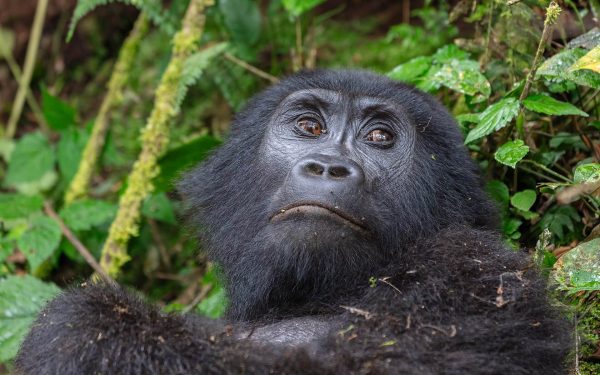
Bwindi Impenetrable National Park
Uganda's UNESCO World Heritage forest protecting roughly half the world's mountain gorilla population.
Explore park →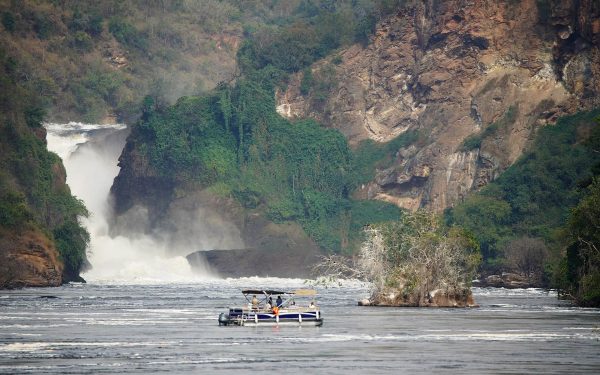 National Park
Murchison Falls National Park
Uganda's largest national park where the entire Nile River forces through a 7-metre gap creating the world's most…
Explore park →Begin your journey
Ready to experience Queen Elizabeth National Park?
Tell us when you want to travel and what you want to see, and we will match you with the right safari.
Plan your safari