
Safaris
Safaris in Bwindi Impenetrable National Park
We are still adding safaris that include Bwindi Impenetrable National Park. Tell us your dates and we will suggest a trip.
Plan your safari Browse all safarisPark guide
Bwindi Impenetrable National Park guide
Overview
Bwindi Impenetrable National Park in south-western Uganda protects one of Africa’s most ancient and biologically rich rainforests, and around half of the world’s mountain gorillas. Covering about 331 km² of steep ridges and deep valleys on the edge of the Albertine Rift, the forest became a national park in 1991 and was inscribed as a UNESCO World Heritage Site in 1994. Its name comes from the dense undergrowth of ferns, vines and shrubs that cloak the hillsides, and walking here is as wild and atmospheric as forest trekking gets.
The forest is thought to have survived the last Ice Age, which helps explain its exceptional diversity of plants, butterflies, birds and primates. According to UNESCO, it is home to more than 120 mammal species and around 350 bird species, including 23 endemic to the Albertine Rift.
Gorilla trekking in Bwindi is organised from four sectors, each with its own trailheads, habituated gorilla families and lodges: Buhoma in the north, Ruhija in the east, and Rushaga and Nkuringo in the south. The sectors are hours apart by road, so it is important to stay in the sector where your permit is issued. Accommodation ranges from simple lodges to luxury forest camps with views across the canopy.
Wildlife
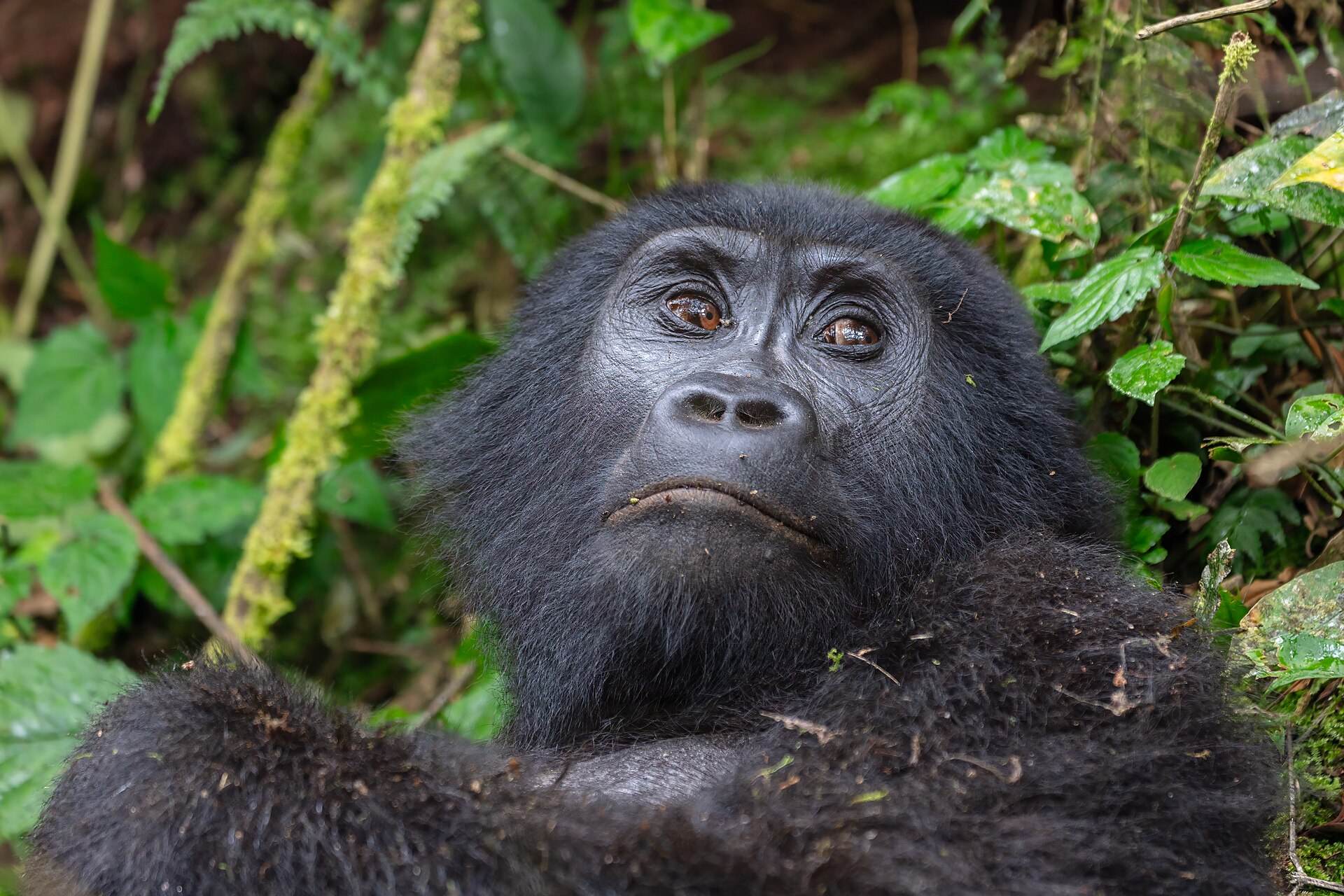
Mountain gorillas are the main attraction. The last census, in 2018, counted 459 mountain gorillas in Bwindi, and a large number of families have been habituated to human visitors. Each family can be visited by a small group once a day.
Bwindi is also home to chimpanzees, although they are not habituated for tracking here, along with L’Hoest’s monkeys, black-and-white colobus, red-tailed and blue monkeys, and baboons. Forest elephants, giant forest hogs, duikers and bushpigs live in the forest but are rarely seen.
For birders, Bwindi is one of the most important sites in Africa. Albertine Rift specials such as the African green broadbill, Shelley’s crimsonwing, handsome francolin and several species of turaco, sunbird and warbler draw dedicated birders from around the world. The Ruhija sector and the Mubwindi Swamp trail are particularly rewarding.
Key wildlife
Best Time to Visit
Short answer: Jun–Aug. Also good: Dec–Feb.
Peak Good Quieter
Gorilla trekking is possible all year. The drier months, usually from June to August and from December to February, are the most popular, with firmer trails and easier hiking. These are busy periods, so book permits early.
The rainier months, from about March to May and September to November, make trails muddier and more challenging, but the forest is green and lush, birding is excellent and there are fewer visitors. UWA has offered discounted low-season permits in some of these months, so ask your safari planner about current offers. Rain is possible at any time in this mountain rainforest, so pack waterproofs.
Getting There
Most international visitors arrive at Entebbe International Airport (EBB). From there, scheduled domestic flights serve airstrips close to Bwindi, such as Kihihi for the northern sector and Kisoro for the southern sectors, followed by a road transfer. By road from Entebbe or Kampala, Bwindi is a long drive of around eight to ten hours, often broken with a stop at Queen Elizabeth National Park.
The southern sectors of Rushaga and Nkuringo are closer to Kigali in Rwanda than to Entebbe. Many travellers fly into Kigali International Airport (KGL) and drive to Bwindi in around four to five hours via the border, which makes it easy to combine with Rwanda’s Volcanoes National Park.
Fees & Access
Gorilla permits are issued by the Uganda Wildlife Authority (UWA) and include park entry, guide fees and a community contribution. Foreign non-resident visitors buy permits through a licensed tour operator, and each permit is for a specific date and sector.
Visitor groups are limited to eight people per gorilla family per day, and the time with the gorillas is one hour. The minimum age is 15. In the Rushaga sector, UWA also offers a gorilla habituation experience, where a small group spends up to four hours with a family that is being habituated, a more in-depth and costlier alternative.
Treks begin with a briefing at the sector headquarters in the morning. Depending on where the gorillas are, a trek can take from one to several hours each way over steep, slippery ground. Porters can be hired at the trailhead to carry your daypack and help on steep sections, which also supports local communities.
Entrance fees
Gorilla permits are issued by the Uganda Wildlife Authority and include park entry, the guide fee and a community contribution. Foreign non-residents pay US$800, foreign residents US$700, visitors from the rest of Africa US$500 and East African citizens UGX 300,000. UWA set a US$600 low-season rate for foreign non-residents in April, May and November 2026.
The gorilla habituation experience in Bwindi costs US$1,500 for foreign non-residents, rising to US$1,800 from 1 January 2027. Foreign non-residents must book through a licensed tour operator. The minimum age for trekking is 15.
Gate hours
Trek briefings at each sector headquarters in the morning; arrive early to register.
Health
Malaria risk: Moderate. Ask a travel clinic about antimalarials before you go.
Fees and gate times change. Check the latest rates with the park authority before you travel.
Things to Do
Gorilla trekking is the highlight, an hour with a habituated mountain gorilla family in the forest.
Gorilla habituation experience in Rushaga offers a longer encounter alongside researchers and trackers.
Birding walks with specialist guides, especially in Ruhija and along the Buhoma trails, reveal Albertine Rift endemics.
Forest and waterfall walks on trails such as the Munyaga River trail near Buhoma explore the forest beyond the gorillas.
Community and cultural visits, including experiences with the Batwa people, who lived in the forest before it became a park, add an important human dimension.
Explore Rwanda’s gorillas on our Rwanda gorilla tracking safari, browse all safaris, or plan your safari with us.
Location
Where is Bwindi Impenetrable National Park?
Good to know
Bwindi Impenetrable National Park FAQs
How much is a gorilla permit in Bwindi?
Foreign non-residents pay US$800, foreign residents US$700, visitors from the rest of Africa US$500 and East African citizens UGX 300,000. UWA set a US$600 low-season rate for foreign non-residents in April, May and November 2026. The permit includes park entry and the guide fee.
Which Bwindi sector is best for gorilla trekking?
All four sectors (Buhoma, Ruhija, Rushaga and Nkuringo) have habituated families and offer excellent trekking. Buhoma is the most accessible and has the most lodges, Rushaga has the most families and the habituation experience, and Ruhija is best for birding. Stay in the sector where your permit is issued.
What is the gorilla habituation experience?
In the Rushaga sector, a small group spends up to four hours with a gorilla family that is being habituated, alongside researchers and trackers. It costs US$1,500 for foreign non-residents, rising to US$1,800 from 1 January 2027.
When is the best time to visit Bwindi?
Trekking runs all year. June to August and December to February are drier and most popular. The wetter months make trails muddier but bring fewer visitors and excellent birding.
How do you get to Bwindi?
Fly from Entebbe International Airport (EBB) to Kihihi or Kisoro airstrip and transfer by road, or drive from Entebbe in around eight to ten hours. The southern sectors are about four to five hours by road from Kigali in Rwanda.
Is Bwindi a malaria area?
Yes, there is a malaria risk, although it is lower in the cooler, higher parts of the forest. Speak to a travel clinic about antimalarials, and use repellent in the evenings.
Keep exploring
More parks in Uganda
 National Park
Murchison Falls National Park
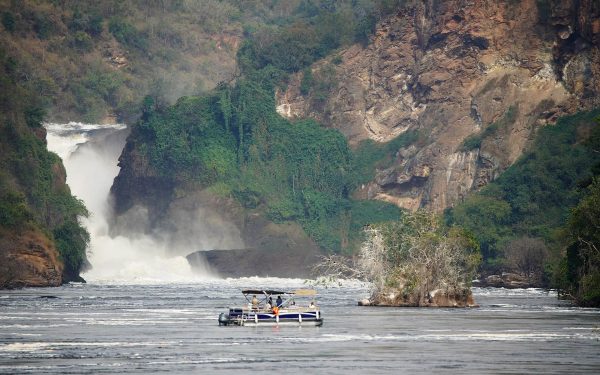
Uganda's largest national park where the entire Nile River forces through a 7-metre gap creating the world's most…
Explore park →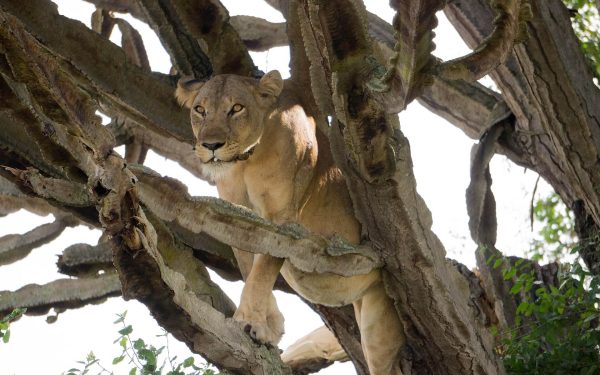 National Park
Queen Elizabeth National Park
Uganda's most popular savanna park with tree-climbing lions and the famous Kazinga Channel boat safari.
Explore park →Begin your journey
Ready to experience Bwindi Impenetrable National Park?
Tell us when you want to travel and what you want to see, and we will match you with the right safari.
Plan your safari