
Safaris
Safaris in Madagascar
We have no itinerary listed for Isalo National Park yet. These safaris explore other parts of Madagascar.
Park guide
Isalo National Park guide
Overview
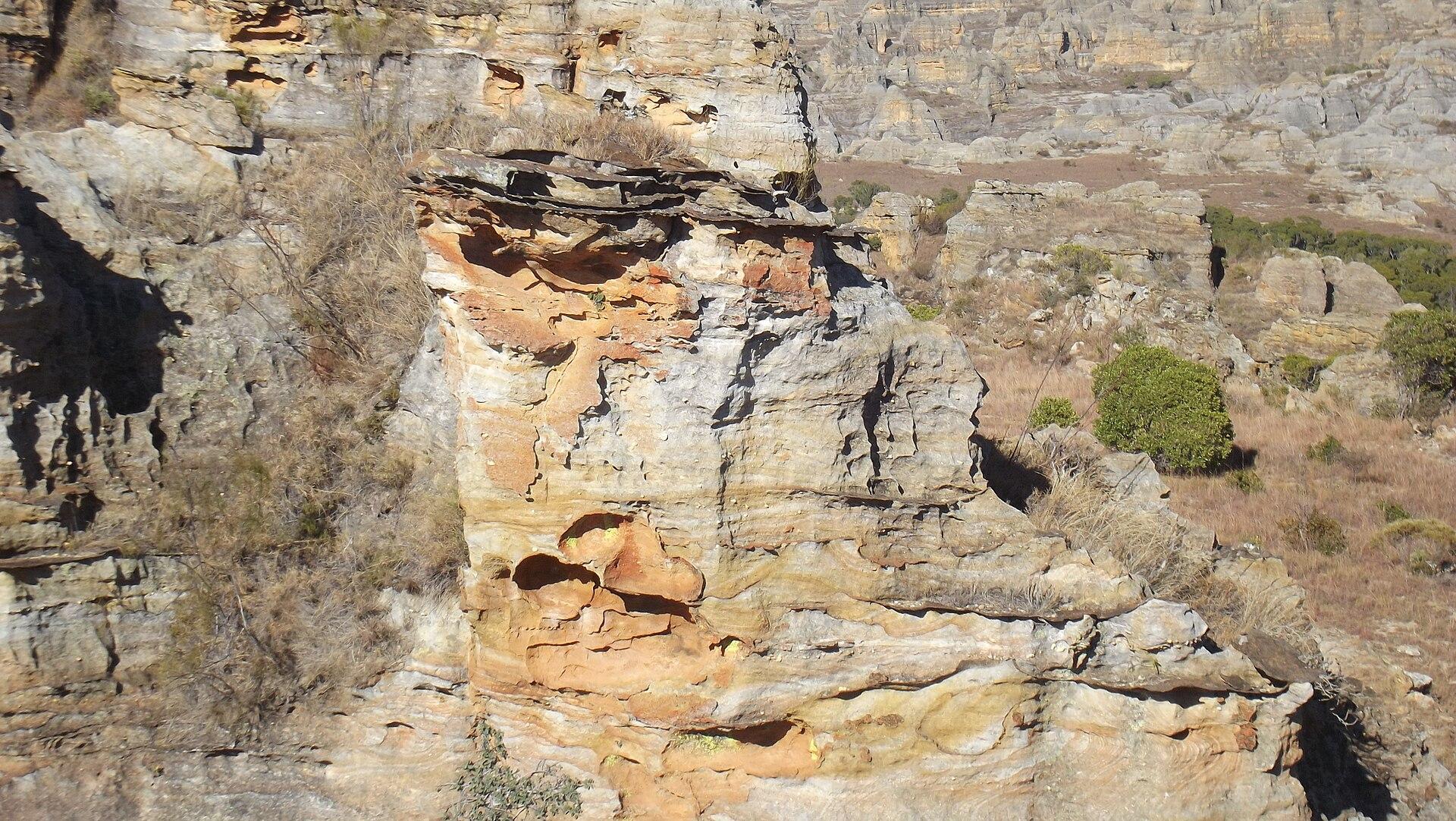
Isalo National Park in southwest Madagascar protects a dramatic sandstone massif of canyons, gorges, ridges and grassy plateaus. Covering about 815 km² and created in 1962, it is one of the country’s most visited parks, famous for its walking trails, natural swimming pools and sweeping desert-like scenery.
Over millions of years, wind and water have carved the Jurassic sandstone into ruined-castle shapes, deep canyons and caves. In the canyons, streams flow year-round, supporting palm-lined oases and patches of forest that contrast vividly with the dry grasslands above.
Isalo is also an important cultural landscape for the Bara people, who live around the massif and use some of its caves as burial sites. These places are sacred, so follow your guide’s advice and respect any restrictions. The small town of Ranohira, on the edge of the park, is the main base for visitors.
Isalo is a highlight of Madagascar’s classic overland route, the RN7, between Antananarivo and the southwest coast, and combines well with rainforest parks such as Andasibe-Mantadia.
Wildlife
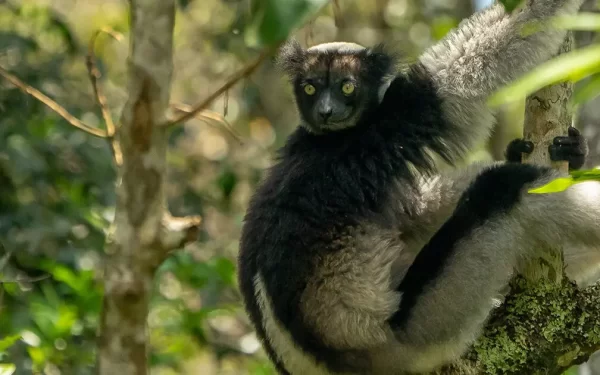
Lemurs are the main wildlife attraction. Ring-tailed lemurs are often seen in the canyons, along with Verreaux’s sifakas, which leap between trees, and red-fronted brown lemurs. Several nocturnal lemurs also live in the park but are rarely seen by day.
Isalo has many plants found nowhere else, including the elephant’s foot plant (Pachypodium rosulatum) and an endemic palm. Reptiles such as chameleons, iguana-like lizards and snakes are common, and the park supports a good range of birds, including the Benson’s rock thrush, which is closely linked to the Isalo region.
There are no large predators in Madagascar of the kind found on the African mainland, so Isalo is very different from a classic safari: wildlife watching here is done on foot with a local guide.
Key wildlife
Best Time to Visit
Short answer: Apr–Nov. Also good: Mar, Dec.
Peak Good Quieter
The best time to visit is the dry season, from about April to November. Skies are mostly clear, trails are in good condition and the natural pools are pleasant for swimming. Days are warm to hot, and nights in June and July can be cold.
September to November is warmer and is a good time to see lemurs with their young. The rainy season, from about December to March, brings heat and heavy storms, and some trails and roads may be difficult.
Malaria is present in parts of Madagascar. Speak to a travel clinic about prevention before you travel.
Getting There
International visitors arrive at Ivato International Airport (TNR) in Antananarivo. From there, most travel overland along the RN7, a journey of several days with stops in the highlands and at Ranomafana. Isalo lies about 240 km northeast of Toliara (Tuléar), which has flights from Antananarivo, so you can also fly to Toliara and drive in.
The park office in Ranohira is where you pay entry and arrange compulsory guides. Roads in the region are mostly tarred, but distances are long, so allow plenty of time.
Fees & Access
Entrance fees
Foreign adults pay MGA 65,000 for a one-day permit, with reduced rates for longer stays (MGA 110,000 for two days and MGA 155,000 for three days). Permits are bought at the park office in Ranohira. A local guide is compulsory and is paid separately, with rates depending on the route and group size.
Madagascar National Parks reviews its fees from time to time, so confirm current rates before you travel.
Gate hours
7:00 AM - 5:00 PM
Health
Malaria risk: Low. Ask a travel clinic about antimalarials before you go.
Fees and gate times change. Check the latest rates with the park authority before you travel.
Things to Do
Hiking is the main activity, with trails ranging from short walks to multi-day treks through canyons and over the plateau.
Natural pools, such as the Piscine Naturelle and the Blue and Black Pools, offer refreshing swims in clear water fed by waterfalls.
Canyon walks in the Canyon des Makis and Canyon des Rats lead through shady forest, with good chances of lemurs.
Sunset viewing at the rock arch known as the Window of Isalo is a popular way to end the day.
Cultural insights into Bara traditions are shared by local guides.
Explore Madagascar’s other parks, such as Andasibe-Mantadia, browse all safaris, or plan your safari with us.
Location
Where is Isalo National Park?
Good to know
Isalo National Park FAQs
How much does it cost to visit Isalo National Park?
Foreign adults pay MGA 65,000 for a one-day permit, MGA 110,000 for two days and MGA 155,000 for three days. A local guide is compulsory and is paid separately.
Do you need a guide in Isalo?
Yes. All visitors must be accompanied by a licensed local guide, who can be arranged at the park office in Ranohira.
Can you swim in Isalo National Park?
Yes. The natural pools, such as the Piscine Naturelle and the Blue and Black Pools, are popular swimming spots fed by springs and waterfalls.
What lemurs can you see in Isalo?
Ring-tailed lemurs, Verreaux’s sifakas and red-fronted brown lemurs are the species most often seen, particularly in the shady canyons.
When is the best time to visit Isalo?
The dry season, from about April to November, is best, with clear skies and good trail conditions. The rainy season, from December to March, is hot and stormy.
How do you get to Isalo National Park?
Most visitors travel along the RN7 from Antananarivo, where Ivato International Airport (TNR) is the main gateway. You can also fly to Toliara and drive about 240 km to Ranohira.
Keep exploring
More parks in Madagascar
Begin your journey
Ready to experience Isalo National Park?
Tell us when you want to travel and what you want to see, and we will match you with the right safari.
Plan your safari