
Safaris
Safaris in Hlane Royal National Park
We are still adding safaris that include Hlane Royal National Park. Tell us your dates and we will suggest a trip.
Plan your safari Browse all safarisPark guide
Hlane Royal National Park guide
Overview
Hlane Royal National Park is Eswatini’s largest protected area, covering about 220 km² of lowveld bushveld in the northeast of the country. Its name means “wilderness” in siSwati. The land was once a royal hunting ground, and the park is held in trust for the nation by the King. Since 1967 it has been managed by Big Game Parks, the trust that also runs Mlilwane and Mkhaya.
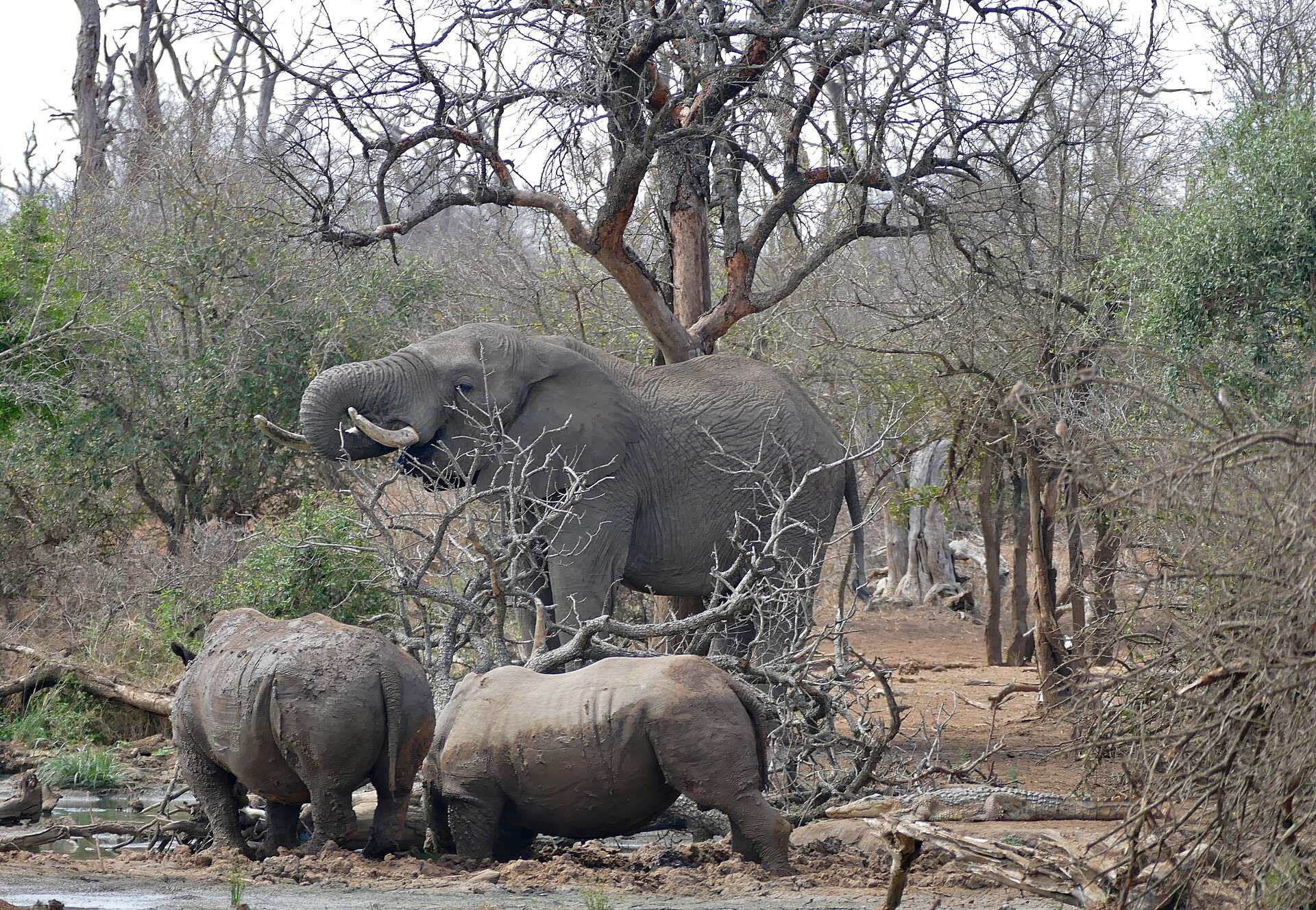
The park is a flat landscape of ancient hardwood trees, open grassland and seasonal pans and waterholes, where animals gather to drink in the dry season. Hlane is home to lion, elephant and white rhino, making it the place in Eswatini to see big game.
Hlane’s main rest camp has no electricity, and evenings are lit by lanterns and campfires, adding to the sense of wilderness. The park is an easy addition to a road trip linking Eswatini with Kruger National Park or with Hluhluwe–iMfolozi and the KwaZulu-Natal coast.
Hlane is also part of a wider conservation landscape in the northeastern lowveld. Nearby protected areas extend towards the Lubombo Mountains on the border with Mozambique, and the park plays a key role in protecting Eswatini’s rhino, which, like rhino elsewhere in Africa, depend on strong anti-poaching work to survive.
Wildlife
White rhino and elephant often visit the waterholes, especially in the dry season, and can be watched at close range from the rest camp. Lions live in a separate section of the park that can be visited only on a guided drive.
Other mammals include hippo, giraffe, zebra, blue wildebeest, kudu, nyala, impala, waterbuck and warthog, with smaller species such as bushbuck and duiker.
Hlane is important for birds of prey and is known for its breeding vultures, including white-backed vultures. Marabou storks, eagles and many bushveld species can also be seen.
Hlane’s waterholes are the heart of the game viewing. On a quiet afternoon you may watch rhino wallowing in the mud, elephant drinking and hippo surfacing, all from a single spot.
Key wildlife
Best Time to Visit
Short answer: May–Oct. Also good: Nov–Apr.
Peak Good Quieter
The dry winter months, from about May to October, are the best time for game viewing. The bush thins out and animals gather at the waterholes. Days are warm and pleasant, and nights are cool.
Summer, from about November to April, is hot and green, with thunderstorms, excellent birding and newborn animals, but game is more spread out.
Malaria risk is present in Eswatini’s lowveld, mainly in the rainy season. Speak to a travel clinic about prevention before you travel.
Getting There
Hlane is on the main road between Manzini and the Lomahasha border post with Mozambique, near the town of Simunye. King Mswati III International Airport (SHO) is about an hour away. From Kruger’s southern gates or the Mananga and Jeppe’s Reef borders, Hlane is a few hours’ drive. From Johannesburg, allow about five to six hours.
Most of the park can be explored in an ordinary car, although some roads can be difficult after rain. Day visitors can enter from 06:00 to 18:00.
Fees & Access
Entrance fees
Hlane and Mlilwane charge a conservation fee of R95 per person per day (Eswatini lilangeni are accepted at par with the rand). From 1 July 2026 payments at the gates are cashless, by Visa, Mastercard or MTN MoMo, and the SANParks Wild Card is accepted. Activities such as guided walks, drives and rides are charged separately.
The current rates run from 1 December to 30 November, so check for changes from December 2026.
Gate hours
06:00–18:00 (day visitors)
Health
Malaria risk: Moderate. Ask a travel clinic about antimalarials before you go.
Fees and gate times change. Check the latest rates with the park authority before you travel.
Things to Do
Self-drive game viewing along the park’s road network.
Guided game drives into the lion section, which is closed to self-drive visitors.
Guided walks with experienced rangers, including walks to see white rhino.
Mountain biking on guided trails through the bushveld.
Waterhole watching from the rest camp, where elephant and rhino often drink.
Cultural visits to nearby communities to learn about Swazi traditions.
Explore Eswatini’s other reserves, such as Mlilwane and Mkhaya, browse all safaris, or plan your safari with us.
Location
Where is Hlane Royal National Park?
Good to know
Hlane Royal National Park FAQs
How much does it cost to enter Hlane?
Hlane charges a conservation fee of R95 per person per day. From 1 July 2026, gate payments are cashless, and the SANParks Wild Card is accepted. Guided activities are extra.
Can you see lions in Hlane?
Yes. Lions live in a separate section of the park that can be visited only on a guided game drive.
Does Hlane have the Big Five?
No. Hlane has lion, elephant and white rhino, but not all five. It is the best place in Eswatini to see big game.
Can you self-drive in Hlane?
Yes, on most of the park’s roads, which are usually suitable for an ordinary car. The lion section is closed to self-drive visitors.
How do you get to Hlane?
Hlane is on the road between Manzini and the Lomahasha border post, near Simunye. King Mswati III International Airport (SHO) is about an hour away.
Is Hlane a malaria area?
Malaria risk is present in Eswatini’s lowveld, mainly in the rainy season. Speak to a travel clinic about prevention before you travel.
Keep exploring
More parks in Eswatini
 Wildlife Sanctuary
Mlilwane Wildlife Sanctuary
Eswatini's oldest protected area and most popular wildlife destination — a gentle introduction to African wildlife.
Explore park →Mkhaya Game Reserve
Eswatini's most exclusive reserve protecting endangered species including black rhino and sable antelope.
Explore park →Begin your journey
Ready to experience Hlane Royal National Park?
Tell us when you want to travel and what you want to see, and we will match you with the right safari.
Plan your safari