
Safaris
Safaris in South Africa
We have no itinerary listed for Pilanesberg National Park yet. These safaris explore other parts of South Africa.

Park guide
Pilanesberg National Park guide
Overview
Pilanesberg National Park lies in South Africa’s North West Province, about two and a half hours’ drive from Johannesburg and right next to Sun City. Covering around 550 km², it sits within the eroded crater of an ancient volcano, formed more than a billion years ago. The rings of hills that rise from the bush are the remains of this alkaline ring complex, one of the largest of its kind in the world.
The park was opened in 1979 on former farmland. In a large translocation project known as Operation Genesis, thousands of animals were reintroduced to the area, and today Pilanesberg is a malaria-free Big Five destination managed by the North West Parks Board.
Its easy access makes it one of South Africa’s most popular parks. You can visit on a day trip from Johannesburg or Pretoria, explore on a self-drive safari, or stay at one of the lodges inside the park or in the private concession areas. The park sits in a transition zone between the dry Kalahari and the wetter bushveld, so species from both habitats live side by side.
Wildlife
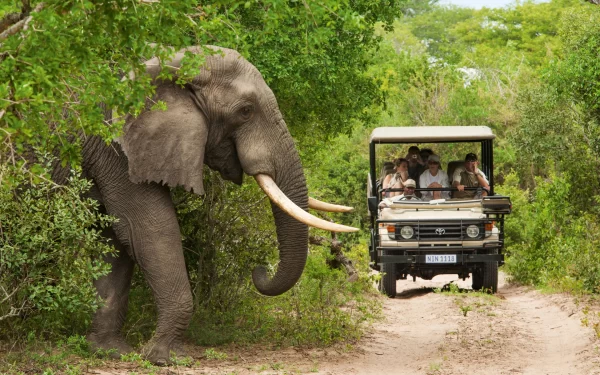
All of the Big Five are found in Pilanesberg: elephant, buffalo, lion, leopard and rhino. Rhino are carefully protected, and the park’s open grasslands and valleys can offer good sightings. Cheetah, spotted and brown hyena and African wild dog are also present, although wild dog are wide-ranging and not always seen.
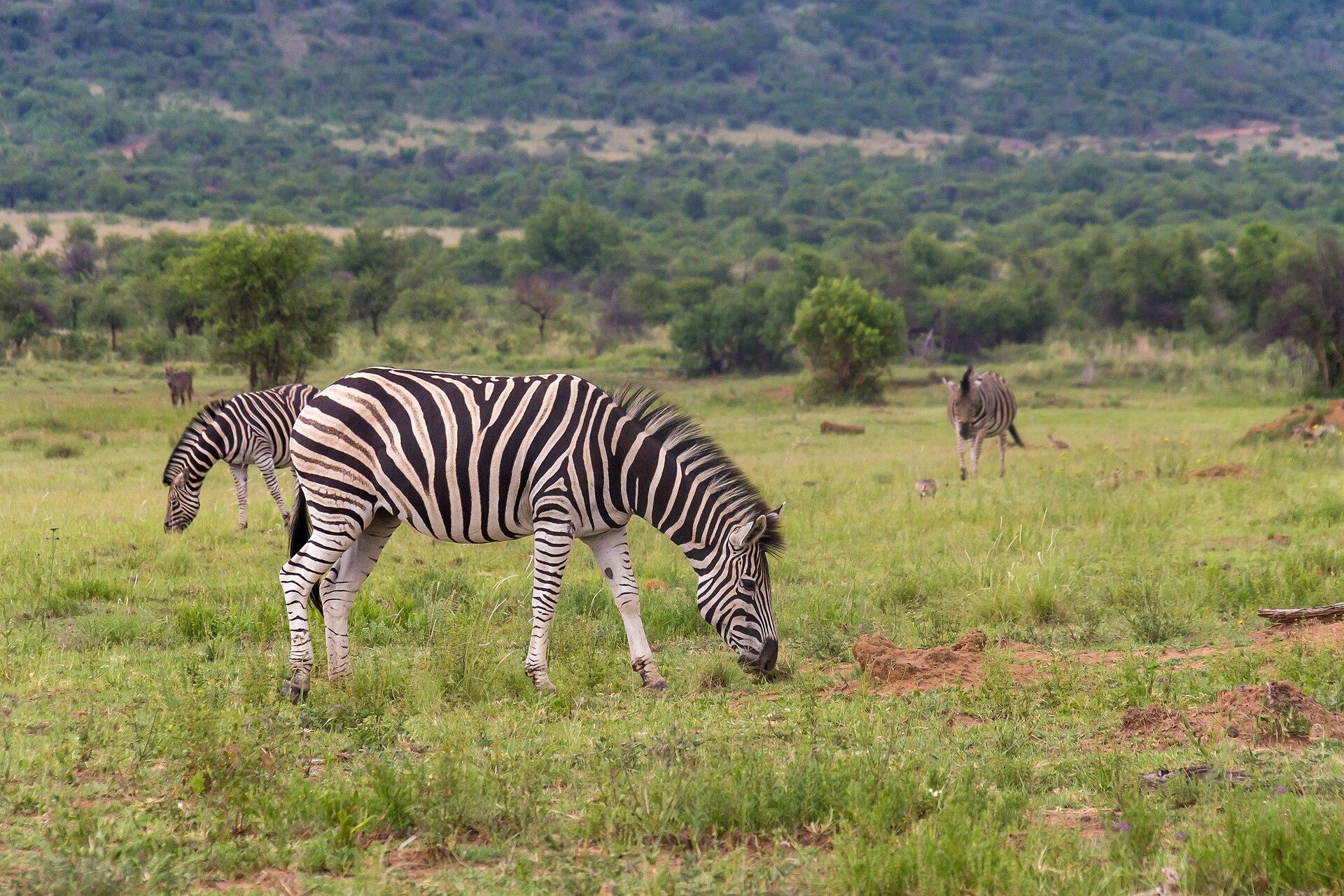
Plains game includes giraffe, zebra, blue wildebeest, kudu, impala, eland, gemsbok, red hartebeest, waterbuck and springbok. Hippo and crocodile live in Mankwe Dam, the largest body of water in the park.
More than 300 bird species have been recorded, from raptors and vultures to the colourful lilac-breasted roller and crimson-breasted shrike.
Key wildlife
Best Time to Visit
Short answer: May–Sep. Also good: Oct–Nov, Mar–Apr.
Peak Good Quieter
Pilanesberg can be visited year-round. The dry winter months, from about May to September, are best for game viewing, with thinner vegetation and animals gathering at waterholes. Days are mild and sunny, but mornings are cold.
Summer, from about October to April, brings heat, afternoon thunderstorms and green landscapes. Many animals give birth and migrant birds arrive. Weekends and school holidays can be busy, so visit midweek for a quieter experience.
The park is malaria-free, which makes it a good choice for families and first-time safari-goers.
Getting There
Pilanesberg is about 170 km northwest of Johannesburg, roughly two and a half hours by road. International visitors usually arrive at OR Tambo International Airport (JNB) in Johannesburg. There are four main gates: Manyane in the east, Bakgatla in the northeast, Bakubung in the southwest and Kwa-Maritane in the south, near Sun City.
Roads inside the park are a mix of tar and gravel and are suitable for ordinary cars. Gate times change with the seasons, and entry usually stops about an hour before the gates close.
Park entry is paid per person and per vehicle, by card only at the gates since December 2025. South African citizens must show ID to pay local rates.
Fees & Access
Entrance fees
Pilanesberg charges a daily conservation fee per person and per vehicle, including a community conservation levy. Since 1 December 2025, international adults pay R748 per day, SADC adults R385 and SADC children aged 5–12 R275. South African adults pay R168 and children aged 5–12 R84, with ID. A passenger car pays R168 per day.
Payment at the gates is by card only. The North West Parks Board does not publish its tariff online, so confirm current rates before you travel. Guided activities are charged separately.
Gate hours
05:30–19:00 (Nov–Feb); 06:00–18:30 (Mar, Apr, Sep, Oct); 06:30–18:00 (May–Aug). Entry usually stops an hour before closing.
Health
Malaria risk: Malaria-free.
Fees and gate times change. Check the latest rates with the park authority before you travel.
Things to Do
Self-drive safaris are easy, with a good road network and maps available at the gates.
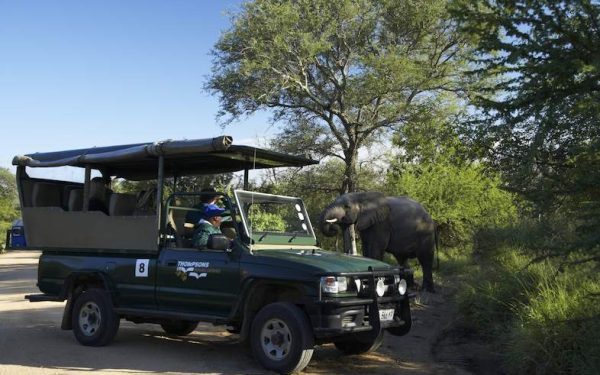
Guided game drives in open vehicles, in the morning, afternoon or after dark, are offered from the camps and lodges.
Hot-air balloon flights at sunrise give a spectacular view of the volcanic crater and its wildlife.
Hides, such as the one at Mankwe Dam, are ideal for quiet wildlife watching and photography.
Guided bush walks led by armed guides offer a closer look at tracks, trees and smaller creatures.
Combine Pilanesberg with nearby Madikwe or the Kruger National Park, browse all safaris, or plan your safari with us.
Location
Where is Pilanesberg National Park?
Good to know
Pilanesberg National Park FAQs
How much does it cost to enter Pilanesberg?
Since 1 December 2025, international adults pay R748 per day and South African adults R168 with ID, plus R168 for a car. SADC adults pay R385. Payment at the gates is by card only.
Is Pilanesberg malaria-free?
Yes. Pilanesberg is in a malaria-free area, which makes it a popular choice for families and first-time safari-goers.
Can you see the Big Five in Pilanesberg?
Yes. Elephant, buffalo, lion, leopard and rhino all live in the park, along with cheetah, brown hyena and wild dog.
How far is Pilanesberg from Johannesburg?
Pilanesberg is about 170 km northwest of Johannesburg, roughly two and a half hours by road, which makes it an easy day trip or weekend safari.
Can you self-drive in Pilanesberg?
Yes. The park has a good network of tar and gravel roads suitable for ordinary cars. Guided game drives and walks are also available.
What are the gate times at Pilanesberg?
Gates open from 05:30 to 19:00 from November to February, 06:00 to 18:30 in March, April, September and October, and 06:30 to 18:00 from May to August. Entry usually stops an hour before closing.
Keep exploring
More parks in South Africa
 National ParkBig Five
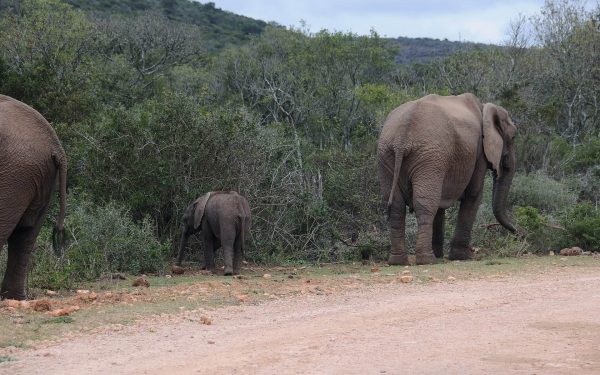
Addo Elephant National Park
South Africa's third-largest national park and the best Big Five destination in the malaria-free Eastern Cape.
Explore park → Nature ReserveBig Five
Hluhluwe-iMfolozi Park
The oldest proclaimed nature reserve in Africa and the park that saved the southern white rhino from extinction.
Explore park → UNESCOBig Five
iSimangaliso Wetland Park
South Africa's first UNESCO World Heritage Site — a mosaic of lakes, wetlands, beaches, and coral reefs on…
Explore park →Begin your journey
Ready to experience Pilanesberg National Park?
Tell us when you want to travel and what you want to see, and we will match you with the right safari.
Plan your safari