
Safaris
Safaris in Addo Elephant National Park
1 safari that visits the park.
Park guide
Addo Elephant National Park guide
Overview
Addo Elephant National Park in South Africa’s Eastern Cape is one of the country’s great conservation success stories. It was proclaimed in 1931 to protect the last 11 elephants surviving in the region, which had been hunted almost to extinction. Today the park is home to more than 600 elephants and has grown into one of South Africa’s largest national parks, stretching from the semi-arid Karoo in the north to the coast of Algoa Bay in the south.
Addo is unusual in protecting a wide range of habitats in one park: thick, evergreen valley bushveld known as spekboom thicket, grassland, fynbos, forest, the Zuurberg mountains, coastal dunes and a marine area that includes islands in Algoa Bay. This diversity means visitors can, in theory, see the “Big Seven”: elephant, lion, leopard, buffalo and black rhino on land, plus southern right whales and great white sharks at sea.
Addo is also malaria-free, an easy drive from the city of Gqeberha (formerly Port Elizabeth) and well suited to self-drive safaris, making it one of the best Big Five destinations in South Africa for families and first-time safari-goers. Accommodation ranges from the SANParks rest camps to private lodges in concessions inside the park and on its borders, and Addo is a natural start or end point for a Garden Route journey.
Wildlife
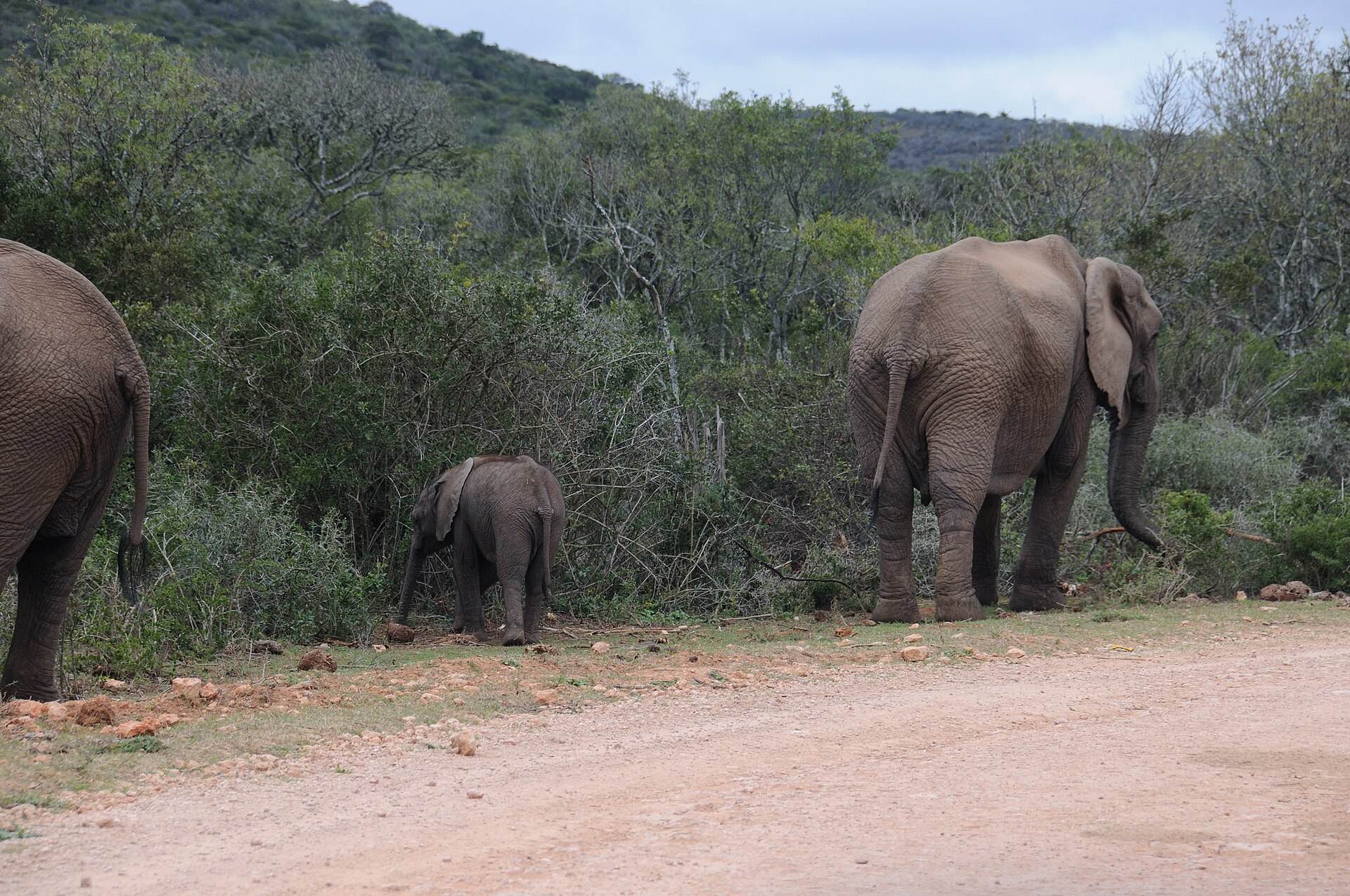
Elephants are the highlight. Addo’s herds are relaxed around vehicles, and large family groups often gather at waterholes such as Hapoor and Gorah in the main game-viewing area, giving wonderful close-up sightings. Addo’s elephant cows are famous for being largely tuskless, a trait linked to the small original population.
Lions were reintroduced in 2003, and the park now supports lion, leopard, spotted hyena, buffalo and black rhino, completing the Big Five, although leopard and rhino are seldom seen. Plains game includes Burchell’s zebra, red hartebeest, eland, kudu, warthog and the tiny grey duiker.
One of Addo’s most unusual residents is the flightless dung beetle, a rare species found in only a few places. Look out for road signs asking drivers to give way to dung beetles, which roll their balls across the roads.
The marine section protects St Croix and Bird Islands in Algoa Bay, home to large colonies of African penguins and Cape gannets. Southern right and humpback whales pass through the bay in season, and dolphins are often seen. Birdlife across the park is rich, from ostriches and secretary birds to forest and fynbos species.
Key wildlife
Best Time to Visit
Short answer: Jun–Aug. Also good: Mar–May, Sep–Nov.
Peak Good Quieter
Addo is a year-round destination. The cooler, drier winter months from June to August often bring the best game viewing, as animals concentrate at waterholes and vegetation thins. Mornings can be cold, but days are generally mild.
Summer, from about November to March, is warm to hot, with the bush green and many young animals around. It is also the school holiday season, so the park can be busier. The Eastern Cape receives rain throughout the year, with peaks in spring and autumn. For whale watching in Algoa Bay, the main season for southern right and humpback whales runs from around June to November.
Getting There
Chief Dawid Stuurman International Airport (PLZ) in Gqeberha is the nearest airport, with daily flights from Johannesburg, Cape Town and Durban. From there, the main entrance and Addo Main Camp are around an hour’s drive. The southern Matyholweni Gate is even closer to the city.
By road, Addo is about eight to nine hours’ drive from Cape Town via the Garden Route, which many travellers break over several days. The main game-viewing area is suitable for ordinary vehicles, with tarred and good gravel roads. Guided game drives are available for those who prefer not to drive.
See our Garden Route, Addo and Cape Town safari for an easy combination.
Fees & Access
Entrance fees
SANParks charges a daily conservation fee per person. Until 31 October 2026, international visitors pay R492 per adult (12 and over) and R246 per child (2–11). From 1 November 2026 to 31 October 2027 the international rate is R565 per adult and R283 per child. Children under 2 enter free. South African citizens and residents and SADC nationals pay lower rates, and SANParks Wild Card holders enter free.
Guided activities and accommodation are charged separately.
Gate hours
7:00 AM - 6:30 PM
Health
Malaria risk: Malaria-free.
Fees and gate times change. Check the latest rates with the park authority before you travel.
Things to Do
Self-drive game viewing in the main game area, stopping at waterholes to watch elephants drink and play.
Guided game drives, including sunrise, sunset and night drives, are offered by SANParks and by private lodges.
Horse riding trails are available in parts of the park, offering a different way to see the landscape.
Hiking in the Zuurberg mountains and along the coastal dunes of the Woody Cape section, including multi-day trails.
Marine tours from Gqeberha to see penguins, dolphins and, in season, whales in Algoa Bay.
Compare other malaria-free Big Five options such as Madikwe and Pilanesberg, browse all safaris, or plan your safari with us.
Location
Where is Addo Elephant National Park?
Good to know
Addo Elephant National Park FAQs
How much are Addo Elephant National Park fees?
From 1 November 2026 to 31 October 2027 international visitors pay a daily conservation fee of R565 per adult and R283 per child (2 to 11). South African citizens and residents pay R115 per adult and SADC nationals pay R242, while SANParks Wild Card holders enter free.
Is Addo malaria-free?
Yes. Addo is in the malaria-free Eastern Cape, which makes it a popular Big Five choice for families with young children.
Can you see the Big Five in Addo?
Yes. Elephant, lion, buffalo, leopard and black rhino all live in Addo, although leopard and rhino are seldom seen. With the marine section, Addo is sometimes called a “Big Seven” park, adding southern right whales and great white sharks.
How far is Addo from Gqeberha (Port Elizabeth)?
The main gate and Addo Main Camp are about an hour’s drive from Chief Dawid Stuurman International Airport (PLZ) in Gqeberha. The southern Matyholweni Gate is closer to the city.
Can you self-drive in Addo?
Yes. The main game-viewing area has good tarred and gravel roads suitable for ordinary cars. SANParks and private lodges also offer guided game drives, including night drives.
When is the best time to visit Addo?
Addo is good all year. Winter, from June to August, often brings the best game viewing at waterholes, while summer is green and warm with many young animals. Whales pass through Algoa Bay from about June to November.
Keep exploring
More parks in South Africa
 Nature ReserveBig Five
Hluhluwe-iMfolozi Park
The oldest proclaimed nature reserve in Africa and the park that saved the southern white rhino from extinction.
Explore park → UNESCOBig Five
iSimangaliso Wetland Park
South Africa's first UNESCO World Heritage Site — a mosaic of lakes, wetlands, beaches, and coral reefs on…
Explore park → National ParkBig Five
Kruger National Park
Kruger National Park is South Africa's flagship wildlife destination and one of the largest game reserves on the…
Explore park →Begin your journey
Ready to experience Addo Elephant National Park?
Tell us when you want to travel and what you want to see, and we will match you with the right safari.
Plan your safari